Top 10 Spray Foam Attic Insulation Buying Questions

Choosing spray foam attic insulation is not simply a matter of comparing prices per square foot. Homeowners must examine the attic’s moisture history, air leaks, roof design, climate, and ventilation strategy. A polished sales promise can hide important details.

Building-science educator Dr. Allison A. Bailes III has repeatedly stressed, “A house is a system.” That short statement matters here. Spray foam changes how air, heat, and moisture move through the building. A contractor should explain the foam type, expected R-value, installation thickness, curing time, fire protection, and indoor-air precautions. Ask for product documentation, installer training records, references, and a written scope of work. Trust evidence, not confidence alone.

This guide answers ten practical buying questions before work begins. It explores open-cell and closed-cell foam, pricing, durability, odor, roof-deck application, and possible moisture risks. It also considers whether another insulation method may fit your attic better. No product is perfect. That matters. A poorly prepared surface can reduce adhesion, leaving visible gaps around wiring, vents, and framing joints. Even a high-quality product can fail when installed carelessly. Experienced homeowners should still question assumptions, request photographs, and confirm cleanup procedures. Small details count. The goal is not the thickest foam or the lowest bid. It is a safe, well-documented insulation system that supports comfort, energy performance, and long-term building durability.
Top 10 Spray Foam Attic Insulation Buying Questions

What Is Spray Foam Attic Insulation and How Does It Work?

Top 10 Spray Foam Attic Insulation Buying Questions

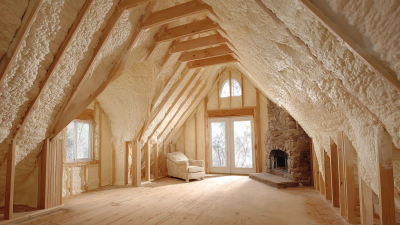
Spray foam attic insulation is a liquid mixture that expands after application. It bonds to roof decks, rafters, and wall joints. The material creates both an insulation layer and an air barrier. Open-cell foam usually provides about R-3.5 to R-4 per inch. Closed-cell foam commonly reaches R-6 to R-7 per inch, according to the U.S. Department of Energy’s Building America resources. This difference affects thickness, cost, and moisture control.

The main working principle is simple. Foam fills cracks that fibrous insulation may leave behind. A tighter attic can reduce heat movement and unwanted air exchange. ENERGY STAR reports that air sealing and insulation improvements may reduce annual heating and cooling costs by about 15 percent in typical homes. Results still depend on climate, duct location, ventilation, and installation quality. Field inspections often find missed edges around wiring, vents, and roof joints. One small gap can matter. Spray foam is not a cure for every attic problem.

Tips: Ask for the installed R-value, foam density, safety documentation, and local code compliance. Confirm that roof leaks are repaired first. Check whether combustion appliances need special treatment after attic air sealing. Request an inspection after curing, not just a price estimate. Closed-cell foam may resist vapor movement better, but it can also hide future roof leaks. That tradeoff deserves careful thought.
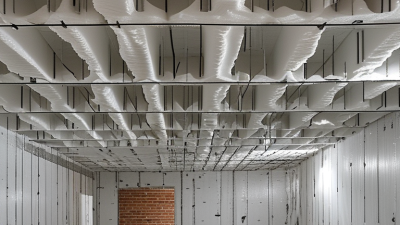
Top 10 Spray Foam Attic Insulation Buying Questions: What Is Spray Foam Attic Insulation and How Does It Work?

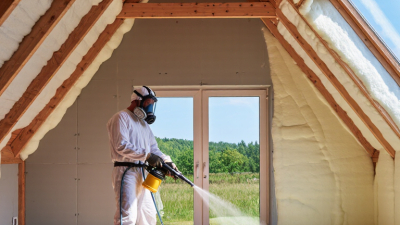
Spray foam attic insulation is a liquid polymer mixture that expands after application and forms a continuous insulating layer. It reduces heat transfer by trapping gas in its cellular structure and can also limit air movement when installed as a continuous air barrier.

The chart compares the typical thermal resistance of the two main spray foam types. Closed-cell foam generally provides a higher R-value per inch, while open-cell foam expands more and is commonly selected when greater thickness is available.

Typical R-value per inch: Open-cell spray foam: approximately R-3.5 to R-3.7; closed-cell spray foam: approximately R-6.0 to R-7.0. Actual performance depends on product formulation, installation thickness, temperature, aging, and application quality.

Reference: Typical insulation R-value ranges published in U.S. Department of Energy and building-code guidance. Values shown are representative ranges, not brand-specific performance claims.

Which Spray Foam Type, Thickness, and R-Value Fit Your Attic?

Top 10 Spray Foam Attic Insulation Buying Questions

Choosing spray foam starts with the attic’s location and purpose. Is the foam applied to the roof deck or the attic floor? Roof-deck insulation can bring the attic inside the home’s thermal boundary. Floor insulation may suit a vented attic with accessible ductwork. The answer affects foam type, thickness, ventilation, and future maintenance.

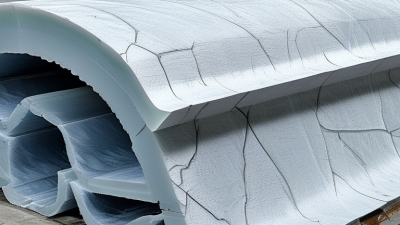
Open-cell foam is lighter and expands more. It usually provides a lower R-value per inch, but can fill irregular cavities effectively. Closed-cell foam offers higher R-value per inch and adds moisture resistance. It costs more and may require careful substrate preparation.

Do not select by R-value alone. Ask for the product’s tested R-value at the proposed thickness. Then compare that value with local energy requirements and the attic’s climate exposure.

Thickness should match the assembly, not a sales target. A professional should inspect roof sheathing, wiring, recessed fixtures, and signs of leakage before spraying. Small gaps around penetrations matter. They can defeat an otherwise thick layer.

Request written details for foam density, cured thickness, safety procedures, and post-installation inspection. Installer training and ventilation practices also deserve direct questions. I would not ignore odor, uneven expansion, or inaccessible repairs after the crew leaves. A perfect plan can still fail in a cramped attic. Rechecking the work with a light and moisture meter is sensible, though not a substitute for qualified evaluation.

How Much Does Spray Foam Attic Insulation Cost to Install?

Spray foam attic insulation costs vary widely, but installation often ranges from $1,500 to $6,000 in many U.S. homes. The final price depends on attic size, foam type, thickness, access, and local labor rates. Open-cell foam usually costs less. Closed-cell foam costs more but provides greater density and moisture resistance. Ask whether the quote uses square feet or board feet. One board foot equals one square foot sprayed one inch thick.

A contractor may charge $1 to $3 per board foot for open-cell foam and $2 to $5 for closed-cell foam. These figures are practical estimates, not fixed prices. Removing old insulation, sealing recessed lights, repairing roof leaks, or improving ventilation can raise the bill. A cramped attic with narrow access may require extra labor. That detail is easy to miss.

Get at least three written estimates. Each one should state the foam type, installed thickness, coverage area, preparation work, and cleanup. Ask about local building requirements and the installer’s training. Experienced crews should explain how they protect wiring, fixtures, and indoor air quality during application. I would not choose the lowest quote automatically. A cheaper bid may exclude air sealing or necessary repairs. My own assumption might be wrong if the attic has hidden moisture damage, so an inspection before spraying is worth the cost. Pricing can change after the roof deck is exposed.

What Safety, Moisture, and Ventilation Issues Should You Consider?

When buying spray foam for an attic, ask more than R-value. Ask which foam type suits your climate, roof assembly, and moisture-drying path. Open-cell foam allows more vapor movement, while closed-cell foam resists vapor but can conceal leaks. That difference matters. U.S. Department of Energy guidance reports that air sealing and insulation can reduce heating and cooling costs by up to 15% in some home upgrades.

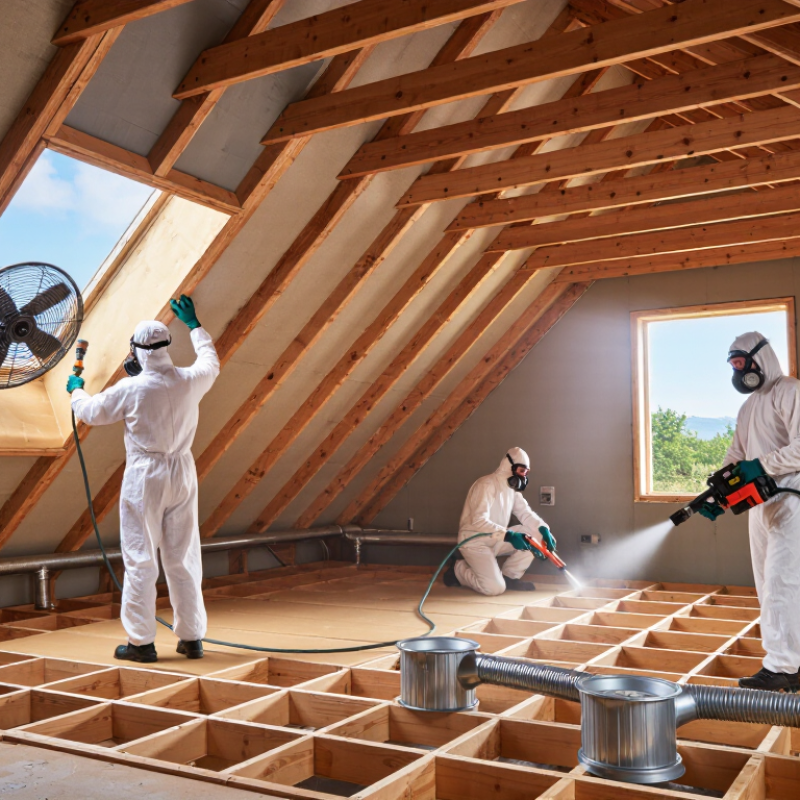
Ask who verifies substrate dryness, roof leaks, and indoor humidity before spraying. The EPA’s moisture-control guidance recommends indoor relative humidity below 60%, ideally between 30% and 50%, to limit mold risk. An attic with wet sheathing needs repair, not foam. OSHA’s spray polyurethane foam guidance warns that application chemicals can irritate the skin, eyes, and lungs. Confirm respiratory protection, workspace isolation, re-entry time, and cleanup procedures. Do not guess.

Ask whether the design preserves soffit-to-ridge ventilation or creates a code-compliant unvented roof assembly. Blocked soffits can trap heat and moisture. If combustion equipment remains inside the air barrier, request combustion-safety testing and carbon-monoxide monitoring. ASHRAE Standard 62.2-2022 establishes minimum residential ventilation requirements, so a tighter home may need mechanical ventilation. A blower-door test can reveal missed air leaks, but it cannot prove every cavity is dry. That limitation deserves attention.

How Can You Compare Contractors, Warranties, and Long-Term Value?

Top 10 Spray Foam Attic Insulation Buying Questions

Comparing contractors requires more than reading online ratings. Ask who will inspect the roof, measure moisture, and calculate the required foam thickness. Request proof of training, insurance, and relevant local credentials. A reliable contractor should explain ventilation changes, combustion safety, and how the work protects roof components. I would also ask for two recent references, preferably from homes with similar attic conditions. Details matter.

Compare written proposals line by line. One quote may include air sealing, preparation, cleanup, and thermal imaging. Another may only cover spraying foam. Ask whether the warranty covers materials, workmanship, or both. Check its length, exclusions, claim process, and transfer rules. Some warranties exclude moisture damage or movement around wiring and framing. That matters later.

Long-term value is not measured by the lowest invoice. Consider reduced drafts, steadier indoor temperatures, and possible savings on heating and cooling. Ask for realistic estimates, not guaranteed payback periods. A contractor should explain how insulation affects attic humidity and future roof inspections. I once saw a low-cost installation hide gaps around a hatch and plumbing penetrations. The homeowner paid again for corrections. The cheapest proposal can be expensive. Still, no estimate is perfect; energy use depends on weather, habits, equipment, and air leakage elsewhere. Request photos before and after installation, plus a clear maintenance and repair plan.

Top 10 Spray Foam Attic Insulation Buying Questions - How Can You Compare Contractors, Warranties, and Long-Term Value?

No. Buying Question What to Compare Useful Benchmark or Typical Range Documents or Evidence to Request Long-Term Value Check
1 Is open-cell or closed-cell foam appropriate for my attic? Foam type, climate, roof assembly, available depth, moisture exposure, and whether the attic will be conditioned. Open-cell foam commonly provides about R-3.5 to R-4 per inch. Closed-cell foam commonly provides about R-6 to R-7 per inch and adds more vapor and moisture resistance. A written assembly recommendation, product technical data sheet, proposed thickness, and local-code compliance details. Higher R-value per inch is not automatically better; compare installed performance, moisture control, durability, and total cost.
2 What exact insulation thickness and R-value will be installed? Specified thickness by roof section, coverage around penetrations, and whether the quote measures board feet or finished area. Required attic R-values vary by location and assembly. Many U.S. energy-code zones commonly specify approximately R-30 to R-60 for ceilings or roofs, but the applicable local code controls. A scaled scope of work showing square footage, target thickness, estimated material quantity, and final R-value. Compare quotes using the same finished thickness and coverage, not just the lowest total price.
3 Is the contractor qualified and properly insured? Business licensing, trade credentials where required, workers’ compensation, general liability, experience, and attic-specific references. A credible contractor should provide current insurance certificates and verifiable project references. Licensing requirements differ by state, province, and municipality. Insurance certificate, license information, recent references, written contract, and installer training records. Proper documentation reduces the risk of paying for defective work, property damage, or uninsured injuries.
4 How will attic ventilation and air sealing be handled? Rafter vents, soffit and ridge ventilation, bathroom exhaust ducts, recessed lights, plumbing penetrations, and top-plate air leaks. Spraying foam over intended soffit or rafter ventilation paths can create problems. Exhaust fans should terminate outdoors rather than in the attic. Attic ventilation plan, air-sealing checklist, photos before and after installation, and details for heat-producing fixtures. A well-sealed assembly can reduce uncontrolled air leakage, but blocked ventilation or concealed moisture can cause expensive roof and mold damage.
5 What preparation and installation conditions are required? Substrate dryness, surface temperature, weather conditions, chemical storage, ventilation during spraying, and curing time. Acceptable temperature and moisture limits are product-specific. Many installations require temporary vacancy and mechanical ventilation during application and curing. Product installation instructions, preparation checklist, re-entry guidance, and written procedures for protecting occupants and belongings. Poor substrate preparation or incorrect spraying conditions can lead to shrinkage, odor, adhesion failure, or uneven coverage.
6 Does the proposal include required fire and thermal protection? Thermal barriers, ignition barriers, covered storage areas, access paths, electrical clearances, and local inspection requirements. Building codes commonly require a 15-minute thermal barrier, such as 1/2-inch gypsum board, in occupied areas; attics and crawl spaces may have alternative approved protection requirements. Code section references, written barrier specification, inspection requirements, and the cost of any coating or covering. A low initial quote may become expensive if required fire protection is excluded from the contract.
7 What warranty is provided, and what does it exclude? Installer workmanship warranty, material warranty, coverage period, transferability, inspection requirements, and exclusions for moisture or remodeling. Published warranties vary widely, commonly ranging from limited workmanship coverage to longer material coverage. The written terms matter more than the advertised duration. Signed warranty, exclusions, claim process, response times, proof-of-purchase requirements, and confirmation of who performs corrective work. A warranty is valuable only if the responsible party remains identifiable and the remedy includes labor, removal, and reinstallation where applicable.
8 How will installation quality be inspected? Visual coverage, thickness measurements, adhesion, gaps, pull-away, overspray, and independent testing of air leakage. A blower-door test can quantify whole-home air leakage in ACH50. Infrared imaging may help identify missing insulation when temperature conditions are suitable. Before-and-after photographs, thickness verification, inspection report, blower-door results, and written punch-list completion. Independent verification helps confirm that the quoted R-value and air-sealing benefit were actually delivered.
9 What is the complete installed cost? Foam, labor, preparation, removal of old insulation, ventilation changes, fire protection, electrical work, cleanup, testing, and permit fees. Spray-foam pricing varies substantially by region, foam type, thickness, access, project size, and preparation. Compare the same scope and thickness rather than a price per square foot alone. Itemized fixed-price proposal, payment schedule, change-order terms, exclusions, permit responsibility, and disposal charges. Evaluate net cost after energy savings, maintenance, improved comfort, and the expected service life of the roof assembly.
10 Will the investment improve comfort and energy performance enough to justify the cost? Current utility use, heating and cooling equipment, duct location, air leakage, climate, attic condition, and planned length of ownership. Energy savings are project-specific. A realistic estimate should use utility bills or an energy model rather than a guaranteed percentage or guaranteed payback period. Written savings assumptions, projected annual savings, comfort objectives, maintenance plan, and any available energy-audit or blower-door data. Compare simple payback, expected ownership period, resale considerations, indoor comfort, moisture risk, and future roof-replacement access.
Buyer note: R-values, fire protection, ventilation, installation conditions, permits, and warranty terms are governed by the applicable product instructions and local building codes. Obtain at least three itemized proposals using the same foam type, thickness, coverage area, preparation scope, and testing requirements.
LSP App

Download the LSP App now

Scan QR code to download the app

We use cookies to personalize content, utilize website traffic analytics & support our marketing initiatives. By continuing to browse our site you consent to receive our cookies. For more information see our Privacy Statement
Ok