Why Choose Spray Foam Insulation for Your Project?
Choosing spray foam insulation is not simply a decision about adding more material. It is a decision about how your building manages heat, air, and moisture. When properly installed, the foam can seal gaps around wall joints, roof edges, plumbing penetrations, and uneven framing. These small openings often become uncomfortable drafts during winter. In summer, they may allow humid outdoor air into cooled spaces.
Building science expert Dr. Joseph Lstiburek often says, “A building is a system.” That principle matters here. Spray foam insulation should work with ventilation, drainage, roofing, windows, and mechanical equipment. A professional assessment can identify the correct foam type, thickness, and installation location for your climate. Open-cell and closed-cell products do not perform identically. Their moisture resistance, expansion, density, and cost can differ significantly.
The benefits can be noticeable. A properly sealed attic may feel less dusty and more stable. Rooms above garages may become easier to heat. Energy use may also decrease, although results depend on the building and its equipment. Nothing is guaranteed.
That part deserves honesty.
Poor preparation, excessive application, or hidden moisture can create problems instead of solving them. Experienced contractors should inspect substrates, follow product instructions, protect occupants, and verify curing conditions. They should also explain limitations rather than promise dramatic savings. For your project, spray foam insulation may be a strong choice, but the best decision begins with measured needs, qualified advice, and realistic expectations.
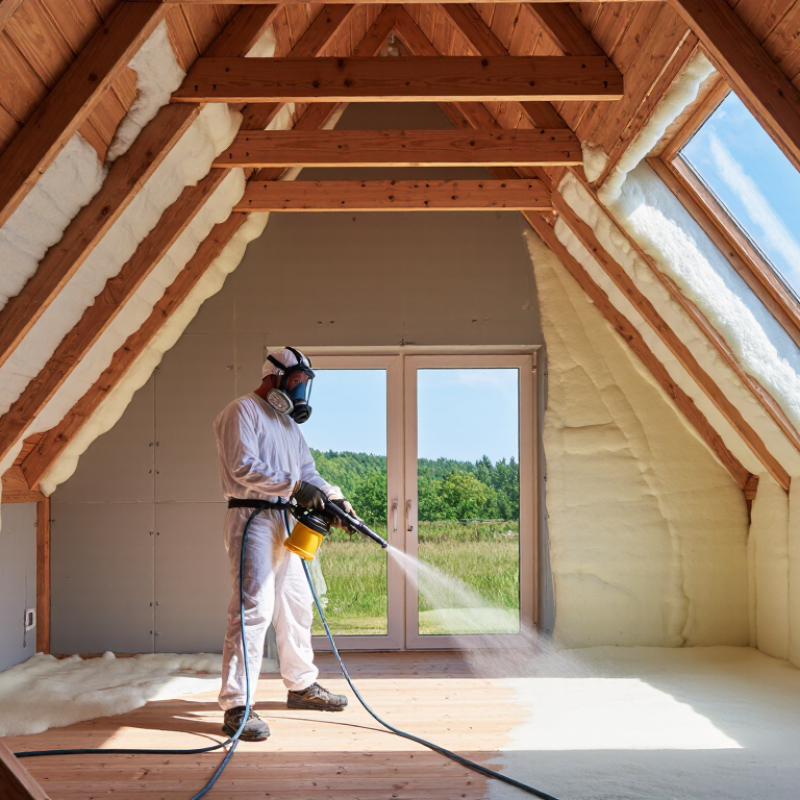
Spray foam insulation is a liquid material that expands after application. It is made by mixing two chemical components at the spray nozzle. The mixture quickly reacts, grows into foam, and bonds with nearby surfaces. This process can fill narrow cracks around pipes, wiring, roof joints, and wall corners.
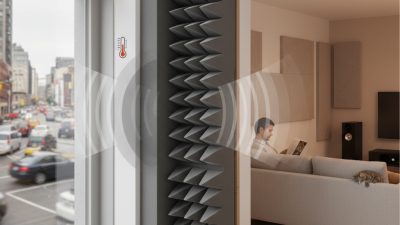
There are two common forms. Open-cell foam is softer and expands more, making it useful for interior walls and sound reduction. Closed-cell foam is denser and resists water movement more effectively. It can also add some structural strength. The right choice depends on climate, building design, moisture exposure, and the required insulation value.
Application needs careful preparation. Installers should check that the surface is clean, dry, and within the product’s temperature range. A damp or dusty surface may reduce adhesion. I have seen small gaps remain when installers rush around complex framing. They matter. Foam should not cover hidden moisture problems or poorly repaired leaks. Ventilation and protective equipment are also essential during installation, while the area should remain unoccupied until the foam has fully cured.
Performance can vary. Thickness, mixing accuracy, and surface conditions all affect the final result. An independent inspection can confirm coverage and identify missed areas before walls or ceilings are closed.
Why Choose Spray Foam Insulation for Your Project?
Key Benefits of Spray Foam Insulation for Building Projects
Spray foam insulation creates a continuous air seal around walls, roofs, rim joists, and awkward gaps. This reduces drafts that ordinary batts may leave behind. In a well-sealed room, heating and cooling systems often work less to maintain a stable temperature. The improvement can feel immediate near cold corners and floor edges.
Closed-cell foam adds insulation value in a thinner layer and can limit water vapor movement. However, it does not replace proper flashing, drainage planes, or roof maintenance. Open-cell foam expands more generously and can fill irregular cavities, but it requires careful moisture planning. These differences matter.
During installation, trained professionals should inspect surfaces, calculate thickness, and follow local building and fire-safety requirements. Ventilation is essential while the material cures. A reliable installer also checks wiring, plumbing, and existing moisture before spraying. I have seen projects where foam hid a leak instead of solving it. That is an expensive lesson.
Spray foam is not a magic fix. Its performance depends on preparation, climate, application quality, and ongoing building care. A small inspection camera or moisture meter can reveal problems before they become costly. When designed correctly, the insulation can improve comfort, reduce uncontrolled air movement, and support more consistent indoor conditions.
| Performance Dimension | Open-Cell Spray Foam | Closed-Cell Spray Foam | Project Benefit |
|---|---|---|---|
| Typical thermal resistance | Approximately R-3.5 to R-3.7 per inch | Approximately R-6 to R-7 per inch | Closed-cell foam provides more insulating value where wall or roof space is limited. |
| Air sealing | Forms a continuous air-control layer when installed at the required thickness. | Forms a continuous air-control layer when installed at the required thickness. | Reduces uncontrolled drafts and air leakage through cracks, joints, and irregular surfaces. |
| Moisture resistance | More vapor-permeable and generally not intended to act as a vapor retarder by itself. | Low water absorption and greater resistance to vapor movement than open-cell foam. | Can help manage moisture, but drainage, flashing, and code-required vapor control are still necessary. |
| Material expansion | Expands significantly and fills larger cavities with a lightweight structure. | Expands less than open-cell foam and produces a denser, more rigid layer. | Helps seal difficult-to-reach gaps, penetrations, and uneven building surfaces. |
| Structural contribution | Provides limited structural reinforcement. | Can add rigidity to some assemblies when specifically designed and approved for that use. | May improve the performance of certain framed assemblies, but it does not replace structural framing or engineering. |
| Sound control | Open structure can help reduce airborne sound transmission in some assemblies. | Dense structure can reduce some sound transmission, although results depend on the complete wall or ceiling assembly. | May improve indoor comfort when combined with suitable gypsum board, air gaps, and other acoustic measures. |
| Space efficiency | Requires greater thickness to achieve the same R-value as closed-cell foam. | Achieves higher R-value per inch and is useful in thin assemblies. | Supports high-performance insulation designs where available cavity depth is restricted. |
| Installation quality | Requires trained installation, correct temperature control, and even application. | Requires trained installation, correct temperature control, and careful thickness control. | Proper preparation and inspection are essential for consistent coverage and long-term performance. |
| Fire and thermal protection | Typically requires an approved thermal or ignition barrier where specified by building codes. | Typically requires an approved thermal or ignition barrier where specified by building codes. | Finishing materials and assembly design must comply with local fire-safety requirements. |
| Best-fit applications | Interior wall cavities, rooflines, rim joists, and areas where flexible, high-expansion coverage is useful. | Exterior walls, foundations, crawl spaces, low-clearance assemblies, and locations needing higher R-value per inch. | Selecting the foam type according to climate, assembly design, moisture strategy, and available space improves project results. |
Note: R-values are typical product and industry ranges. Actual performance depends on product formulation, installed thickness, temperature, substrate conditions, workmanship, climate, and the complete building assembly. Local building codes and manufacturer installation requirements should always be followed.
Spray foam insulation comes in two main forms: open-cell and closed-cell. Open-cell foam expands widely and creates a softer, air-sealing layer. It suits interior walls, rooflines, and spaces where sound control matters. It is lighter and usually less expensive. However, it does not provide the same moisture resistance as closed-cell foam.
Closed-cell foam forms a dense barrier with higher insulation value per inch. It works well in crawl spaces, basements, exterior walls, and areas exposed to humidity. It can also add limited structural stiffness.
Moisture changes everything. Installers must inspect the surface before application. Wet wood, dust, or oil can reduce adhesion and create hidden problems. A small gap around a pipe may also weaken the whole air seal.
Project conditions should guide the choice. Open-cell foam may be unsuitable where water intrusion is possible. Closed-cell foam may be excessive for a dry interior partition. It also expands forcefully, so trained installers should protect wiring, vents, and windows.
Proper ventilation is essential during installation and curing. Local building requirements still apply. In practice, the best result depends on thickness, temperature, substrate condition, and careful trimming. Foam is not a cure for poor drainage or damaged roofing. A detailed inspection can prevent an expensive mistake.
Spray foam can reduce air leakage and improve comfort in difficult areas.
Its performance depends on more than the product itself. Before choosing it, examine the building’s moisture conditions, ventilation, climate, and long-term access needs. The substrate must be clean and dry. Moisture trapped beneath foam can create expensive problems later.
A qualified installer should inspect the roof, walls, joints, and penetrations before work begins. Ask about training, ventilation procedures, curing time, and written workmanship details.
Open-cell foam may suit some interior applications, while closed-cell foam offers greater density and moisture resistance. Neither option is automatically better. Your wall assembly and local conditions matter.
Cost also deserves careful review. A low initial quote may exclude surface preparation, removal, trimming, or post-installation repairs. In field inspections, small gaps around pipes and window frames often reveal weak preparation. That detail is easy to miss.
Foam can also make future repairs harder, especially around wiring and plumbing. Plan those access points before installation.
Tips:
Request a written scope describing thickness, coverage, preparation, and cleanup. Check that the installer follows applicable building requirements. Keep photos of concealed areas before they are covered. Ask how the space will be ventilated during curing. Do not select foam solely by advertised energy savings. Some projects need less foam, better air sealing, or improved drainage instead. A second opinion may feel unnecessary, but it can expose assumptions before they become permanent.
Spray foam can reduce drafts by sealing gaps around framing, wiring, and pipe penetrations. The U.S. Department of Energy reports that air sealing and insulation improvements can reduce home heating and cooling costs by about 15%. However, installation requires more than spraying material into a wall cavity. Surfaces should be clean, dry, and within the product’s specified temperature range. Installers must also control thickness, pressure, and ventilation. Poor application can leave voids, shrinkage, or uneven coverage.
Safety remains critical during installation. Occupants, pets, and unprotected workers should leave the work area while foam is applied and cured. The U.S. Environmental Protection Agency recommends professional training, suitable respiratory protection, and strict re-entry procedures. Fire protection also matters. Exposed foam generally requires an approved thermal or ignition barrier, depending on the building location and local code. Long-term performance depends on these details, not just the foam’s advertised R-value. The uncomfortable truth is simple: one missed cavity can weaken an otherwise careful project.
Tips: Request a written installation plan before work begins. It should identify substrate preparation, target thickness, ventilation, curing time, and final inspection. Ask for photographs of concealed areas. The National Institute of Standards and Technology emphasizes that building performance depends on the interaction of materials, workmanship, and moisture control. Do not ignore odor complaints or unusual surface movement. Recheck assumptions. A lower initial cost may become expensive if repairs require opening finished walls.
Scan QR code to download the app
LSP Products was founded by plumbers over 50 years ago with a focus on unparalleled innovation, superior product quality, and best-in-class service to the plumbing industry. Our primary focus is the new construction market where we develop products that make installations easy and provide significant cost savings to the plumbing/mechanical contractor. LSP has a manufacturing facility located in Monterrey, Mexico and a distribution center in Dallas, Texas. We are proud to offer many products designed and made in North America… About LSP
Submit the form below to receive the document via email.