Choosing the right noise insulation foam is rarely as simple as comparing prices or thicknesses. Global buyers face different rooms, climates, building codes, and performance expectations. A foam that works well inside a podcast studio may perform poorly in a factory, vehicle cabin, or apartment wall. Real projects are messier.
This guide examines ten widely used types of noise insulation foam, including polyurethane, melamine, polyethylene, EPDM, and closed-cell products. Each material offers different advantages in sound absorption, vibration control, moisture resistance, durability, and installation flexibility. Open-cell foam can reduce reflected sound inside a room, while dense barriers may be more suitable for limiting sound transmission. The difference matters.
Foam is not a complete soundproofing system.
Experienced buyers should review thickness, density, flame performance, temperature range, VOC information, and independent acoustic test data. Product descriptions alone can be misleading. Request samples and test them against the actual wall, machine, enclosure, or ceiling design. Ask suppliers about installation methods, surface finishes, packaging quality, and long-term compression. These details often affect performance more than appearance.
International procurement also requires careful documentation. Depending on the destination market, buyers may need safety declarations, technical data sheets, and recognized laboratory reports. Standards such as ASTM or ISO can support comparison, but test conditions still differ. There is no universally “best” noise insulation foam. The best choice depends on frequency, space, budget, safety requirements, and maintenance conditions. This overview offers practical direction, while reminding readers to verify every claim before placing a large order.
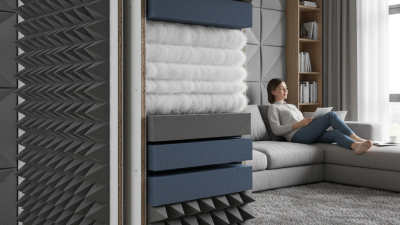
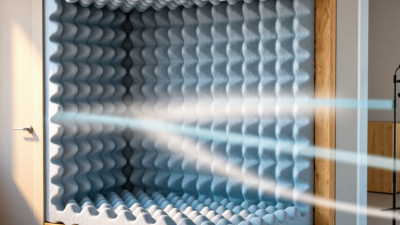
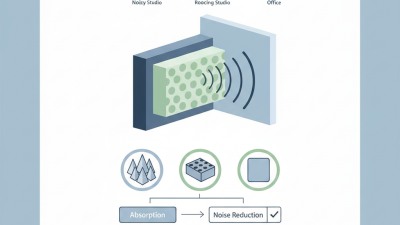
Noise insulation foam is a lightweight material designed to manage unwanted sound. Its open-cell structure lets air movement enter tiny pores. Inside, sound energy changes into small amounts of heat through friction. This process reduces reflections, echoes, and harsh high-frequency noise.
It is not the same as full soundproofing. Foam usually absorbs sound inside a room, while heavy barriers help block sound passing through walls. Common options include polyurethane foam, melamine foam, polyethylene foam, and EVA foam. Wedge, pyramid, egg-crate, and flat panels create different surface patterns. Deeper patterns generally provide more absorption area, but room size and placement still matter.
Placement changes performance.
In practical installations, panels work best on large reflective surfaces near speakers, machinery, or conversation areas. Corners may need thicker treatment because low-frequency sound gathers there. Buyers should check laboratory absorption data, density, thickness, fire behavior, and temperature resistance. Local building requirements can differ significantly between countries.
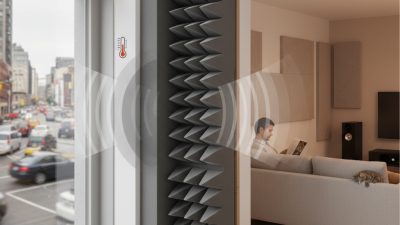
I have seen rooms filled with foam that still sounded loud. The problem was often thin material, poor coverage, or sound entering through doors and ventilation paths. Foam cannot correct every acoustic problem. Installation quality matters more than attractive shapes. A cleaner result may require combining absorption panels with sealed gaps, heavier barriers, and controlled airflow. Even then, results should be measured rather than assumed.
Global buyers need more than a foam name. A 2024 Grand View Research assessment places the acoustic insulation market on a steady growth path, driven by construction, transport, and industrial equipment. Performance still depends on frequency, thickness, airflow resistance, and installation. Fit matters.
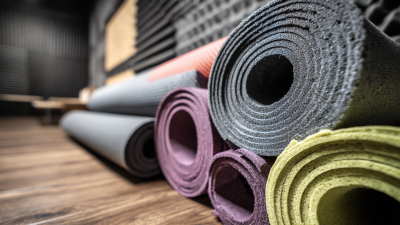
Ten major types cover most purchasing requirements: open-cell polyurethane for wall panels; melamine foam for lightweight, fire-sensitive interiors; polyester fiber foam for offices; cross-linked polyethylene for impact and vibration control; EVA foam for compact enclosures; EPDM foam for moisture exposure; nitrile foam for HVAC equipment; neoprene foam for flexible sealing; silicone foam for wider temperature ranges; and recycled rubber foam for heavier vibration loads. These materials do not perform equally. Open-cell structures usually absorb mid and high frequencies, while dense elastomers help reduce structure-borne noise.
The World Health Organization’s Environmental Noise Guidelines recommend limiting long-term exposure to protect sleep and health. Buyers should therefore request third-party test data, not rely on “soundproof” wording. ISO 10140 and ISO 354 methods can support laboratory comparisons, although room installation may produce different results. Check the Noise Reduction Coefficient, low-frequency absorption, density, fire classification, moisture resistance, and aging data. A 50-millimeter panel may look substantial, yet still underperform against bass vibration. That is a common mistake. Site measurements, sealed joints, and mechanical fixing often matter as much as the foam itself.
Top 10 Types of Noise Insulation Foam for Global Buyers
Foam performance depends on sound control, density, and structure, not appearance alone. Open-cell polyurethane absorbs mid and high frequencies through its porous network. Closed-cell polyethylene, EVA, neoprene, and EPDM provide better impact isolation and moisture resistance, but often absorb less airborne sound. Melamine foam is lightweight and highly porous, while cross-linked polyethylene offers firmer support. Recycled polyester is not technically foam, yet buyers often compare it with acoustic foam. Density changes handling and absorption, but higher density does not automatically mean better results. The structure matters more than many product pages admit. Egg-crate and wedge profiles increase exposed area; flat sheets save space but may absorb less sound.
ASTM C423 and ISO 354 provide recognized laboratory methods for measuring sound absorption, usually reported through NRC or αw values. These figures require careful comparison because test rooms, thicknesses, and mounting methods differ. The WHO Environmental Noise Guidelines for the European Region recommends limiting outdoor road-traffic noise below 45 dB Lnight, showing why room treatment needs measured targets. The European Environment Agency’s 2020 report estimated that over 113 million Europeans experienced road-traffic exposure above 55 dB Lden. Foam can reduce reflections inside a room, but it will not block heavy traffic by itself. That distinction is important. Buyers should check thickness, density, fire classification, humidity performance, and test conditions. A 25 mm wedge may look effective, yet a thicker panel with a small air gap can perform better. My ranking is useful, but not absolute. Room geometry can overturn it.
Indicative sound absorption, density, and cell structure comparison at approximately 50 mm thickness
Higher NRC indicates stronger sound absorption within a room. Open-cell materials generally absorb airborne sound more effectively, while closed-cell foams are more commonly used for vibration damping, sealing, and impact-noise control. Actual performance varies with thickness, facing, installation method, frequency, and test standard.
Choosing noise insulation foam starts with the building, not the product label. The ten common families include open-cell polyurethane, melamine, polyester, reticulated foam, polyethylene, cross-linked polyethylene, EVA, neoprene, nitrile, and EPDM. Open-cell foams absorb reflections in studios, offices, classrooms, and restaurants. Closed-cell foams suit equipment rooms, pipe enclosures, vehicle interiors, and vibration-control details. They resist moisture better, but they usually absorb less airborne sound. Foam alone rarely blocks bass noise. Airtight layers, mass, and careful joints still matter.
The European Environment Agency reported in Environmental Noise in Europe 2020 that over 20% of Europeans face potentially harmful long-term transport noise. The WHO Environmental Noise Guidelines for the European Region set 53 dB Lden for road traffic exposure. These figures make site assessment essential. A bedroom beside a road needs different treatment from a recording booth or factory wall. For walls, combine porous foam with sealed boards and an air gap. For ceilings, choose lightweight absorbers with tested fire performance. For machinery, prioritize resilient foam mounts and isolated contact points. A thick panel may look impressive, yet perform poorly at low frequencies. That mistake remains common.
Tips: Check the foam’s Noise Reduction Coefficient, airflow resistance, density, thickness, and test method. Request results under ISO 354 or ASTM C423 where relevant. Confirm fire, humidity, and aging data. Do not trust “soundproof” claims without laboratory transmission-loss results. Measure the room after installation; design assumptions can be wrong.
Top 10 Types of Noise Insulation Foam for Global Buyers
Choosing noise insulation foam requires more than comparing thickness and price. Open-cell polyurethane, melamine, polyethylene, polyester, and rubber foams serve different acoustic and installation needs. Absorptive foam reduces echo inside a room, but it rarely blocks traffic, machinery, or voices by itself. A practical assessment should identify the noise source, frequency range, wall structure, and available installation depth.
Safety comes first. Request current fire-test reports, chemical safety data, and declared density from the supplier. Standards differ by destination, so verify whether testing follows requirements such as ASTM E84, EN 13501-1, or relevant ISO methods. Do not treat one certificate as universal approval. Check flame spread, smoke development, VOC emissions, moisture resistance, and temperature limits. Some products look similar but perform very differently after installation.
Installation conditions also shape performance. Measure the surface carefully, clean dust and oil, and seal visible gaps around panels, ducts, and cable openings. Heavy equipment may need resilient mounts, not foam alone. In humid areas, closed-cell materials can be more practical, although they may absorb less sound. Adhesive compatibility deserves attention; an unsuitable adhesive can soften foam or increase odor. A common mistake is selecting the thickest foam without checking fire exposure or available clearance. The cheaper option can become expensive after removal. Supplier drawings, batch records, and independent test evidence make purchasing decisions more reliable.
| No. | Foam Type | Cell Structure and Typical Density | Primary Acoustic Function | Typical Applications | Key Advantages | Important Limitations | Fire and Safety Considerations | Installation Requirements | Relevant Tests and Buyer Checks |
|---|---|---|---|---|---|---|---|---|---|
| 1 | Open-Cell Polyurethane Acoustic Foam | Flexible, interconnected cells; commonly about 20–60 kg/m³, depending on formulation and profile. | Absorbs mid- and high-frequency airborne sound by converting part of the sound energy into heat within the porous structure. It does not provide strong sound blocking by itself. | Recording rooms, control rooms, offices, equipment enclosures, podcast spaces, and interior wall or ceiling treatments. | Lightweight, easy to cut, available in flat, wedge, pyramid, and egg-crate profiles, and effective for reducing reverberation. | Usually weak at low-frequency absorption unless thick, spaced from the wall, or combined with a bass-trap design. Standard grades may burn readily. | Request documented flame-spread and smoke results. Common reference methods include ASTM E84 and EN 13501-1; the applicable classification depends on the destination market. | Install on a clean, dry surface using a compatible low-VOC adhesive or mechanical fixing. Avoid covering ventilation openings or electrical equipment. | For absorption, request ASTM C423 or ISO 354 results, including thickness and mounting method. Do not treat an absorption rating as a sound-transmission-loss rating. |
| 2 | Closed-Cell Polyurethane Foam | Mostly closed cells; commonly about 25–80 kg/m³. Density and compression resistance vary significantly by grade. | Provides limited direct absorption but can reduce vibration transmission and add separation or cushioning when used as part of a multilayer assembly. | HVAC equipment supports, machinery interfaces, vehicle interiors, pipe supports, door seals, and composite acoustic panels. | Low water absorption, good resilience, and useful cushioning performance. | Less effective than open-cell foam for broad-band reverberation control. Some formulations can degrade under ultraviolet exposure, heat, oils, or solvents. | Confirm the exact fire grade, smoke performance, temperature range, and chemical compatibility. Do not assume that closed-cell construction automatically means fire safety. | Use the correct compression level and avoid permanent over-compression. Select adhesives and sealants that are compatible with the foam chemistry. | Request compression-set, temperature, water-absorption, and fire-test data. For building assemblies, verify the complete assembly under the required local code. |
| 3 | Melamine Resin Foam | Very lightweight, open-cell, thermoset foam; often about 7–15 kg/m³. | Highly porous absorber with useful performance over a broad frequency range when adequate thickness and suitable mounting are provided. | Commercial interiors, transport interiors, HVAC systems, clean technical areas, industrial rooms, and equipment housings. | Low mass, good acoustic absorption, relatively good temperature resistance, and commonly available in low-smoke or flame-retardant grades. | Can be brittle and may shed particles when cut or handled roughly. Mechanical strength is lower than many polyurethane products. | Obtain product-specific flame, smoke, toxicity, and thermal data. Use protective coverings where abrasion, impact, or frequent cleaning is expected. | Cut with a clean blade, avoid excessive compression, and use a compatible adhesive or retaining system. Protect exposed edges in high-traffic locations. | Check ISO 354 or ASTM C423 absorption data, EN 13501-1 or ASTM E84 fire information, and the stated service-temperature range. |
| 4 | Polyester Fiber Acoustic Foam or Felted Polyester | Thermally bonded polyester fibers with a porous structure; typical acoustic panels may be about 20–80 kg/m³. | Broad-band sound absorption, especially when installed with an air gap. Performance improves with greater thickness and spacing. | Schools, offices, open-plan workplaces, wall panels, ceiling clouds, studios, and public interiors. | Low irritation potential compared with some fibrous materials, easy fabrication, good color options, and resistance to moisture-related degradation in suitable grades. | Thin products may have limited low-frequency performance. Some grades can melt or lose shape under high heat. | Confirm flame-spread, smoke, and melting behavior. For public interiors, check the required local reaction-to-fire classification and surface-finish requirements. | Use mechanical clips, track systems, or compatible adhesives. Maintain the specified air gap and avoid blocking sprinklers, lights, or air returns. | Request absorption coefficients by frequency under ISO 354 or ASTM C423, plus thickness, mounting, density, recycled-content, and fire documentation. |
| 5 | Polyethylene Foam | Flexible or semi-flexible closed-cell foam; commonly about 25–100 kg/m³. | Primarily provides impact isolation, decoupling, gasketing, and vibration control rather than room reverberation absorption. | Floating floors, underlayment, duct and pipe interfaces, door gaskets, packaging for sensitive equipment, and vehicle components. | Low moisture absorption, good chemical resistance, light weight, and useful resilience. | Closed-cell polyethylene is generally not a substitute for porous acoustic absorbers. It may creep under continuous load and can be difficult to bond without surface preparation. | Verify flame performance, smoke generation, temperature limits, and compatibility with oils, solvents, and construction chemicals. | Install continuously at joints where decoupling is required. Prevent bridging between isolated layers, because rigid fasteners can create sound flanking paths. | For floor or machinery use, request dynamic stiffness, compression-set, load-deflection, and impact-noise data. For assemblies, request ISO 10140 or ASTM E90 results where applicable. |
| 6 | Ethylene-Vinyl Acetate (EVA) Foam | Closed-cell, flexible or semi-rigid foam; often about 30–200 kg/m³ depending on grade. | Useful for impact absorption, vibration isolation, gasketing, and damping interfaces. It is not normally a stand-alone room absorber. | Footfall underlays, equipment mounts, vehicle and marine interiors, protective linings, and acoustic seals. | Good flexibility, resilience, water resistance, and resistance to many dilute chemicals. | Acoustic behavior is highly dependent on thickness and compression. Some grades have limited long-term performance at elevated temperatures or under heavy load. | Check flame, smoke, halogen, and toxic-emission requirements for the target application. Some EVA products are combustible and require protection. | Use a designed compression range, provide full support, and avoid overstretching. Select adhesive systems that do not attack the foam surface. | Request density, hardness, compression set, dynamic stiffness, temperature, and fire data. For marine or transport applications, verify the sector-specific approval requirements. |
| 7 | Neoprene Foam | Closed-cell synthetic rubber foam; commonly about 100–300 kg/m³, with higher-density grades also available. | Performs well as a resilient seal, vibration isolator, and flexible barrier interface. It helps prevent airborne leakage through joints rather than absorbing room sound. | Door and window seals, machinery mounts, HVAC connections, pipe supports, marine equipment, and industrial enclosures. | Good weathering, ozone, and moderate oil resistance; maintains flexibility across a relatively broad service range. | More expensive and heavier than many commodity foams. It may be unsuitable for strong oxidizers, certain solvents, or applications requiring very low smoke. | Confirm fire and smoke behavior, especially in transport, marine, and public-building applications. Review chemical-emission and environmental requirements. | Provide uniform compression in seals and avoid gaps at corners. Use mechanically retained joints where vibration, heat, or movement is significant. | Request compression-deflection, compression-set, weathering, temperature, chemical-resistance, and fire-test data. |
| 8 | EPDM Foam | Closed-cell synthetic rubber foam; typical density is about 60–250 kg/m³. | Effective for sealing, vibration isolation, and reducing structure-borne leakage at joints and penetrations. | Exterior doors and windows, HVAC systems, automotive and rail applications, roof equipment, pipe supports, and outdoor enclosures. | Excellent resistance to ozone, weather, water, and aging; suitable for many outdoor installations. | Generally poor resistance to petroleum oils and some hydrocarbon-based chemicals. It is not designed to replace a mass barrier or porous absorber. | Verify fire, smoke, UV, ozone, and low-temperature performance. Ensure the selected grade is compatible with adjacent membranes, coatings, and sealants. | Keep mating surfaces clean and dry. Maintain the specified compression and use continuous seals around penetrations to limit flanking paths. | Check compression-set, weathering, water-absorption, temperature, and chemical-resistance results, together with applicable fire classifications. |
| 9 | Nitrile Rubber Foam | Closed-cell acrylonitrile-butadiene rubber foam; commonly about 60–200 kg/m³. | Provides flexible sealing, vibration isolation, and damping around equipment and ductwork; commonly selected where oil resistance is important. | Industrial HVAC, refrigeration systems, mechanical rooms, engine compartments, pipe insulation, and machinery interfaces. | Good resistance to oils, fuels, and many industrial fluids; flexible and useful for closed-cell thermal and acoustic interfaces. | Less resistant to ozone and outdoor weathering than EPDM unless specially formulated. It usually offers limited direct sound absorption. | Confirm flame spread, smoke, toxicity, and refrigerant compatibility. Avoid assuming that an insulation grade has the same fire performance as an acoustic grade. | Seal all joints carefully and avoid excessive stretching. Follow the supplier’s temperature and adhesive recommendations. | Request oil-resistance, compression-set, temperature, refrigerant-compatibility, water-vapor, and fire-test data. |
| 10 | Polyimide Foam | Lightweight, mostly open-cell or microcellular high-temperature polymer foam; density varies by formulation and is often about 10–50 kg/m³. | Provides sound absorption and vibration-control capability in applications where low mass and high-temperature performance are important. | Aircraft and rail interiors, high-temperature equipment, industrial systems, engine-adjacent areas, and specialist transport applications. | Very low weight, good thermal stability, and suitability for demanding temperature environments when the correct grade is selected. | Higher material cost, limited general-market availability, and potentially lower mechanical robustness than denser rubber or polyethylene foams. | Demand complete fire, smoke, toxicity, and heat-release documentation. Transport and aerospace projects may require sector-specific qualification rather than only general building tests. | Use clean cutting tools and approved adhesives or mechanical retainers. Protect the foam from abrasion, liquid contamination, and unapproved coatings. | Request frequency-based absorption data, thermal aging, fire/smoke/toxicity results, outgassing data where relevant, and transport-sector qualification documents. |
Scan QR code to download the app
LSP Products was founded by plumbers over 50 years ago with a focus on unparalleled innovation, superior product quality, and best-in-class service to the plumbing industry. Our primary focus is the new construction market where we develop products that make installations easy and provide significant cost savings to the plumbing/mechanical contractor. LSP has a manufacturing facility located in Monterrey, Mexico and a distribution center in Dallas, Texas. We are proud to offer many products designed and made in North America… About LSP
Submit the form below to receive the document via email.