Why Choose Spray Foam Attic Insulation?
Why choose spray foam attic insulation? The answer often begins with a familiar winter scene: cold air near the ceiling, dusty insulation between the joists, and a heating system that seems to run endlessly. Spray foam can help reduce air leakage and slow heat flow when it is selected and installed for the specific attic. It is not a magic fix. The roof assembly, ventilation strategy, climate, and existing materials all matter.
Building-science expert Dr. Joseph Lstiburek is often associated with this principle: “The perfect wall is one that has all the control layers on the outside.” The quote is about building assemblies broadly, not a blanket endorsement of spray foam. It offers a useful reminder: insulation works as part of a system. A careful assessment should consider moisture control, air barriers, and the way the attic connects to the rest of the home. Details matter.
This article will explore how spray foam attic insulation can improve air sealing, comfort, and energy performance, while also examining its limitations. Homeowners should compare open-cell and closed-cell products, ask how the installer will protect the space, and request clear details about preparation and curing. A qualified contractor can explain the trade-offs for the home rather than promise the same result everywhere. That is less tidy than a simple sales pitch, but more honest. The right choice depends on the house.
What Spray Foam Attic Insulation Is and How It Works
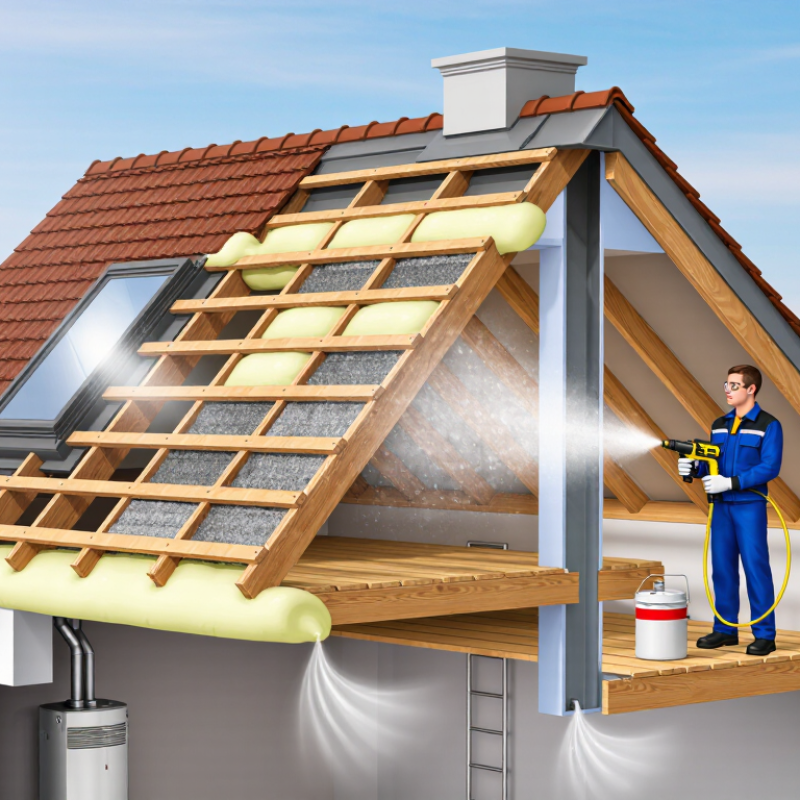
Spray foam attic insulation begins as two liquid components mixed at the application gun. The mixture reacts, expands, and bonds to the roof deck, rafters, or attic floor. As it grows, it fills many cracks that loose insulation may leave open. Small gaps matter. The cured foam can slow heat flow and reduce air movement through those openings.
There are two common types: open-cell and closed-cell foam. They differ in density, expansion, and resistance to water vapor. The right choice depends on the roof assembly, climate, and moisture strategy; one type is not automatically best for every attic. It is easy to assume that more foam always means better performance. That assumption deserves a second look. Poorly planned application can hide roof leaks or complicate future repairs.
When foam is installed along the roof deck, the attic may become part of the home’s conditioned space. That changes how the roof and attic manage heat and moisture. A qualified installer should inspect the roof, wiring, and existing ventilation before work begins. Combustion equipment may also need careful assessment. Installation requires protective measures, and the area should remain unoccupied until the foam has cured and the space is cleared for re-entry. The details are not glamorous, but they matter.
Types of Spray Foam Used in Attics
Why Choose Spray Foam Attic Insulation?
Types of Spray Foam Used in Attics
Attic projects generally use two types of spray polyurethane foam: open-cell and closed-cell. Open-cell foam is softer and expands into irregular gaps around rafters and wiring. Closed-cell foam is denser and more rigid. The U.S. Department of Energy’s Building America Solution Center reports typical R-values of about 3.5 per inch for open-cell foam and 6 to 7 per inch for closed-cell foam. Details matter.
That higher R-value can help when roof cavities are shallow. Closed-cell foam also resists water-vapor movement more than open-cell foam, but it costs more and may make roof-leak detection harder. Open-cell foam can dampen sound, though it usually needs more thickness to reach the same R-value. I would not treat the higher number as an automatic winner. The roof assembly, local climate, and moisture conditions all affect the choice.
Before installation, check whether the attic is vented or being converted into conditioned space. That changes where insulation belongs. Foam should be applied at the intended thickness, with careful coverage around eaves and penetrations. The U.S. Environmental Protection Agency notes that spray polyurethane foam installation can involve chemical exposure concerns, so occupants should follow the installer’s re-entry guidance. A neat surface is reassuring, but it does not prove the foam cured correctly.
How Spray Foam Improves Energy Efficiency and Comfort
Spray foam attic insulation can improve comfort by slowing heat transfer and sealing gaps around rafters, wiring, and ceiling joints. The U.S. Department of Energy’s Energy Saver guidance estimates that 25%–40% of home heating and cooling energy may be wasted. That figure covers homes generally, not spray foam alone, so it should not be read as a guaranteed saving. Still, reducing drafts can help rooms feel steadier in temperature. That matters. A less chilly ceiling in winter and fewer hot upstairs rooms in summer are practical signs of better control.
Foam expands into narrow cracks, limiting air movement that can carry heat and humidity through the attic. The DOE says air sealing and insulation can save up to 10% on annual energy bills; actual results depend on the home, climate, existing insulation, and installation quality. I would not treat that figure as a promise. Foam also needs careful planning around roof ventilation, moisture, and combustion appliances. A qualified installer should assess those conditions before work begins. Small gaps can be easy to miss, and insulation alone cannot fix every comfort problem.
Moisture Control, Air Sealing, and Indoor Air Quality
Spray foam attic insulation can reduce drafts by sealing gaps around roof framing, wiring, and attic access points. That matters. Warm, humid indoor air can otherwise leak into colder attic areas and condense on wood or roofing materials. A continuous air barrier helps limit that movement, though performance depends on careful installation. Small missed seams can still matter.
Moisture control starts with finding the source. Foam will not repair a roof leak or dry wet framing. The attic should be checked for existing dampness before work begins, and the chosen foam type must suit the roof assembly and local conditions. Indoor air quality also deserves attention: sealing leaks may reduce dust and outdoor pollutants entering through the attic, but it does not replace fresh-air ventilation. Not by itself. Installers should follow product curing and ventilation requirements, and homeowners should ask how the attic’s airflow will change. One detail is easy to overlook: tighter homes need a deliberate plan for ventilation and humidity, rather than an assumption that sealing alone solves everything.
Why Choose Spray Foam Attic Insulation? - Moisture Control, Air Sealing, and Indoor Air Quality
Safety, Installation, and Cost Factors to Consider
Why Choose Spray Foam Attic Insulation?
Safety, Installation, and Cost Factors to Consider
Spray foam can reduce air leakage and help stabilize attic temperatures, but the result depends on careful installation. A contractor should inspect roof sheathing, wiring, ventilation, and signs of moisture before spraying. Existing leaks need attention first. Foam can hide problems if applied too soon. Ask how the attic’s ventilation plan will change and what access you’ll have for future repairs.
Tips: Get a written scope. It should list foam type, target thickness, prep work, cleanup, and any removal of old insulation. Ask who handles ventilation and how long occupants should stay away during application and curing. Follow the installer’s re-entry guidance. Small details matter.
Costs vary with attic size, access, foam thickness, surface preparation, and local labor. A cramped attic with stored items may take longer to prepare than an empty, open space. Compare estimates that describe the same work, not just the same price. Check the installer’s training, insurance, references, and warranty terms. Also ask how the work will be inspected. The cheapest quote may omit important preparation. And even a thorough estimate can miss hidden damage—so keep some room in the budget for surprises.
Why Choose Spray Foam Attic Insulation? — Safety, Installation, and Cost Factors to Consider
Typical insulation value per inch (R-value). Bar heights show approximate midpoints of commonly published ranges.
How to read it: Typical ranges are about R-3.1–3.4 per inch for fiberglass batt, R-3.5–3.8 for open-cell spray foam, and R-6–7 for closed-cell spray foam. Actual performance varies by product and installation.
Safety and installation: Spray foam application requires appropriate protective equipment and careful control of the work area. Follow product instructions for ventilation and re-entry; professional installation can help reduce application errors.
Cost factors: Installed cost depends on foam type, required thickness, attic size and accessibility, local labor rates, and air-sealing or preparation work. Compare quotes by specified R-value and scope, not price alone.





 Skip to main content