Why Buy Plaster Boards with Insulation for Global Projects?

Global construction projects face different climates, labor practices, and building standards. That makes material selection more demanding than choosing a familiar board. Plaster boards with insulation can combine interior lining, thermal control, and faster installation in one coordinated system. On a cold morning, a properly fitted board can help keep interior surfaces warmer. In a humid region, the same assembly needs careful moisture design. One product cannot solve every enclosure problem.

Building scientist Joseph Lstiburek is widely associated with the practical principle, “The perfect wall is a wall that works.” That idea matters here. A successful plaster boards with insulation system must match the project’s climate, structure, fire strategy, acoustic targets, and local code requirements. Designers should check declared thermal values, reaction-to-fire classifications, moisture resistance, joint details, and installation tolerances. They should also confirm supply consistency across borders. A board that performs well in a laboratory may disappoint when gaps appear around windows.

Small details matter.

From project experience, integrated boards can reduce handling, simplify sequencing, and create cleaner interior finishes. Yet the benefits are not automatic. Transport damage, unsuitable adhesives, and rushed fixing can weaken performance. This is where honest evaluation becomes necessary. Does the product suit the wall build-up? Can local installers use it correctly? Will replacement stock remain available?

The strongest global choice is not always the thickest board or the cheapest shipment. It is the system that performs reliably, can be verified, and remains practical from specification to installation.
Why Buy Plaster Boards with Insulation for Global Projects?

What Are Insulated Plaster Boards? Core Materials, Types, and EN 520 Scope

Why Buy Plaster Boards with Insulation for Global Projects?

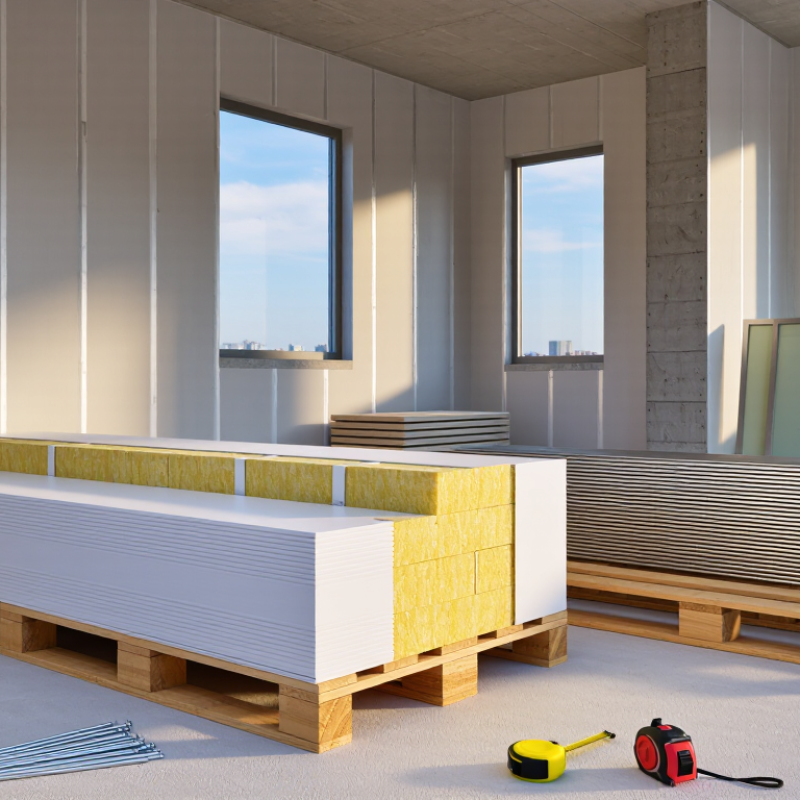
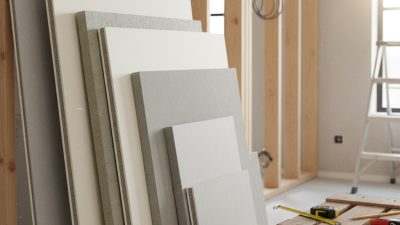
Insulated plaster boards combine a gypsum board with a thermal or acoustic insulation layer. They reduce installation steps, wall thickness, and coordination problems on busy sites. Common cores include mineral wool, expanded polystyrene, and rigid polyurethane foam. Each core reacts differently to moisture, fire, sound, and temperature.

EN 520 covers gypsum plasterboards used for walls, ceilings, and lining systems. It defines board types, including Type A, D, F, H, I, P, and R. However, EN 520 does not certify the complete insulated assembly.

Composite products may also require assessment under EN 13950, while the insulation core needs its own declared performance. This distinction is easy to miss.

The UNEP Global Status Report for Buildings and Construction 2023 states that buildings consumed about 30% of global final energy and produced around 26% of energy-related emissions. Better envelopes matter, but one board cannot solve poor design.

Tips: Check the declared thermal conductivity, fire reaction, moisture resistance, and acoustic test method. Confirm whether values apply to the board, the core, or the full wall. Request an EPD when project carbon data matters.

Local climate still changes the specification. A dry coastal wall is not a cold, wet mountain wall.

On real projects, installers sometimes cut panels too tightly or leave small gaps. Those details can weaken performance, despite excellent laboratory figures. Perfect paperwork cannot repair careless joints.
How Do Thermal Values of 0.020–0.040 W/m·K Improve Building Efficiency?

Plaster boards with insulation can improve building efficiency when their thermal conductivity is carefully assessed. Values between 0.020 and 0.040 W/m·K indicate how easily heat moves through the insulation core. Lower values usually provide stronger resistance at the same thickness. For example, a 60 mm layer rated at 0.020 W/m·K can resist heat flow more effectively than one rated at 0.040 W/m·K.

That difference matters in apartments, offices, and modular buildings where wall space is limited. A thinner insulated board may help designers preserve room area while meeting local energy requirements. In cold climates, it can reduce heat escaping through interior partitions and external walls. In warmer regions, it can slow unwanted heat entering during the day. Less heat transfer can reduce heating and cooling demand.

The number alone is not enough. I have seen projects where excellent laboratory values delivered modest site results. Gaps around sockets, compressed insulation, damp materials, and poorly sealed joints can create thermal bridges. Product thickness, moisture exposure, installation quality, and the complete wall assembly should be checked together. Declared values should also come from reliable testing under recognized standards. Small errors matter. For global projects, climate data and local construction methods must guide the specification. A board suited to a dry northern interior may perform differently in a humid coastal building. Thermal efficiency is practical, but never automatic.

Why Do Fire Ratings of Up to 120 Minutes Support Global Compliance?

Why Buy Plaster Boards with Insulation for Global Projects?

Fire-rated plaster boards with insulation can strengthen compartment walls, ceilings, and service enclosures. Their value becomes clearer when projects cross borders. A two-hour fire rating can protect evacuation time and reduce fire spread between occupied zones. However, the rating belongs to the complete tested assembly, not the board alone. Studs, joints, fasteners, insulation, penetrations, and installation quality all influence performance.

NFPA’s Fire Loss in the United States During 2023 reported approximately 1.39 million fires and more than 3,600 civilian fire deaths. These figures show why passive fire protection remains essential. For international work, engineers often compare test evidence under EN 13501-2, ASTM E119, or ISO 834. A rating of up to 120 minutes may support local compliance when the tested construction matches the project design. It also helps consultants document fire compartments more clearly.

Still, a two-hour label is not a universal passport. It must be checked against national codes, building height, occupancy, and cavity details. In real site reviews, small gaps around pipes can undermine an otherwise robust wall. That part is easy to underestimate. Material selection should include thermal performance, moisture resistance, acoustic needs, and logistics. The Global Status Report for Buildings and Construction 2024 highlights the sector’s substantial energy demand, so insulated boards can support both fire strategy and operational efficiency. Yet their actual benefit depends on correct thickness, detailing, and workmanship. Mistakes remain possible. A careful inspection plan matters.

Why Buy Plaster Boards with Insulation for Global Projects? - Why Do Fire Ratings of Up to 120 Minutes Support Global Compliance?

Evaluation Dimension Representative Data or Range Global Project Relevance Compliance Consideration
Fire-resistance duration Up to 120 minutes in a tested wall, ceiling, or partition assembly Supports compartmentation, protected escape routes, and delayed fire spread in many building types. The rating applies to the complete tested system, including boards, studs, insulation, fixings, joints, and penetrations—not to the board alone.
Common fire-test frameworks EN 1364-1, EN 1365-1, EN 13501-2, ASTM E119, UL 263, and ISO 834-based methods Provides a basis for selecting documentation that aligns with regional building-control requirements. Equivalent test methods are not automatically interchangeable; confirm the authority having jurisdiction and the required classification format.
Thermal conductivity of insulation Mineral wool commonly about 0.035–0.040 W/(m·K); rigid PIR commonly about 0.022–0.028 W/(m·K) Lower conductivity can reduce the insulation thickness needed to achieve a target thermal performance. Use declared or design thermal conductivity values from the applicable product documentation and climate calculation method.
Thermal transmittance A framed insulated wall can commonly achieve approximately 0.18–0.30 W/(m²·K), depending on thickness, framing, bridges, and workmanship. Helps projects address energy-efficiency targets across cold, temperate, and hot climates. Final U-value must be calculated for the complete build-up, including thermal bridges, fasteners, cavities, and surface resistances.
Acoustic performance Typical lightweight partition systems may provide approximately 40–60 dB airborne sound reduction, depending on the tested assembly. Insulated cavities and multiple board layers can improve privacy in residential, hospitality, healthcare, and commercial spaces. Acoustic results depend strongly on cavity depth, stud spacing, sealing, flanking transmission, and installation quality.
Board thickness options Common plasterboard thicknesses include approximately 9.5 mm, 12.5 mm, and 15 mm; project systems may use multiple layers. Multiple thickness and layering options support different structural, fire, acoustic, and impact requirements. Do not substitute thicknesses or layer arrangements without confirming the relevant system test or engineering assessment.
Moisture and application zones Moisture-resistant boards are commonly specified for areas exposed to intermittent humidity; wet areas may require a separately approved lining system. Supports use in kitchens, bathrooms, utility rooms, and variable-humidity environments when correctly specified. Moisture resistance does not mean waterproofing. Waterproof membranes, joint treatment, ventilation, and local installation rules may still be required.
Installation efficiency Factory-laminated or coordinated board-and-insulation systems can reduce separate handling and sequencing steps on site. May simplify procurement, reduce site labor, and improve consistency across multi-country projects. Actual productivity depends on panel size, access, cutting requirements, substrate tolerance, local labor practices, and quality control.
Reaction-to-fire classification Gypsum-based boards are generally classified as limited-combustibility or non-combustible products under applicable European classification routes, subject to composition and certification. Can help designers manage surface-spread-of-flame and material reaction requirements. Reaction-to-fire classification is different from fire resistance; both may be required for the same project.
Documentation for cross-border projects Typical documentation includes technical datasheets, fire-test reports, classification reports, installation instructions, and performance declarations where applicable. Clear technical evidence helps consultants, contractors, inspectors, and import authorities review the proposed system consistently. Verify document validity, test scope, product configuration, language requirements, and acceptance by the local regulatory authority before procurement.

Note: Values shown are representative industry ranges for preliminary comparison only. Final fire, thermal, acoustic, structural, and moisture performance must be confirmed using the complete tested or engineered assembly and the regulations applicable at the project location.

How Do Lightweight Boards Reduce Installation Time and Transport Costs?

Why Buy Plaster Boards with Insulation for Global Projects?

In global construction, time is often lost before installation begins. Insulated plaster boards can reduce this delay through lower panel weight. Crews may carry more sheets per trip, especially in buildings without reliable lifting equipment. On a mid-rise fit-out, workers can move panels through narrow corridors more easily. Fewer handling stages may also reduce damaged edges and rework. Small gains matter.

A standard truck can often carry more usable wall area when board weight falls. Exact savings depend on thickness, density, pallet design, and road limits. Freight planning becomes more predictable when pallets fit efficiently. Lower fuel use may follow, but it should be calculated rather than promised. A lighter panel still needs dry, stable storage. Moisture can ruin the expected advantage.

During installation, two-person teams can position boards faster, particularly on ceilings and upper floors. Cutting, fastening, and joint treatment remain necessary. Lightweight material does not make the whole process effortless. Experienced supervisors still check screw spacing, joint alignment, fire ratings, acoustic performance, and local building rules. One overlooked detail can erase a day’s saving. The estimate is rarely perfect. Weather, site access, and crew familiarity can change results. For remote projects, a trial pallet and timed installation test may reveal more than a brochure.

Why Buy Plaster Boards with Insulation for Global Projects?

A planning benchmark for a 100 m² interior wall system, comparing a conventional two-layer plasterboard and separate insulation installation with an integrated insulated plasterboard system.

Integrated insulated boards reduce the number of components and handling steps. In this benchmark, the system requires approximately 33% fewer installation hours and 44% less transported mass. Actual results vary by board thickness, insulation type, wall design, labor productivity, and local transport conditions.

Which ASTM, EN, and ISO Standards Guide Product Selection Worldwide?

Global projects need plaster boards that match climate, fire, acoustic, and installation demands. Insulation changes that decision. A board may perform well in a dry office but struggle in humid transport hubs or cold warehouses.

ASTM references help teams assess North American products and testing methods. ASTM C1396 covers gypsum board requirements, while ASTM C840 addresses installation practices. For insulation, ASTM C518 or ASTM C177 can support thermal conductivity testing. These standards do not replace project design. They also do not guarantee equal performance across every climate.

EN standards guide many European and international specifications. EN 520 classifies gypsum plasterboards, while EN 13950 covers laminated gypsum thermal or acoustic boards. EN 13162 applies to factory-made mineral wool insulation products. Fire behaviour often requires EN 13501-1 classification. ISO 8301 supports thermal resistance testing, and ISO 10140 addresses laboratory sound insulation testing. ISO 834 may guide fire-resistance testing, but its use depends on the tested assembly.

Selection should compare complete wall systems, not isolated board data. Check thickness, density, moisture exposure, joint treatment, and fixing spacing. A higher insulation value may still create weak acoustic performance. This is easy to overlook. Test reports should show the exact construction, laboratory method, and edition used. Local building rules may adopt these standards differently. Verify every certificate before shipment. Performance claims can look precise, yet site workmanship often changes the result.

LSP App

Download the LSP App now

Scan QR code to download the app

We use cookies to personalize content, utilize website traffic analytics & support our marketing initiatives. By continuing to browse our site you consent to receive our cookies. For more information see our Privacy Statement. 
Ok