Why Choose Cleanroom Swing Doors for Your Facility?

Why Choose Cleanroom Swing Doors for Your Facility?

In a controlled production area, every doorway influences contamination control, workflow, and operator safety. Cleanroom Swing Doors provide a practical barrier between spaces with different cleanliness requirements. Their smooth surfaces reduce dust traps, while tight seals help limit uncontrolled air movement. This matters near filling lines, laboratories, and gowning rooms.

Cleanroom specialist Tim Sandle has stated, “Cleaning is not the same as disinfection.” That distinction should guide door selection. A door may look spotless, yet poorly sealed edges can collect residue or disrupt pressure balance. Experienced facility teams inspect hinges, frames, vision panels, and bottom clearances during routine maintenance. Small details matter.

These doors can also support safer movement. Staff can pass through with controlled force, and observation windows reduce unnecessary opening. Stainless steel construction, chemical-resistant finishes, and rounded edges can simplify cleaning. However, no door solves contamination risks alone. Not even close.

The correct choice depends on room classification, pressure strategy, traffic frequency, and cleaning chemicals. A heavy door may improve durability but slow busy operators. An automatic model may increase convenience but require more maintenance. This trade-off is easy to overlook. It deserves honest review.

For facilities seeking dependable separation without excessive complexity, Cleanroom Swing Doors offer a balanced solution. Their value comes from integration with the entire cleanroom design, not appearance alone. A careful assessment, supported by documented cleaning and maintenance experience, helps confirm whether they fit your operation.
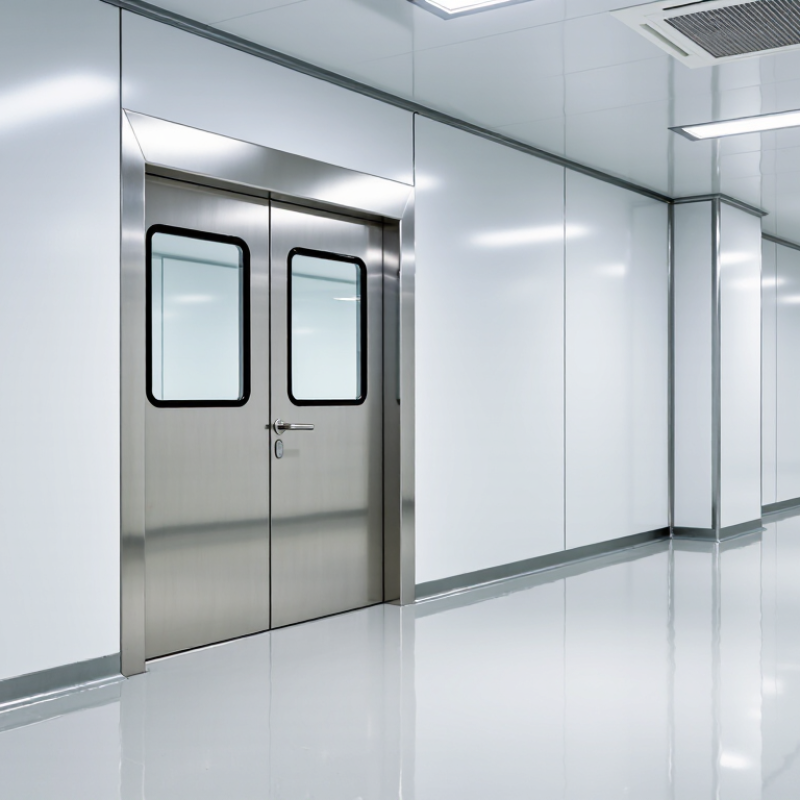
Why Choose Cleanroom Swing Doors for Your Facility?

What Are Cleanroom Swing Doors and Where Are They Used?

Why Choose Cleanroom Swing Doors for Your Facility?

Cleanroom swing doors are hinged access doors designed to protect controlled environments. They support separation between rooms with different cleanliness or pressure requirements. Most models use smooth, nonporous surfaces that resist moisture, chemicals, and frequent cleaning. Sealed edges reduce air leakage around the frame. Small details matter.

These doors are widely used in pharmaceutical production, medical device facilities, laboratories, hospitals, and electronics manufacturing. They can connect gowning rooms, material airlocks, preparation areas, and classified production spaces. A properly selected door may include a vision panel, automatic closer, or interlocking control. These features help staff move safely while limiting unnecessary air disturbance.

In daily operation, the door should open smoothly and close completely without dragging. Stainless steel hardware often withstands repeated cleaning better than ordinary fittings. However, no door solves every contamination problem. Poor installation, damaged seals, or careless traffic can weaken the room’s control. This is where practical inspection becomes important. Facility teams should check hinges, frames, thresholds, and seals during scheduled maintenance. Door weight, opening direction, pressure differences, and emergency access also need review. A heavier door is not always the better choice. It may strain operators and increase maintenance needs. Reliable performance comes from matching the door design to the room, workflow, and cleaning routine.

Why Choose Cleanroom Swing Doors for Your Facility?

What Are Cleanroom Swing Doors and Where Are They Used?

Cleanroom swing doors are sealed, easy-to-clean doors designed to help control air movement, contamination, and pressure differences between controlled areas. They are commonly used in pharmaceutical production, medical-device manufacturing, laboratories, electronics facilities, and food-processing environments.

The chart shows the maximum permitted concentration of airborne particles ≥0.5 μm per cubic meter for selected ISO cleanroom classes at-rest, based on ISO 14644-1. Lower particle limits require tighter control of door sealing, opening practices, airflow, and personnel movement.

How Do Cleanroom Swing Doors Support Contamination Control?

Why Choose Cleanroom Swing Doors for Your Facility?

How Do Cleanroom Swing Doors Support Contamination Control?

In controlled environments, a door is more than an entry point. It is part of the pressure boundary. A cleanroom swing door can close quickly after personnel pass, limiting uncontrolled air exchange. Its tight perimeter reduces gaps where particles may move between adjacent spaces. Smooth, nonporous surfaces also make routine wiping more consistent. That matters beside gowning areas, airlocks, and production rooms.

During daily operations, operators often carry materials, carts, or documentation. A well-balanced swing door opens with controlled force and returns without being touched again. This reduces hand contact on handles, where particles can transfer from gloves or sleeves. Vision panels help staff check the opposite side before opening.

Small details matter.

However, the door cannot control contamination alone. A damaged seal, weak closer, or misaligned frame can undermine the intended barrier.

Facility teams should inspect hinges, latches, seals, and surface damage on a defined schedule. They should record recurring faults, not simply repair them and move on. Cleaning methods must match the door material and the room’s validated procedures. In my experience, rushed maintenance creates more risk than an imperfect door design. Still, that observation needs testing in each facility. Airflow studies, pressure monitoring, and personnel behavior may reveal different failure points. Operators may also discover that a technically sound door performs poorly when traffic patterns change.

Which Design Features Improve Cleanroom Door Performance?

Cleanroom swing doors can support stable airflow, controlled access, and easier daily cleaning. Their performance depends less on appearance and more on detailed design choices. A flush door leaf reduces ledges where dust may collect. Smooth stainless steel or coated surfaces tolerate repeated wiping with approved cleaning agents. Sealed edges limit particle movement, while durable hinges help maintain alignment after frequent use.

A well-designed vision panel improves safety without creating difficult-to-clean joints. Properly fitted gaskets should compress evenly around the frame. Automatic closers can reduce pressure loss, but they must not make the door difficult to open during emergencies. In higher-control areas, interlocking systems help prevent both doors from opening together. Still, complicated controls may create maintenance problems. Simpler designs are often more dependable. A small gap matters.

Tips: Check the door sweep, frame seal, hinges, and closer during routine inspections. Look for uneven wear, loose hardware, or damage around the threshold. Confirm that the door closes fully without slamming. Cleaning instructions should match the surface material and facility procedures. Select hardware that supports the room’s pressure requirements, traffic level, and cleaning frequency. Do not judge performance from a product sample alone. Installation quality, wall conditions, and regular maintenance can change the result significantly.

How Should Facilities Select the Right Swing Door System?

Why Choose Cleanroom Swing Doors for Your Facility?

Selecting the right cleanroom swing door system begins with workflow, not appearance. Study how operators, carts, and equipment move through each opening. A narrow door may slow gowning traffic. A large door may waste valuable wall space. Measure the opening, turning radius, and daily passage frequency before choosing a configuration.

Hygiene and environmental control need equal attention. Choose smooth, non-shedding surfaces with sealed edges and minimal dirt traps. Stainless steel can suit demanding washdown areas, while coated panels may fit controlled, lower-impact zones. Check the door’s seal, closing speed, hinge strength, and vision panel design. A clear panel improves safety near busy corridors. However, oversized glass can increase cleaning time and replacement costs. Small details matter.

In facility assessments, I have seen attractive doors fail because their hardware did not match real traffic. That is an easy mistake to repeat. Review pressure differences, temperature ranges, cleaning chemicals, and expected impact before approval. Ask maintenance teams about access, spare parts, and adjustment procedures. Confirm that the system supports applicable hygiene and building requirements.

Tips: Test a sample door during peak movement. Watch carts, gloves, and elbows. Record delays. Recheck the decision after one week of use. Convenience can expose weaknesses.

Why Choose Cleanroom Swing Doors for Your Facility? — How Should Facilities Select the Right Swing Door System?
Selection Dimension Recommended Benchmark or Data Why It Matters in a Cleanroom Best-Fit Swing Door Configuration
Cleanroom Classification Commonly used in ISO Class 5 to ISO Class 8 controlled areas, depending on the room process and contamination-control plan. The door must support the required air cleanliness level without creating unnecessary particle release or turbulence. Flush, low-particle doors with sealed frames, smooth surfaces, and minimal exposed hardware.
Opening Width Typical single-leaf clear width: approximately 800–1,200 mm. Wider openings may require a double-leaf arrangement. The opening should accommodate personnel, carts, pallets, or production equipment without causing traffic delays. Single swing door for personnel traffic; double swing door for carts, material handling, or emergency egress requirements.
Opening Height Typical clear height: approximately 2,000–2,400 mm, subject to equipment and building constraints. Adequate height prevents contact with carts and improves the movement of tall loads through the controlled area. Standard-height single door for personnel; increased-height or double-leaf door for equipment and material transfer.
Traffic Frequency Low to moderate traffic is generally suitable for manual operation. High-frequency traffic benefits from assisted or automatic operation. Frequent manual opening can increase pressure fluctuation, operator fatigue, and the time that the doorway remains open. Self-closing manual door for occasional use; automatic or power-assisted swing door for frequent traffic.
Pressure Differential Many facilities use a positive pressure differential of approximately 5–15 Pa between adjacent rooms, but the project design determines the final value. Door seals, closing force, and interlocking strategy must work with the room pressure cascade. Perimeter-gasketed door with reliable self-closing hardware; interlocked doors where pressure control requires it.
Surface Cleanability Use smooth, non-porous, corrosion-resistant surfaces with sealed joints and limited ledges. Simpler geometries reduce particle traps and make routine cleaning and disinfection more consistent. Flush door leaf, radiused or sealed edges, concealed fasteners where practical, and cleanable vision panels.
Material Selection Common choices include coated steel, stainless steel, and high-pressure laminate or composite panels selected for the cleaning chemicals used onsite. The door material must resist corrosion, staining, impact, and repeated exposure to approved detergents and disinfectants. Stainless steel for demanding or corrosive environments; coated or composite construction for less aggressive conditions.
Door Leaf Construction Use rigid, sealed, insulated construction when temperature stability, durability, or sound control is required. A stable leaf reduces warping, protects the perimeter seal, and supports consistent closing performance over time. Hollow or honeycomb-core construction for standard use; insulated core for temperature-controlled or higher-duty areas.
Air Leakage Control Specify continuous perimeter seals, an accurately fitted frame, and a controlled closing sequence. The leakage target should be defined by the project specification. Uncontrolled leakage can disrupt room pressure relationships and increase the burden on the HVAC system. Gasketed swing door with adjustable hinges, positive latching, and verified installation tolerances.
Interlocking Requirement Use a door interlock or airlock arrangement where simultaneous opening could compromise segregation or pressure control. Interlocks help prevent direct airflow paths between spaces with different cleanliness or pressure requirements. Single or double swing doors integrated with an electrical or mechanical interlock system.
Safety and Egress Emergency release, opening direction, clear width, hardware, and fire performance must comply with applicable local building and life-safety codes. Cleanroom performance cannot override emergency evacuation requirements. Outward-opening or code-compliant egress door where required; panic or emergency-release hardware when specified by the authority having jurisdiction.
Vision Panel Use a flush, sealed, impact-resistant vision panel when visibility is needed for personnel safety or workflow control. Visibility can reduce collisions and unnecessary door openings while supporting safer material and personnel movement. Double-glazed or sealed flush vision panel with rounded or protected edges.
Cleaning and Disinfection Confirm compatibility with the facility’s actual cleaning agents, contact times, concentration levels, and cleaning frequency. A material that tolerates routine cleaning helps maintain hygiene performance and lowers replacement risk. Non-porous, chemical-resistant finishes with sealed joints and hardware designed for wet or frequent cleaning.
Durability and Impact Exposure Assess trolley frequency, impact locations, door-cycle volume, and the need for kick plates or protective guards. Impact-resistant construction reduces dents, alignment problems, and seal damage caused by carts or equipment. Reinforced door leaf, protected lower section, heavy-duty hinges, and replaceable impact plates where necessary.
Maintenance Access Choose adjustable hinges, replaceable seals, accessible closers, and readily available spare components. Simple maintenance helps preserve closing speed, sealing performance, and compliance throughout the door’s service life. Modular hardware and replaceable perimeter gaskets with documented inspection intervals.
Automation and Controls Consider sensors, push plates, access control, status indicators, and building-management-system interfaces where operationally necessary. Automation can reduce touch points and shorten open time, but it adds controls, commissioning, and maintenance requirements. Low-energy automatic swing door for controlled traffic; hands-free activation for hygiene-sensitive workflows.
Recommended Selection Approach Define the room classification, pressure cascade, traffic pattern, opening size, cleaning regime, safety codes, and lifecycle requirements before final specification. A door that matches the process and room system performs more reliably than a door selected by appearance or initial price alone. Select the simplest compliant swing door system that meets contamination control, safety, durability, and workflow needs.
Note: The dimensions, pressure range, and operating guidance shown above are typical planning benchmarks rather than universal requirements. Final door specifications should be verified against the facility’s contamination-control strategy, room pressure design, applicable building and fire codes, and the manufacturer’s tested performance data.

What Maintenance Practices Keep Cleanroom Swing Doors Reliable?

Cleanroom swing doors support controlled movement between classified areas, but their reliability depends on disciplined maintenance. A door may look clean while its hinges slowly lose alignment. Small gaps can disturb airflow and allow particles to enter sensitive spaces.

Inspect the door at the start of each shift. Check the frame, hinges, handle, vision panel, and perimeter seal. Watch for scraping sounds, uneven closing, or delayed latching. These signs often appear before a failure. Wipe surfaces with approved, low-lint materials and use cleaning agents compatible with stainless steel, seals, and protective coatings. Excess moisture near hinges can cause corrosion.

Keep the closer adjusted so the door shuts firmly without slamming. Excessive force damages seals and stresses the frame. Lubricate only components approved by the facility procedure. Too much lubricant can attract dust. It happens more often than people admit. Record inspections, repairs, cleaning products, and recurring faults in a maintenance log. This creates traceable evidence for internal reviews and helps technicians identify patterns.

A monthly inspection should include hinge fasteners, frame alignment, seal compression, and latch performance. Verify that the door does not remain open after normal use. Staff should report unusual resistance immediately, rather than forcing the door through a busy shift. Maintenance schedules are useful, but they are not perfect. Room pressure changes, cleaning routines, and heavy traffic may require earlier attention. Retraining may also be necessary when repeated damage suggests a handling problem.

LSP App

Download the LSP App now

Scan QR code to download the app

We use cookies to personalize content, utilize website traffic analytics & support our marketing initiatives. By continuing to browse our site you consent to receive our cookies. For more information see our Privacy Statement
Ok