China Top Cylinder Boring Machine Manufacturers for Sale
China has become an important sourcing base for precision engine-rebuilding equipment. Its manufacturers now offer manual and CNC Cylinder Boring Machine models for workshops, remanufacturing plants, and automotive service centers. These machines commonly support cast-iron and aluminum blocks, adjustable boring diameters, and repeatable cutting depths.
Market data supports this expanding demand. Grand View Research identifies automotive machining as a technology-driven market, shaped by tighter tolerances, equipment automation, and growing vehicle maintenance needs. The IMARC Group also reports continued investment in automotive repair and remanufacturing services worldwide. However, broad market reports rarely separate Cylinder Boring Machine sales from other machining equipment. That limitation matters. Buyers should not treat every published market figure as a direct machine-sales forecast.
John Edwards, an AERA technical specialist, describes the rebuilding principle clearly: “Precision machining is the foundation of a reliable rebuilt engine.” His point is practical. A damaged cylinder may look acceptable under workshop lighting, yet reveal taper, ovality, or surface inconsistency during measurement. A reliable boring machine must therefore deliver stable spindle movement, rigid fixture support, accurate centering, and measurable results.
This guide examines China’s leading Cylinder Boring Machine manufacturers for sale. It considers machine structure, boring range, tooling, automation, after-sales support, and export experience. Price is included, but it is not the whole decision. A low-cost machine can become expensive when calibration, spare parts, or operator training are overlooked. Some supplier claims also need independent verification. That is an uncomfortable detail, but an important one. The best choice combines documented accuracy, practical service, and proven performance in real engine workshops.
What Is a Cylinder Boring Machine?
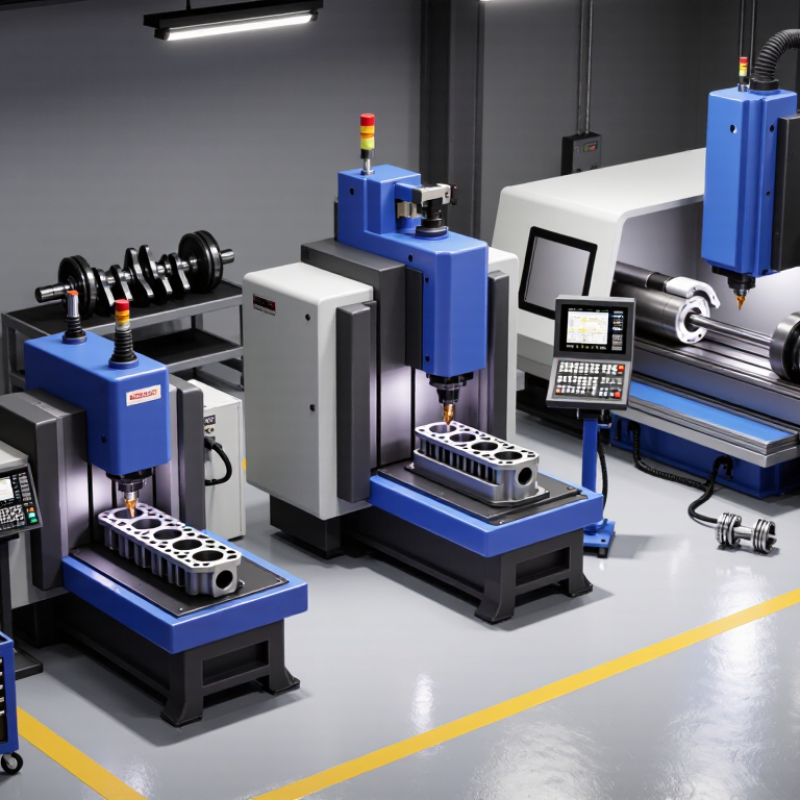
A cylinder boring machine is a precision workshop tool used to enlarge and restore the inner surface of an engine cylinder. It removes a controlled layer of metal, correcting taper, scoring, and uneven wear. The machine holds the engine block firmly while a boring bar travels through the cylinder. Cutting depth must remain consistent. Even a small error can affect piston clearance, oil control, and compression.
In practical engine rebuilding, the technician measures the cylinder at several heights and angles before cutting. This reveals whether the bore is round, straight, or badly worn. The block may then be bored to a larger repair size and matched with suitable pistons. Cutting speed, spindle alignment, coolant flow, and tool sharpness all influence the final surface. Measurement matters most.
China has many manufacturers producing cylinder boring machines for repair shops and industrial workshops. Buyers should examine spindle rigidity, table movement, digital measurement systems, and available service support. A strong frame reduces vibration, but it does not replace skilled setup. The operator still needs accurate gauges and clean working habits. Small mistakes happen. Rushing the final pass can leave marks that later require honing or additional inspection. A reliable machine should provide repeatable results, clear controls, and practical access for different engine block sizes.
China Top Cylinder Boring Machine Manufacturers for Sale
Typical Cylinder Boring Machine Capacity by Engine Application
A cylinder boring machine enlarges and accurately finishes an engine cylinder bore so that it can be restored to the correct diameter and alignment. The chart shows representative bore-diameter ranges commonly encountered in passenger vehicle, commercial diesel, and industrial engine machining. Actual capacity depends on the machine structure, spindle travel, tooling system, and workpiece size.
How Cylinder Boring Machines Work and Their Main Types
A cylinder boring machine enlarges and trues an engine cylinder with a rigid cutting bar. The block is clamped firmly, then aligned from the main-bearing centerline. A dial gauge checks the bore before cutting begins. The tool removes a controlled layer, often in several passes, until the damaged or distorted surface reaches its target diameter. The final measurement matters more than speed. A small alignment error can cause uneven piston wear.
The main types are vertical, horizontal, portable, and CNC-controlled machines. Vertical models suit common automotive blocks and offer stable workholding. Horizontal machines can handle longer or heavier components. Portable units fit field repairs, but they demand stricter operator control. CNC versions improve repeatability through programmed feed and depth settings. According to Grand View Research, the global automotive aftermarket reached about 481 billion US dollars in 2023, with roughly 4% annual growth projected through 2030. That demand supports continued investment in accurate rebuilding equipment.
After boring, technicians usually hone the surface to create the required crosshatch pattern. This retains oil and supports proper ring seating. Buyers comparing China cylinder boring machine manufacturers should inspect spindle rigidity, alignment procedures, measuring tools, and service training. I would not judge a machine by its maximum bore alone. Real workshop results depend on fixturing, calibration, and operator habits. A cheaper machine may become expensive when repeatability is poor. Tens of thousands of engines are not forgiving.
Key Features of China-Made Cylinder Boring Machines
China-made cylinder boring machines increasingly combine rigid structures, digital control, and practical workshop access. The 2024 World Machine Tool Survey reported China’s machine-tool consumption at approximately US$31 billion in 2023. That scale supports broad component sourcing and competitive pricing, but price alone proves little.
Key features begin with a heavily ribbed cast-iron column and adjustable worktable. These parts reduce vibration during boring. Many machines offer spindle speeds around 200–1,200 rpm, depending on bore diameter and tooling. A digital bore gauge can help operators hold accuracy near 0.01 mm, although actual results depend on calibration, operator skill, and workpiece stability. Coolant circulation also matters. It controls heat around the cutting edge and protects the finished cylinder wall.
Control quality deserves close inspection. ISO 230 testing principles emphasize positioning accuracy, repeatability, and thermal behavior in machine tools. Buyers should request inspection records, spindle runout data, and sample machining results. Ask for real measurements.
Some machines include automatic centering, variable-speed drives, and programmable feed rates. These features shorten setup time for repeated engine work. Yet automation may hide weak mechanical alignment. I would check the bore gauge against a certified master before accepting delivery. Factory videos look convincing, but a scratched test bore can reveal more than polished marketing. A clear service manual, accessible replacement parts, and documented training often matter more than an impressive control panel.
Leading Chinese Manufacturers and Their Product Ranges
China’s cylinder boring machine manufacturers serve automotive, motorcycle, agricultural, and diesel repair markets. Their product ranges usually include manual boring machines, CNC boring systems, cylinder honing machines, and integrated boring-and-surfacing equipment. Some factories also produce portable units for field maintenance. The choice depends on bore diameter, block size, repeatability, and daily workload.
A practical sourcing review should examine spindle travel, cutting-tool adjustment, table movement, and fixture strength. Many Chinese suppliers offer machines for small motorcycle cylinders and larger commercial-engine blocks. Common options include digital measurement systems, automatic feed mechanisms, coolant circulation, and adjustable worktables. These features can reduce setup time, but they do not replace operator skill. That matters.
Reliable manufacturers provide drawings, test videos, electrical details, and sample machining results before shipment. Buyers should request actual tolerance data instead of relying on general claims. Factory audits can verify assembly areas, calibration tools, spare-part storage, and final inspection records. Export experience also helps with packaging and installation guidance. Still, product catalogs sometimes describe several configurations too broadly. Details vary. A careful buyer should confirm every dimension, motor specification, voltage requirement, and warranty condition in writing. Trial boring on a representative cylinder block can reveal vibration, surface quality, and adjustment difficulty more clearly than polished photographs. Some equipment may need better tooling or training than expected. That is worth discussing early.
How to Choose and Buy a Cylinder Boring Machine in China
China Top Cylinder Boring Machine Manufacturers for Sale
How to Choose and Buy a Cylinder Boring Machine in China
Choosing a cylinder boring machine in China starts with your workshop’s actual jobs. Measure the cylinder diameter range, block length, and expected daily workload. A compact machine may suit motorcycle blocks, while heavy-duty equipment handles truck and industrial engines. Check spindle speed, table travel, boring accuracy, and tooling compatibility. These details affect output more than a low purchase price.
Ask manufacturers for operating videos, inspection records, and clear technical drawings. Confirm whether the quoted machine includes boring bars, centering tools, fixtures, and measuring equipment. Request tolerance data from recent production tests. A reliable supplier should explain alignment procedures and calibration intervals in practical language. Factory audits, video inspections, and independent pre-shipment checks can reduce costly surprises.
Review warranty coverage, spare-part availability, installation guidance, and response times. Ask how quickly they can replace a damaged spindle bearing or electrical component. Payment terms and shipping documents should be written clearly. Do not trust polished photos alone. A machine can look excellent and still produce inconsistent bores. I would also test a sample cylinder before final approval, although this step may add time and expense. That delay is usually easier to manage than returning unsuitable equipment.
China Top Cylinder Boring Machine Manufacturers for Sale - How to Choose and Buy a Cylinder Boring Machine in China
| Machine Type | Typical Bore Diameter Range | Typical Boring Length | Typical Spindle Speed | Common Application | Recommended Buyer Profile |
| Portable cylinder boring machine | About 30–120 mm | About 150–450 mm | Approximately 200–1,000 rpm | On-site repair of small engines, motorcycles, agricultural engines and compact diesel engines | Mobile repair services and workshops that need low setup time |
| Vertical cylinder boring machine | About 30–180 mm | About 200–600 mm | Approximately 300–1,200 rpm | Passenger-car, motorcycle, agricultural and light commercial engine blocks | General automotive machine shops requiring flexible cylinder-block work |
| Horizontal cylinder boring machine | About 40–250 mm | About 250–800 mm | Approximately 150–800 rpm | Large engine blocks, commercial vehicles, construction equipment and marine components | Heavy-duty workshops processing larger or heavier workpieces |
| CNC cylinder boring machine | About 40–250 mm or more, depending on configuration | About 250–1,000 mm | Approximately 300–3,000 rpm | Repeat production, multi-cylinder blocks and applications requiring programmed feeds | Production-oriented users prioritizing repeatability and reduced operator variation |
| Cylinder honing machine | About 30–300 mm | About 150–1,000 mm | Typically lower reciprocating and rotational speeds selected for honing tools | Finishing previously bored cylinders and producing a controlled cross-hatch pattern | Workshops requiring final surface finishing after boring |
Key Specifications to Compare Before Buying
| Evaluation Dimension | What to Check | Practical Buying Guideline | Why It Matters |
| Bore diameter capacity | Minimum and maximum boring diameter, including the tool-holder limitation | Select a usable range that covers current jobs and leaves approximately 10–15% capacity for future work | Prevents the machine from being unsuitable for common engine blocks |
| Spindle travel | Maximum boring depth and effective travel without repositioning | Compare the published travel with the longest cylinder and required allowance for setup | Insufficient travel can cause incomplete machining or additional alignment operations |
| Accuracy and repeatability | Spindle runout, diameter tolerance, feed consistency and test-piece results | Request measured inspection results rather than relying only on nominal accuracy claims | Directly affects piston clearance, cylindricity and rework rates |
| Worktable and fixture | Table dimensions, maximum workpiece weight, clamping range and alignment adjustment | Confirm that the table supports the heaviest block and allows secure, repeatable positioning | Rigid fixturing reduces vibration and alignment errors |
| Spindle motor | Rated power, speed range, overload protection and motor voltage | Match power and voltage to the material, bore size, cutting tool and local electrical supply | Adequate power helps maintain cutting speed and surface quality |
| Feed system | Manual or automatic feed, feed-rate range and emergency stop function | Automatic feed is preferable for repeat work; manual feed may suit occasional repairs | Stable feed improves consistency and reduces operator fatigue |
| Tooling compatibility | Boring bars, inserts, pilot cones, mandrels and honing-tool compatibility | Confirm tool availability, replacement cost and compatibility with the intended bore range | Tooling often determines actual productivity and operating cost |
| Electrical and safety requirements | Rated voltage, frequency, phase, guarding, emergency stop and overload protection | Verify compatibility with the destination country before placing an order | Avoids installation delays and supports safer operation |
| Installation and service | Foundation requirements, operating manual, spare parts, remote support and warranty terms | Obtain a written service scope, spare-parts list and commissioning procedure | Reliable support reduces downtime after delivery |
China Purchasing and Inspection Checklist
| Stage | Required Action | Documents or Evidence to Request | Acceptance Focus |
| 1. Define the application | List engine types, bore sizes, block dimensions, materials and expected monthly workload | Technical requirement sheet and representative workpiece drawings | The proposed machine must cover the complete operating range |
| 2. Compare quotations | Compare machine configuration, tooling, electrical specification, packaging and delivery terms | Itemized quotation, configuration sheet and commercial invoice draft | Ensure quotations describe equivalent configurations before comparing price |
| 3. Verify technical performance | Request a video or live test using a similar cylinder block and measuring equipment | Test report, dimensional measurement records and machine nameplate photographs | Check bore diameter, taper, cylindricity, surface finish and repeatability |
| 4. Confirm quality control | Review inspection points for casting, guideways, spindle, electrical cabinet and final assembly | Factory inspection checklist and calibration records where applicable | Critical alignment and spindle components should be inspected before shipment |
| 5. Arrange pre-shipment inspection | Inspect appearance, accessories, operation, dimensions, packaging and documentation | Pre-shipment inspection report, packing list and serial-number photographs | Do not approve shipment until agreed specifications are verified |
| 6. Plan delivery and installation | Confirm export packing, shipping terms, lifting points, foundation and commissioning responsibilities | Packing list, installation manual, wiring diagram and commissioning checklist | Machine should arrive protected from moisture, impact and movement damage |
| 7. Secure after-sales support | Agree warranty coverage, response time, spare-parts supply and remote troubleshooting method | Signed warranty terms, spare-parts catalogue and service contact details | Support terms should be specific, measurable and included in the purchase contract |
Note: Specification ranges are typical market ranges for commonly sold cylinder boring and honing equipment. Actual capacity, accuracy, motor configuration and tooling depend on the selected machine configuration and should be confirmed in the final technical quotation.
 Skip to main content