7 Tips for Choosing Polyurethane Foam Insulation

Choosing the right polyurethane foam insulation is more than comparing product prices. The foam must match your climate, building assembly, moisture conditions, and energy goals. A low quote can become expensive when poor adhesion, trapped moisture, or unexpected trimming reduces performance. These decisions deserve careful attention.

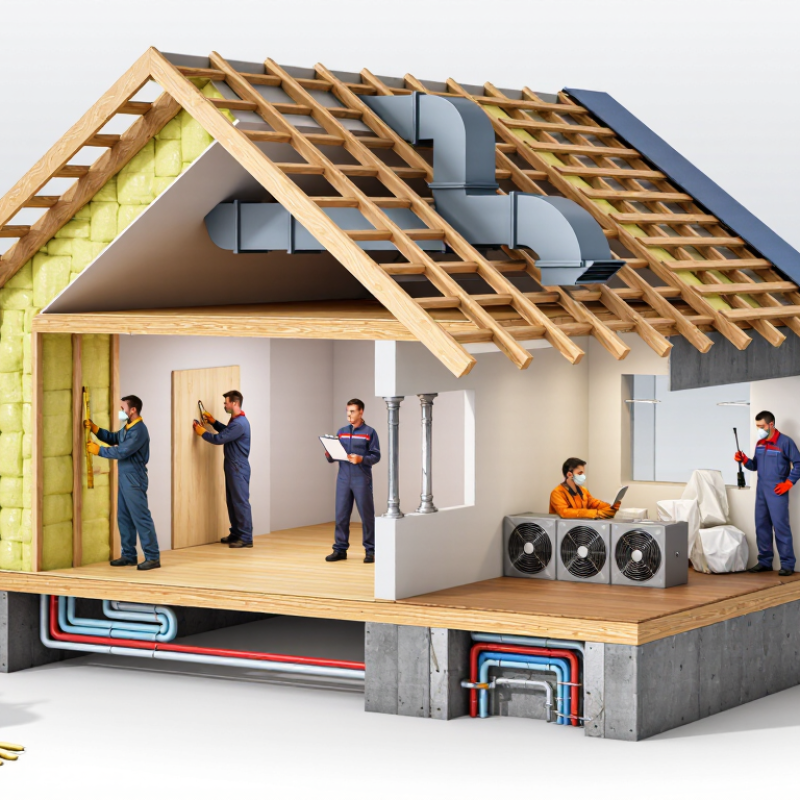
In real projects, installers examine wall cavities, roof decks, ventilation paths, and existing materials before spraying. Closed-cell foam offers high resistance to moisture and delivers strong insulation value per inch. Open-cell foam can expand further and may suit certain interior applications. However, neither option works everywhere. Manufacturer data, local building requirements, and independent professional advice should guide the final choice.

Ask whether the product has appropriate testing, clear installation instructions, and documented thermal performance. Confirm the installer’s training, experience, insurance, and preparation process. A qualified team should explain substrate temperatures, ventilation, curing time, and cleanup before work begins. Small details matter, such as protecting electrical fixtures and checking corners for missed coverage.

Do not trust impressive claims alone.

One practical warning remains important: more foam does not automatically mean a better result. Excess material can complicate inspections, alter ventilation, or hide workmanship problems. I have seen how rushed preparation creates doubts later, even when the finished surface looks smooth. That limitation deserves honest consideration.

The following seven tips will help you compare materials, contractors, costs, and long-term performance. They are designed to support informed decisions, not replace site-specific advice from qualified professionals.
7 Tips for Choosing Polyurethane Foam Insulation

Define Foam Types and Compare R-Values: 3.5–7.0 per Inch

Tip: Identify the foam type before comparing R-values. Open-cell polyurethane foam commonly provides about R-3.5 to R-3.8 per inch. It is lighter and more flexible, so it can suit interior cavities where sound control also matters. Closed-cell foam often rates around R-6 to R-7 per inch. Its denser structure can add moisture resistance, but it usually costs more. Check the product’s technical sheet; figures vary by formulation.

Tip: Compare the whole assembly, not just the number per inch. A two-by-four wall cavity, for example, may not hold enough closed-cell foam to reach a target R-value. Framing, wiring, gaps, and installation thickness all affect results. Measure twice. Ask how the foam will be applied around pipes, corners, and window frames, where uneven coverage can leave cold spots.

Tip: Match the foam to the space and its moisture conditions. A roof deck, basement rim joist, and interior partition have different needs. Confirm that the stated R-value reflects the intended thickness, and ask whether a vapor-control layer is needed. Installation quality matters. Even a high-rated foam performs poorly when coverage is inconsistent, so review the scope and inspection plan before work begins. I would not choose by R-value alone.
Match Foam Density to Thermal Performance and Structural Needs

7 Tips for Choosing Polyurethane Foam Insulation
Match Foam Density to Thermal Performance and Structural Needs

Choosing polyurethane foam by density starts with asking what each surface must do. Density describes mass per unit volume, but it does not set insulation value by itself. Foam chemistry, cell structure, and installed thickness also affect R-value. Density is not everything. Compare tested product data at the thickness you can actually install, rather than relying on a label alone.

For a roof or wall where space is tight, closed-cell foam often provides more R-value per inch and adds rigidity. Yet extra density can increase cost and may not suit every assembly. Open-cell foam is lighter and can help with sound control, but usually needs more depth for similar thermal performance. Check the data sheet. Confirm the stated R-value, recommended thickness, and suitable substrates before work begins.

Structural needs deserve separate attention. Foam may stiffen an assembly, but it should not replace framing or engineering design. A common planning mistake is chasing the highest density while overlooking moisture movement, roof loads, or uneven cavities. A neat density number can feel reassuring, but it may be the wrong shortcut. If the space is shallow, damp, or exposed to changing temperatures, reconsider the choice. Ask an experienced installer how density, thickness, and ventilation work together in that specific assembly.

7 Tips for Choosing Polyurethane Foam Insulation

Match Foam Density to Thermal Performance and Structural Needs

Typical representative values show how increasing polyurethane foam density is generally associated with higher thermal resistance and compressive strength. Open-cell foam is lightweight and economical for interior air sealing, while closed-cell spray foam and rigid polyurethane board are better suited to moisture exposure, limited-depth assemblies, and applications requiring greater structural support. Actual performance varies by formulation, thickness, temperature, installation quality, and testing standard.

Check ASTM E84 Flame-Spread Ratings and Local Fire-Code Requirements

7 Tips for Choosing Polyurethane Foam Insulation

Check ASTM E84 flame-spread ratings before comparing polyurethane foam products. ASTM E84 measures flame spread and smoke development across a ceiling-mounted test surface. It does not predict every fire condition inside a wall or roof assembly. Under common building-code classifications, Class A covers flame-spread indexes from 0 to 25, Class B from 26 to 75, and Class C from 76 to 200. Lower is generally preferable, but the number alone is not enough. Ask for current, laboratory-issued test documentation.

Local fire-code requirements may demand more than an ASTM E84 rating. The International Building Code can require a thermal barrier, such as gypsum board, over foam insulation in occupied spaces. Some installations also need ignition barriers, approved coverings, or specific thickness limits. Confirm requirements with the local code official or authority having jurisdiction before installation. Small details matter.

NFPA’s Fire Loss in the United States During 2023 estimated 1,388,500 fires and approximately 22.2 billion dollars in direct property damage. Those figures make fire protection more than a paperwork exercise.

Review smoke-development results, joints, penetrations, and protective coverings together. A compliant sample can still perform poorly if installers leave gaps around wiring or ducts.

I have seen specifications focus heavily on R-value while treating fire protection as an afterthought. That is a mistake worth revisiting.

Ask whether the tested assembly matches the actual wall, ceiling, or roof design.

Evaluate Moisture Control, Air Sealing, and Water Vapor Permeance

Moisture control should guide every polyurethane foam choice. The U.S. Department of Energy’s Building America research identifies uncontrolled air leakage as a major source of heating and cooling loss. Check the foam’s installed density, drainage path, and compatibility with the wall assembly. Ask for the product’s tested water absorption and dimensional stability data. A basement rim joist needs different attention than a vented attic.

Air sealing is not the same as insulation. Inspect cracks around wiring, plumbing, window frames, and top plates before spraying. Use a smoke pencil on a windy day; small leaks often reveal themselves quickly. Confirm the installer’s thickness measurements with a depth probe. Research cited by the U.S. Environmental Protection Agency shows that air sealing can improve comfort and reduce energy waste, but poor installation can trap moisture behind the foam. That risk deserves more attention.

Water vapor permeance matters. Under the 2021 International Residential Code, Class I vapor retarders measure 0.1 perm or less, Class II exceeds 0.1 to 1 perm, and Class III exceeds 1 to 10 perms. Compare those limits with the climate zone and wall design. Do not assume a lower perm rating is always better. ASHRAE guidance emphasizes whole-assembly moisture analysis, including drying direction. Request a written vapor-permeance test report, not just a product brochure. I would also leave room for uncertainty: field workmanship can differ from laboratory results. Inspect the surface after curing, especially near cold corners and floor edges.

7 Tips for Choosing Polyurethane Foam Insulation - Evaluate Moisture Control, Air Sealing, and Water Vapor Permeance

No. Evaluation Dimension Typical Data or Benchmark What to Check Selection Guidance
1 Foam Cell Structure Open-cell foam: approximately 0.4–1.0 lb/ft³. Closed-cell foam: approximately 1.5–2.2 lb/ft³. Confirm whether the application requires a vapor-permeable or vapor-resistant insulation layer. Review the product data sheet rather than relying only on the foam name. Choose open-cell foam when vapor drying and cavity filling are priorities. Consider closed-cell foam where higher moisture resistance, greater rigidity, or more insulation value per inch is needed.
2 Air Sealing Performance A properly installed continuous foam layer can function as an air barrier; performance depends on continuity, substrate preparation, and edge detailing. Inspect the substrate, joints, penetrations, rim joists, corners, and transitions. Ask how gaps, shrinkage, poor adhesion, and missed areas will be corrected. Select an installation method that creates a continuous air-control layer. Use blower-door testing or visual quality checks where practical; nominal R-value alone does not prove airtightness.
3 Water Vapor Permeance A vapor retarder is commonly classified as Class I at ≤0.1 perm, Class II at >0.1 to ≤1.0 perm, and Class III at >1.0 to ≤10 perms. Check the tested perm rating at the intended thickness. Permeance can change significantly with thickness, aging, facings, coatings, and installation conditions. Use a lower-perm assembly only when it is compatible with the climate, wall direction, interior finishes, and required drying paths. Avoid creating unintended double vapor barriers.
4 Moisture and Water Absorption Closed-cell foam generally absorbs less water than open-cell foam, but neither type should be treated as a substitute for drainage, flashing, or waterproofing. Review water-absorption test results, dimensional stability, adhesion to damp surfaces, and the manufacturer’s limitations for bulk-water exposure. For below-grade, crawl-space, or moisture-prone locations, prioritize a complete water-management system and verify whether the selected foam is approved for the specific exposure.
5 Thermal Resistance Typical aged R-value is about R-3.5 to R-4.0 per inch for open-cell foam and about R-6 to R-7 per inch for closed-cell foam; actual values vary. Check the tested aged R-value, required thickness, thermal bridging, framing dimensions, and whether the assembly meets the local energy code. Compare whole-assembly performance rather than R-value per inch alone. A higher R-value does not compensate for air leaks, thermal bridges, or moisture problems.
6 Installation and Quality Control Application quality is affected by substrate condition, ambient temperature, surface temperature, humidity, lift thickness, mixing, and curing time. Require trained installers, documented site conditions, correct component temperature, suitable ventilation, and inspection of each lift for voids, scorching, shrinkage, or poor adhesion. Choose a contractor who can provide a written installation plan, safety procedures, product documentation, and a process for repairing defective areas.
7 Fire, Code, and Assembly Compatibility Polyurethane foam commonly requires an approved thermal or ignition barrier, depending on its location and the applicable building code. Verify code requirements for occupied spaces, attics, crawl spaces, basements, egress paths, electrical equipment, and fire separation assemblies. Select the complete tested assembly—including coverings, coatings, and adjacent materials—not just the foam product. Obtain approval from the authority having jurisdiction when required.

Note: Performance values are typical ranges for comparison only. Always verify the current product-specific technical data, installation instructions, climate-zone requirements, and local building code before selection.

Verify Blowing-Agent GWP and Confirm Professional Installation Standards

When choosing polyurethane foam, verify the blowing agent before comparing R-values or price. The blowing agent expands the foam, but it can also carry substantial climate impact. The IPCC Sixth Assessment Report lists HFC-245fa at a 100-year GWP of about 962. Newer hydrofluoroolefin alternatives can have GWP values close to one. Figures vary by assessment method, so request the product’s technical data sheet and the stated GWP basis. Do not rely on vague terms such as “low impact.”

Ask who will install the foam, and how the work will be controlled. Professional practice should follow the relevant product standard, such as ASTM C1029, plus local building and fire-safety requirements. Installers should document substrate temperature, moisture condition, ambient ventilation, and foam thickness. A thin, uneven layer beside a window frame can reduce real performance, even when the laboratory R-value looks impressive. The smell matters too. Persistent odor may indicate poor curing or inadequate ventilation.

Request batch records, mixing-ratio checks, and photographs taken before concealment. The installer should explain re-entry times and required protective measures. Independent certification can strengthen confidence, but it does not replace site inspection. No checklist is perfect. I would still question unusually fast work, unclear GWP data, or missing thickness measurements. UNEP’s Kigali Amendment assessments emphasize reducing high-GWP refrigerants and foam agents, making transparent blowing-agent information increasingly important. Pricing should come later. Evidence comes first.

LSP App

Download the LSP App now

Scan QR code to download the app

We use cookies to personalize content, utilize website traffic analytics & support our marketing initiatives. By continuing to browse our site you consent to receive our cookies. For more information see our Privacy Statement. 
Ok