What Is a Three Phase RCBO and How Does It Work?

A Three Phase Rcbo combines residual-current protection and overcurrent protection in one compact device. It monitors three live conductors and, where required, the neutral conductor. If current leaks toward earth, it detects an imbalance and disconnects the circuit rapidly. It also responds to overloads and short circuits, helping protect cables, equipment, and people.

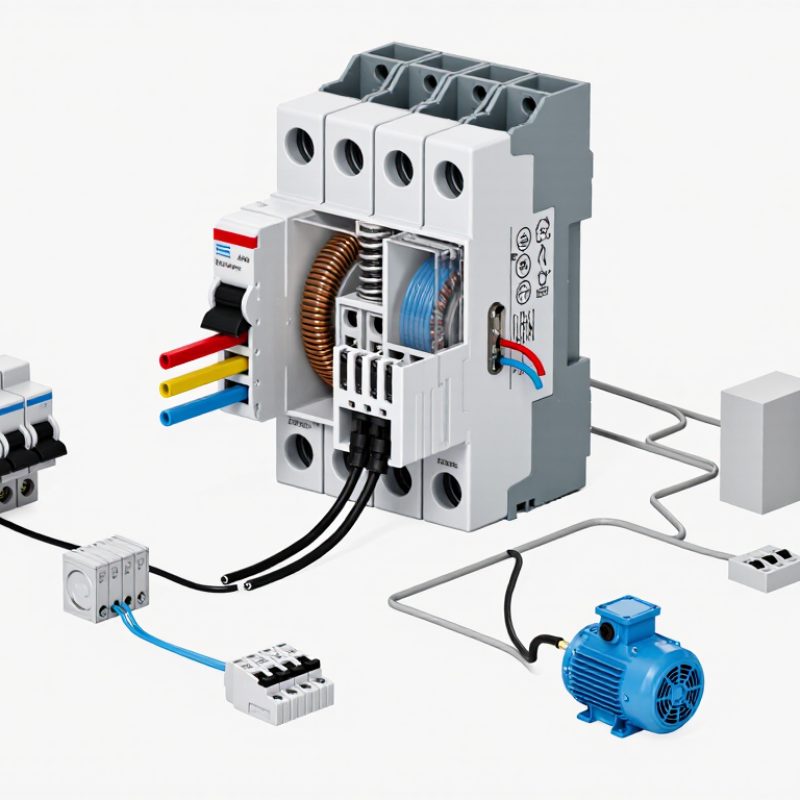
The device works through current transformers that compare outgoing and returning current. Under normal conditions, these values remain balanced. Even a small difference can activate the trip mechanism. For example, damaged insulation near a damp motor may create leakage before visible sparks appear. The Three Phase Rcbo can interrupt the supply, although its performance depends on the rated sensitivity, trip curve, and installation quality.

Details matter. Selection should match the system voltage, fault level, pole arrangement, load type, and earthing design. A qualified electrician should verify these points against applicable standards, such as IEC 61009-1 and local wiring rules. Manufacturer instructions remain essential because different models handle neutral switching and three-phase disconnection differently. An unsuitable device may trip unnecessarily or provide less protection than expected. That risk is easy to underestimate.

Real installations are rarely perfect. Cable routes, motor starting currents, humidity, and shared neutrals can complicate diagnosis. Testing the RCBO regularly and recording results improves confidence, but a test button cannot replace professional inspection. This guide explains the construction, operating process, common applications, and practical limitations of Three Phase Rcbo systems. It also questions a common assumption: one protective device cannot solve every electrical safety problem.
What Is a Three Phase RCBO and How Does It Work?

What Is a Three-Phase RCBO?

A three-phase RCBO is a protective device designed for electrical systems with three live phases. It combines two functions in one unit: residual-current protection and overcurrent protection. The residual-current section detects electricity leaking to earth, such as current passing through damaged insulation. The circuit-breaker section responds to overloads and short circuits.

Unlike a single-phase device, a three-phase RCBO monitors several conductors together. It may also include a neutral connection, depending on the system design. If one phase develops a fault, the device can disconnect the protected circuit quickly. This helps reduce electric shock risks, cable overheating, and equipment damage. Correct pole arrangement matters. A wiring error can leave part of a circuit energized, even when the handle appears off. That detail is easy to underestimate.

Tips: Check the rated current, residual operating current, breaking capacity, and compatible voltage before installation. The protected phases and neutral must pass through the correct terminals. Press the test button regularly, but do not treat it as a complete inspection. A successful test only confirms the mechanism responds at that moment. An experienced electrician should verify phase balance, earthing, terminal torque, and enclosure suitability. In real installations, dust, moisture, and loose connections can affect performance. Neat wiring is useful, but measured testing is more reliable.

Key Components and Their Functions

What Is a Three Phase RCBO and How Does It Work?

Key Components and Their Functions

A three-phase RCBO combines two protective devices in one compact unit. Its circuit-breaker section responds to overloads and short circuits. A thermal element warms during sustained overcurrent. A magnetic trip reacts almost instantly to severe faults. Together, these parts protect cables and connected equipment across three phases.

The residual-current section uses a sensing transformer around the phase conductors and neutral. Under normal conditions, current entering and leaving the circuit balances. Leakage to earth creates an imbalance. The transformer detects it and signals the trip mechanism. The contacts then open all required poles, reducing shock and fire risks. Many units include a test button, which creates a controlled imbalance. Pressing it should disconnect the circuit. If it does not, the device needs prompt inspection. A three-phase RCBO may also contain an arc chamber, terminals, an operating handle, and a neutral pole. Each part matters. A loose terminal can generate heat, even when the device appears healthy.

Tips: Test the button at the interval required by local guidance. Check phase identification before energising. Confirm the rated current, residual-current setting, and cable size match the installation. A qualified electrician should verify these points with suitable test instruments. In real installations, nuisance tripping can reveal moisture, damaged insulation, or shared neutrals. That diagnosis is not always obvious, and guessing can waste time.

What Is a Three-Phase RCBO and How Does It Work?

Three-phase 50 Hz voltage waveforms monitored by a three-phase RCBO

The chart shows three balanced sinusoidal phase voltages, each separated by 120 degrees. The example uses a typical 230 V RMS phase-to-neutral supply, which produces a peak voltage of approximately 325 V. A three-phase RCBO monitors the live conductors and neutral for overcurrent caused by overloads or short circuits, while its residual-current protection detects an imbalance caused by current leaking to earth and disconnects the circuit.

Thermal element
Responds to sustained overload current.
Magnetic element
Trips rapidly during a short circuit.
Residual-current sensor
Detects current imbalance between outgoing and returning conductors.

How a Three-Phase RCBO Detects Electrical Faults

What Is a Three Phase RCBO and How Does It Work?

A three-phase RCBO combines residual-current protection with overcurrent protection. It monitors three live phases and, where fitted, the neutral conductor. Inside the device, these conductors pass through a sensing core. During normal operation, current leaving through the phases returns through the neutral. The magnetic effects cancel each other.

A fault changes that balance. For example, damaged insulation may allow current to flow through a metal enclosure or a person toward earth. The sensing core detects this small difference, called residual current. An electronic or magnetic trip mechanism then opens all connected poles rapidly. This action reduces the duration of dangerous contact current. It also helps prevent overheating caused by insulation faults.

The RCBO checks more than leakage. Its thermal element responds to sustained overloads, such as too many heating loads on one circuit. Its magnetic element reacts to a short circuit and trips almost instantly. In practice, a qualified electrician should verify phase sequence, neutral routing, conductor size, and disconnection time. The test button should be operated at suitable intervals, because a device can appear normal while its mechanism becomes stiff.

That is not a comforting thought.

Nuisance tripping also needs investigation, not repeated resetting. Moisture, faulty equipment, or a neutral-earth connection may be involved. A three-phase RCBO is valuable, but correct installation and regular testing still determine how well it protects people and equipment.

How Overcurrent and Residual Current Protection Work

A three-phase RCBO combines overcurrent protection with residual current protection. It usually monitors three live conductors and, where required, the neutral conductor. Its overcurrent function responds to excessive load or short circuits. Thermal protection handles sustained overloads, such as several motors sharing one circuit. Magnetic protection reacts almost instantly to severe faults.

Residual current protection works differently. Not the same. A sensing core compares the current leaving and returning through the conductors. In a healthy circuit, these currents balance. If insulation fails or a person contacts an energized part, some current may flow to earth. The imbalance creates a trip signal, and the RCBO disconnects the circuit quickly. This protection helps reduce electric shock and fire risks, but it cannot replace sound insulation, earthing, or careful installation.

A three-phase fault can affect one phase or several phases. The RCBO should disconnect the required poles together, preventing dangerous partial energization. Its rated current, trip curve, and residual operating current must match the circuit design. A test button is useful. It checks the internal tripping path, not every part of the installation. Field inspections should also check loose terminals, heat marks, moisture, and conductor sizing. One limitation deserves attention: nuisance tripping may indicate leakage from filters, motors, or damaged insulation. Resetting repeatedly is not a repair. Sometimes the assumed fault is wrong. A qualified electrician should isolate circuits and measure the cause safely.

Installation Considerations and Common Applications

What Is a Three Phase RCBO and How Does It Work?

A three-phase RCBO combines residual-current protection with overcurrent protection in one device. It monitors three live conductors and, where required, the neutral conductor. If leakage flows toward earth, it disconnects the circuit quickly. It also trips during overloads or short circuits. This arrangement can reduce fault-finding time inside commercial and industrial panels.

Installation requires more than choosing the correct current rating. Confirm the system voltage, number of poles, breaking capacity, residual-current sensitivity, and required trip type. Type A may suit equipment with electronic controls, while other loads may need a different response. Follow the circuit diagram carefully. A misplaced neutral can cause nuisance tripping or leave part of the circuit unprotected. Keep protected neutrals separate from other circuits. Tighten terminals to the manufacturer’s specified torque, and check conductor size, insulation, enclosure space, and heat dissipation. A qualified electrician should verify polarity, phase sequence, insulation resistance, and earth continuity before energising the circuit. The test button is useful, but it does not replace full testing. That mistake is still common.

Three-phase RCBOs are often used for pumps, air-conditioning systems, workshop machinery, commercial kitchens, and electric vehicle charging equipment. Motors can create starting currents, so the protective curve must match the load. Electronic equipment may also produce leakage or direct-current components. In practice, a device that works well on a resistive heater may nuisance-trip on a variable-speed drive. Reviewing the equipment manual and measuring actual operating conditions is wiser than relying on assumptions.

LSP App

Download the LSP App now

Scan QR code to download the app

We use cookies to personalize content, utilize website traffic analytics & support our marketing initiatives. By continuing to browse our site you consent to receive our cookies. For more information see our Privacy Statement. 
Ok