Choosing the top Aluminized Steel Coil manufacturers worldwide requires more than comparing production volume. A reliable evaluation examines coating consistency, base-steel quality, furnace control, order flexibility, and delivery performance. It also considers whether a producer can supply automotive, HVAC, construction, and industrial grades without sacrificing traceability. In a real factory, the difference may appear as a cleaner weld, a tighter coating layer, or fewer scratches after slitting. Small details matter.
Edwin Basson, Director General of the World Steel Association, has said, “Steel is the most widely used material in the world.” His observation explains why manufacturer selection deserves careful attention. Aluminized Steel Coil combines steel strength with aluminum-based heat and corrosion resistance, but its performance depends heavily on processing discipline. A glossy surface alone proves very little. Buyers should review coating weight, mechanical properties, dimensional tolerances, edge condition, testing methods, and relevant certifications. Factory audits can reveal more than polished brochures.
No ranking is perfect. Market data changes, and regional strengths are easy to overlook. Some manufacturers offer huge volumes, while smaller mills may provide better technical support or faster customization. That trade-off needs honest discussion. This guide compares leading producers through practical criteria, including manufacturing capability, quality control, geographic reach, sustainability efforts, and customer experience. The goal is not to praise the largest name automatically. It is to identify dependable partners for demanding applications, while recognizing that the best choice depends on specification, budget, delivery schedule, and long-term performance. Evidence matters more than reputation.
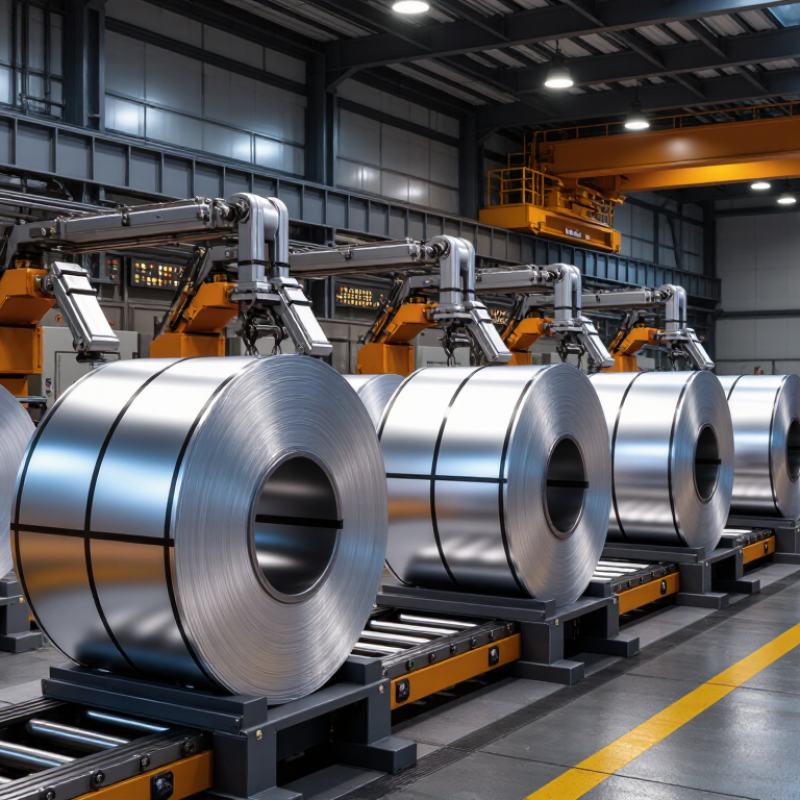
Aluminized steel coil is carbon steel coated with aluminum, often blended with a small amount of silicon. The coating creates a bright, heat-reflective surface. It also forms a thin aluminum oxide layer that slows further oxidation. This makes the coil useful for exhaust parts, heating equipment, roofing components, and industrial enclosures.
The manufacturing process begins with cleaning the steel strip. Oil, scale, and surface dirt must be removed carefully. The strip then passes through an annealing furnace, where controlled heat improves its structure and prepares the surface. It enters a molten aluminum-silicon bath at high speed. Rollers remove excess metal and help control coating thickness. Cooling follows. Leveling and recoiling produce a flat, usable coil.
Small details affect the final result. Bath chemistry, strip temperature, line speed, and wiping pressure require constant control. A coating may look uniform but still fail adhesion or thickness tests. That is why experienced producers check coating mass, tensile properties, surface defects, dimensions, and bend performance. I would not treat appearance as proof of quality. It is only an early clue. Even advanced lines can show minor variations, especially near coil edges. Reliable manufacturers record production data and provide test reports for each shipment. Buyers should compare those records with the intended forming, welding, and temperature conditions.
Aluminized steel coil combines a steel substrate with an aluminum-based coating, often containing silicon. This structure improves heat resistance, surface reflectivity, and protection against atmospheric corrosion. The coating can reflect radiant heat from exhaust systems, industrial ovens, and heating equipment. It also supports longer service life in dry, high-temperature environments. However, performance depends on coating weight, steel grade, thickness, and forming quality. A thicker coating is not always better.
Industrial applications include automotive heat shields, furnace panels, HVAC components, roofing sheets, and agricultural equipment. In exhaust assemblies, the coil must resist repeated heating and cooling cycles. In roofing, stable coating adhesion and controlled surface appearance matter more. Fabricators should examine edge cracking after bending, especially with tight radii. Small defects can grow during stamping. This is easy to underestimate.
Tips: Check coating mass, tensile strength, elongation, and bend performance before purchasing. Request test data for corrosion resistance and heat exposure. Match the coil grade to the operating temperature, not only the lowest price. Slitting accuracy also matters. Uneven edges can create waste and slow production. Supplier reliability should be judged through inspection records, traceability, delivery consistency, and technical support. No coating solves every problem. Design assumptions still need review.
Leading Aluminized Steel Coil Manufacturers Worldwide
Leading aluminized steel coil manufacturers combine controlled metallurgy with dependable production discipline. Their coils usually feature a steel substrate coated with aluminum and silicon. This structure supports heat resistance, surface durability, and improved corrosion performance. Experienced producers control coating weight, strip temperature, line speed, and cooling conditions. Small changes can affect forming behavior and surface quality.
From practical sourcing experience, buyers should inspect more than polished brochures. Reliable manufacturers provide mill certificates, coating test results, dimensional records, and traceable batch numbers. They also explain substrate grades, coating thickness, coil weight limits, and slitting tolerances clearly. Strong producers maintain laboratory testing and regular process audits. Their technical teams can discuss welding, stamping, bending, and high-temperature service requirements without vague promises.
Consistency matters most.
Worldwide suppliers may differ in equipment, energy control, and quality systems. A capable manufacturer adapts production to regional transport conditions and application standards. However, certifications alone cannot prove daily performance. Sample testing remains essential, especially for automotive parts, ventilation systems, roofing components, and industrial equipment. Some suppliers may offer attractive prices but weaker edge protection or uneven coating coverage. That risk deserves honest attention. Even established production lines can produce occasional defects, so corrective-action records should be reviewed. Buyers should compare measurable performance, communication speed, packaging quality, and after-sales responsibility before choosing a long-term partner.
| Market Region | Common Product Type | Typical Substrate Grades | Typical Thickness Range | Typical Coil Width Range | Aluminum Coating System | Common Standards | Main Applications | Key Selection Criteria |
|---|---|---|---|---|---|---|---|---|
| North America | Hot-dip aluminized steel | Low-carbon commercial steel; drawing-quality grades; structural grades | Approximately 0.40–3.00 mm | Approximately 600–1,850 mm | Aluminum-silicon alloy coating, commonly known as Type 1 | ASTM A463/A463M; applicable customer specifications | Automotive exhaust components, heat shields, furnaces, HVAC parts, roofing and building products | Heat resistance, corrosion resistance, formability, coating adhesion and surface finish |
| Europe | Continuously hot-dip coated coil | Commercial-quality and structural grades; cold-forming grades | Approximately 0.40–2.50 mm | Approximately 700–1,600 mm | Aluminum-silicon coating designated as AS in European product specifications | EN 10346; EN 10143; customer-specific automotive or construction requirements | Construction panels, industrial equipment, transport components, exhaust systems and thermal appliances | Dimensional tolerances, surface quality, bending performance, weldability and compliance documentation |
| East Asia | Aluminized cold-rolled steel coil | Commercial-quality, deep-drawing and high-strength low-alloy grades | Approximately 0.30–2.30 mm | Approximately 700–1,850 mm | Type 1 aluminum-silicon coating; selected markets also use higher-aluminum coating systems | JIS G3314; ASTM A463/A463M; EN 10346 for export orders | Automotive exhaust parts, kitchen appliances, heat exchangers, industrial ovens and electrical enclosures | High-temperature oxidation resistance, stamping behavior, coating uniformity and export certification |
| South Asia | General-purpose aluminized coil | Commercial steel and structural steel grades | Approximately 0.40–2.00 mm | Approximately 700–1,600 mm | Hot-dip aluminum-silicon coating with commercial and structural coating classes | ASTM A463/A463M; EN 10346; ISO 5002 where specified | Roofing, water heaters, solar thermal equipment, exhaust components and industrial ducting | Availability, coating mass, price-to-performance ratio, delivery format and local compliance |
| Southeast Asia | Export-oriented coated coil | Commercial-quality, structural and forming grades | Approximately 0.35–2.50 mm | Approximately 700–1,600 mm | Aluminum-silicon alloy coating; bare, oiled or passivated finishes may be available | ASTM A463/A463M; JIS G3314; EN 10346 | Automotive components, appliances, roofing accessories, HVAC systems and fabricated industrial parts | Surface protection during shipment, slit-width capability, forming performance and export packaging |
| Middle East and Africa | Construction and industrial coil | Commercial and structural grades, typically selected for fabrication | Approximately 0.45–2.50 mm | Approximately 700–1,600 mm | Hot-dip aluminum-silicon coating for atmospheric and elevated-temperature service | ASTM A463/A463M; EN 10346; project-specific standards | Roofing systems, industrial buildings, HVAC equipment, generators and heat-resistant fabricated parts | Outdoor durability, local climate exposure, coating mass, cut-edge protection and project certification |
| Latin America | Industrial and automotive coil | Low-carbon commercial, forming and structural grades | Approximately 0.40–2.50 mm | Approximately 700–1,600 mm | Type 1 aluminum-silicon coating; finish may be supplied dry, oiled or treated | ASTM A463/A463M; EN 10346; national construction requirements | Exhaust systems, roofing, appliances, agricultural equipment and industrial fabrication | Corrosion resistance, forming limits, local stocking, freight efficiency and technical support |
Comparing aluminized steel coil manufacturers starts with evidence, not polished websites. Ask for mill certificates, production dates, coating mass, steel grade, and tensile results. A reliable supplier explains whether its coil uses hot-dip aluminum-silicon coating and identifies the substrate chemistry. Request samples from actual production lots.
Small details matter. Inspect edge condition, surface streaks, coil telescoping, and protective wrapping. I have found that photographs can hide uneven coating and handling dents. That lesson is easy to overlook.
Compare products against the intended service environment. Automotive heat shields may need different formability from furnace panels or exhaust components. Check coating class, thickness tolerance, width tolerance, yield strength, elongation, and bend performance.
Ask how the manufacturer controls bath temperature, strip speed, and coating adhesion. Independent testing should follow recognized ASTM, EN, or JIS methods, with current editions clearly identified.
Do not accept “equivalent” without test conditions. It sounds reassuring. It proves little.
Quality also includes consistency after delivery. Review inspection frequency, traceability, nonconformance records, packaging design, and claims response time. A strong manufacturer can show batch-level records and explain corrective actions without defensiveness.
Compare lead times using realistic order sizes, not ideal quotations. Check whether tolerances remain stable across narrow and wide coils.
One weakness deserves attention: a supplier may pass laboratory tests yet struggle with forming on your line. Trial processing is essential. Record press force, cracking, springback, and surface behavior before approving regular shipments.
Top Aluminized Steel Coil Manufacturers Worldwide?
Global Market Trends and Future Development of Aluminized Steel Coil
Aluminized steel coil is moving beyond traditional exhaust systems. Demand is rising in heat shields, industrial ovens, HVAC equipment, and energy infrastructure. The material combines a steel core with an aluminum-silicon coating. This structure offers heat resistance, reflective performance, and reasonable corrosion protection. In factory audits, buyers often examine coating uniformity, edge quality, and forming behavior. These details can matter more than a supplier’s advertised production volume.
Leading manufacturers are investing in tighter process control and digital inspection. They monitor coating mass, surface defects, furnace temperature, and coil tension in real time. Automotive customers increasingly request thinner gauges without sacrificing durability. Construction buyers prefer stable dimensions and dependable delivery schedules. Regional production is also changing. New capacity is appearing closer to vehicle and appliance factories, reducing transport risks and inventory pressure.
Sustainability is becoming a purchasing requirement. Producers are testing lower-carbon steelmaking, renewable electricity, and higher recycled content. Traceable material data may soon influence contracts as strongly as price. However, future forecasts are not always reliable. Energy costs, trade restrictions, and uneven infrastructure can quickly change regional demand. Some manufacturers still provide limited information about coating durability after repeated thermal cycles. That gap deserves more independent testing. Buyers should compare laboratory results with actual service conditions, including salt exposure, bending, welding, and long-term heating. Performance claims need evidence.
Scan QR code to download the app
LSP Products was founded by plumbers over 50 years ago with a focus on unparalleled innovation, superior product quality, and best-in-class service to the plumbing industry. Our primary focus is the new construction market where we develop products that make installations easy and provide significant cost savings to the plumbing/mechanical contractor. LSP has a manufacturing facility located in Monterrey, Mexico and a distribution center in Dallas, Texas. We are proud to offer many products designed and made in North America… About LSP
Submit the form below to receive the document via email.