How to Find a Reliable Custom Rubber Springs Supplier?
Finding a reliable Custom Rubber Springs Supplier is not simply about comparing prices. It requires practical evaluation, technical understanding, and careful communication. Rubber springs may support machinery, isolate vibration, absorb shocks, or control movement. Their performance depends on compound selection, geometry, load capacity, temperature, and operating environment.
An experienced buyer should ask how the supplier develops each design. Can the engineering team review drawings, mounting space, and expected loads? Does the factory provide material data, compression testing, fatigue testing, and dimensional inspection? These details reveal more than a polished website. A dependable supplier should also explain rubber hardness, bonding methods, tolerances, and expected service life in clear language. Ask for samples. Check the surface.
Manufacturing experience matters, but evidence matters more. Look for traceable materials, documented quality procedures, consistent inspection records, and relevant certifications. Reference projects can also show whether the supplier understands demanding industries, such as industrial equipment, rail systems, construction machinery, or automotive applications. Still, no checklist is perfect. A supplier may offer impressive test reports yet communicate slowly after the order. That weakness can become expensive when a design changes.
Request a complete quotation with tooling costs, sample schedules, production capacity, packaging details, and after-sales support. Compare technical responses, not only unit prices. A trustworthy Custom Rubber Springs Supplier should welcome reasonable questions and identify risks before production begins. The best partnership develops through honest feedback, measurable requirements, and steady verification. Small details matter. Reliability is built, not promised.
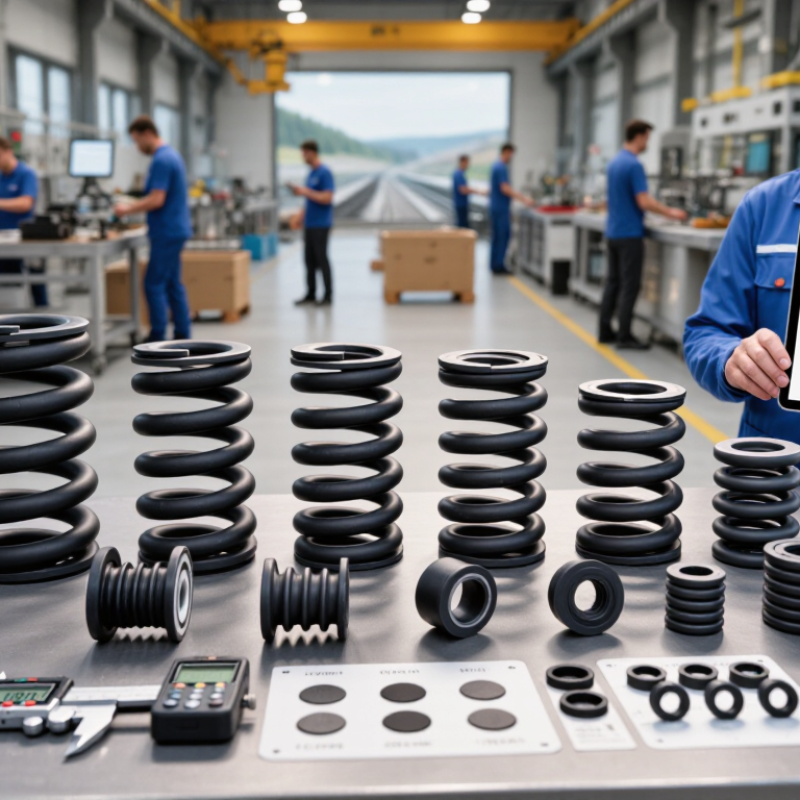
Define Your Custom Rubber Spring Requirements
Before contacting a supplier, describe what the rubber spring must do in service. State the working load, peak load, movement, and target life in cycles. Include compression, shear, torsion, or combined loading. These details prevent a supplier from guessing the design.
Measure the available space carefully. Record the outside diameter, height, mounting holes, and allowable deflection. A few millimeters can change spring performance. Specify the operating temperature range and exposure to oil, water, dust, ozone, or sunlight. Select a suitable rubber compound and hardness range, such as 50 to 70 Shore A. If metal inserts are required, explain their material, coating, and bonding position. A simple sketch with tolerances often communicates more than a long email.
Your requirement sheet should also define testing expectations. Ask for load-deflection data, compression-set results, fatigue testing, and dimensional inspection records. Request material certificates and sample approval before production. Early estimates are often wrong. A design may meet the load target but fail after repeated movement or temperature changes. Leave room for adjustment after prototype testing. The supplier should explain assumptions, identify risks, and confirm what remains uncertain. This exchange reveals practical engineering experience, not just sales language. Keep the final drawing, test conditions, and approved sample together. That record supports consistent quality during future orders.
How to Find a Reliable Custom Rubber Springs Supplier?
Define Your Custom Rubber Spring Requirements
A supplier can provide a more accurate design and quotation when the required load-deflection behavior is clearly defined. This engineering profile shows a progressively increasing compression load, which is typical of elastomeric springs because rubber stiffness generally rises as deflection increases. In addition to the target load curve, specify working deflection, maximum load, temperature range, environmental exposure, mounting conditions, and required service life.
Evaluate Supplier Experience and Manufacturing Capabilities
A reliable custom rubber springs supplier should show practical experience, not only a polished website. Ask how many years they have produced rubber springs for demanding applications. Request examples with similar load, deflection, temperature, and space requirements. Useful suppliers can explain failures they have encountered and how they corrected them.
Review their manufacturing capabilities in detail. Can their engineers select suitable rubber compounds for oil, heat, moisture, or repeated compression? Do they use controlled mixing, accurate molding, and consistent curing processes? Visit the production area if possible. Look for clean workstations, calibrated measuring tools, organized molds, and clear material labels. Ask to inspect sample inspection records, dimensional reports, and batch traceability documents. A dependable supplier should also explain its testing equipment. Compression testing, hardness checks, aging tests, and fatigue testing can reveal weaknesses before production begins.
Experience is visible in questions, too. Skilled engineers will ask for load curves, mounting conditions, tolerances, and expected service life. They should provide prototypes before approving a large order. However, no supplier is perfect. I once underestimated the effect of installation misalignment, and the spring performed differently than laboratory results. That mistake taught me to review the full assembly, not just the rubber part. Be cautious when a supplier promises identical performance without discussing design limits, inspection methods, or production risks. Clear records and honest technical feedback are stronger signs of reliability than confident claims.
Check Material Quality, Testing, and Industry Compliance
A reliable custom rubber springs supplier should prove material quality before discussing price. Ask for the rubber grade, hardness range, tensile strength, and compression set results. These figures show how the spring may behave under repeated loads. I also inspect sample surfaces for cracks, air pockets, uneven edges, and poor bonding. Small defects can become serious during vibration.
Tips: Request a material certificate for each production batch. Check whether testing uses documented methods and calibrated equipment. Ask for samples tested at your real temperature and load conditions. A supplier’s general report may not represent your application. I have seen impressive samples fail after heat exposure, so one test is never enough.
Testing should include dimensional checks, fatigue cycles, load deflection, aging, and resistance to oil or moisture when relevant. Request raw data, not only a pass statement. The supplier should explain failed samples and corrective actions clearly. That honesty matters. Industry compliance also requires traceable records, controlled production, and suitable workplace procedures. Confirm applicable technical standards for your market, then verify certificates with the issuing organization. Compliance paperwork can look complete while missing revision dates or product scope. I would treat unclear documents as a warning, not a minor inconvenience.
Review Prototypes, Pricing, Lead Times, and Production Flexibility
Finding a reliable custom rubber springs supplier requires more than comparing online promises. Request prototypes made with the intended rubber grade, dimensions, and load requirements. Inspect their surfaces, bonding points, and compression recovery. A working sample should survive repeated testing, not just look accurate. Ask how engineers record changes after each prototype review. Clear documentation shows practical experience.
Pricing needs careful context. One common purchasing mistake is choosing the lowest quote too quickly. Tooling, testing, packaging, and material waste may appear later. Request an itemized quotation with tooling fees and volume breaks. Compare equivalent specifications, not attractive totals. Lead times also deserve proof. Confirm prototype schedules, production capacity, inspection dates, and shipping preparation. A supplier should explain possible delays honestly. Vague promises are warning signs.
Tips: Ask for a pilot order before committing to large production. Check whether the supplier can adjust hardness, dimensions, or tooling when test results change. Production flexibility matters when forecasts move or a design needs correction. However, flexibility should not mean uncontrolled changes. Require written approvals, revised drawings, and sample sign-off. A useful question is simple: “What happens if the first batch fails?” The answer may reveal more than a sales presentation. Allow extra time for testing; tight schedules often encourage decisions that later need reconsideration.
How to Find a Reliable Custom Rubber Springs Supplier? - Review Prototypes, Pricing, Lead Times, and Production Flexibility
Benchmark note: The figures above are indicative industry ranges for custom molded rubber springs and similar elastomeric components. Actual pricing and lead times vary according to rubber compound, spring geometry, load and deflection requirements, tolerances, tooling complexity, testing, packaging, order quantity, and shipping terms. Obtain a written quotation and an approved prototype before placing a production order.
Confirm Communication, Quality Control, and Long-Term Support
A reliable custom rubber springs supplier communicates before sending a quotation. Ask for load ratings, deflection targets, temperature range, and installation space. A technical drawing should show tolerances clearly. Do not accept vague promises. In the World Bank’s 2023 Logistics Performance Index, 4,090 logistics professionals assessed supply chains across 139 economies. The report highlights reliability and shipment tracking as practical performance measures. Your supplier should provide both.
Quality control needs visible evidence. Request material specifications, hardness results, dimensional inspection records, and batch traceability. For rubber springs, compound selection affects fatigue life, compression behavior, and resistance to oil or heat. ISO’s 2022 Survey recorded more than 1.2 million ISO 9001 certificates worldwide, but certification alone proves little. Check whether the supplier applies controlled mixing, mold inspection, and final testing. A sample may pass while production later drifts. That risk is real.
Long-term support matters after delivery. Confirm replacement procedures, corrective-action reports, spare tooling policies, and response times. Ask who handles technical questions when the original sales contact leaves. Keep written records of design changes. My practical preference is a supplier that admits one limitation and proposes a test plan. Perfect claims feel less credible. Quarterly reviews can expose wear patterns, installation errors, or changing loads before failures spread. Reliability is built through repeated evidence, not one impressive sample.
 Skip to main content