Choosing the right switching component can shape a heating system’s safety, comfort, and operating cost. An Electric Heat Relay offers a practical way to control electrical heating loads through a separate control signal. This arrangement helps thermostats, controllers, and automation systems manage higher current circuits without carrying the full load themselves. The relay acts like a carefully timed gate.
In a real installation, details matter. A technician may inspect the heater’s voltage, current rating, switching frequency, enclosure, and available space. The relay should match the system’s electrical characteristics, not merely its label. Proper terminals, secure wiring, ventilation, and overcurrent protection also deserve attention. A reliable supplier should provide clear specifications, testing information, and installation guidance. Local electrical requirements must be checked by a qualified professional.
An Electric Heat Relay can improve control and simplify system design, but it is not a universal solution. Mechanical relays may create audible clicks and contact wear. Solid-state options can run quietly, yet they may produce heat and require suitable heat dissipation. That trade-off is easy to overlook. Even a well-rated relay can fail when installation conditions are misunderstood or maintenance is ignored. For that reason, this guide examines how electric heat relays work, where they fit, and which selection factors deserve careful review. The goal is not to promise perfection. It is to support safer decisions based on measured loads, manufacturer data, and practical field experience.
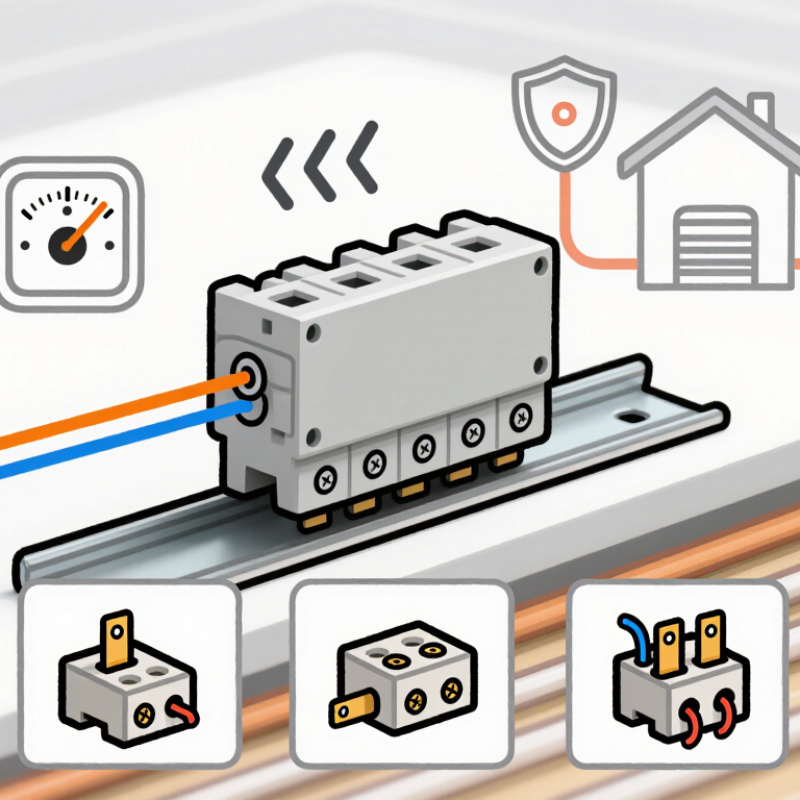
An electric heat relay is an electrically controlled switch that manages power to a heating load. It usually contains a coil, movable contacts, and an insulated housing. When a thermostat or controller sends a low-voltage signal, the coil creates a magnetic field. The contacts then close and energize the heater. When the signal stops, the contacts open and interrupt the circuit.
This separation protects the control device from the heater’s higher current. It also allows a small sensor to operate a larger heating circuit. Electric heat relays are used in air handlers, wall heaters, ovens, industrial cabinets, and temperature-control panels. Selection requires more than matching voltage. Check the contact rating, coil voltage, switching duty, enclosure temperature, and expected inrush current. A relay rated for ten amps may fail quickly with a poorly matched heating element.
Heat matters.
During inspections, loose terminals often cause discoloration, buzzing, or intermittent heating. These symptoms should not be ignored. The relay may be sound, while the connection is deteriorating. Solid-state relays can reduce mechanical noise, but they still require correct heat dissipation and load protection. I have found that troubleshooting becomes harder when installers assume every relay failure comes from the relay itself. Wiring errors, oversized loads, and weak ventilation can produce similar damage. A careful technician verifies the circuit with appropriate test equipment and follows the system’s electrical documentation before replacing parts.
| Data Dimension | Typical Information | Why It Matters |
|---|---|---|
| Definition | An electric heat relay is a switching device that allows a low-power control signal to turn an electric heating load on or off. | It separates the control circuit from the higher-power heater circuit and enables automated temperature control. |
| Primary Function | Switches electrical power to resistance heaters, heating elements, heat lamps, cabinet heaters, and similar loads. | The heater can be controlled by a thermostat, programmable controller, timer, or building-management system. |
| Common Relay Types | Electromechanical relays use physical contacts; solid-state relays use semiconductor switching components. | The choice affects switching noise, service life, heat generation, leakage current, and switching speed. |
| Control Voltage | Common control options include 12 V DC, 24 V DC, 24 V AC, 120 V AC, and 230 V AC, depending on the system design. | The relay coil or input must match the controller output voltage to operate correctly and safely. |
| Load Voltage | Heating loads may operate on low-voltage or line-voltage circuits, commonly including 120 V, 208 V, 230 V, 240 V, 277 V, or 480 V AC systems. | The relay contact or output rating must be suitable for the heater supply voltage and electrical system configuration. |
| Current Rating | The required rating is determined by the heater's operating current, calculated as power divided by voltage for a single-phase resistive load. | Selecting an adequate current rating helps prevent contact damage, overheating, nuisance trips, and premature failure. |
| Switching Method | Relays may switch one pole, two poles, or multiple poles, depending on whether the heater circuit is single-phase or multi-phase. | Correct pole configuration ensures that the intended conductors are switched and that the installation meets applicable electrical requirements. |
| Temperature-Control Compatibility | A relay can be controlled by thermostats, thermocouple or resistance-temperature detector controllers, and electronic temperature controllers. | Compatibility supports automatic heating cycles and helps maintain the required temperature range. |
| Electromechanical Relay Characteristics | Uses a coil and movable contacts; it has very low off-state leakage but produces audible contact movement and experiences mechanical wear. | It can be practical for straightforward on/off heating applications where switching frequency is moderate. |
| Solid-State Relay Characteristics | Uses semiconductor devices with no moving contacts, enabling silent operation and frequent switching. | It is often suitable for rapid temperature cycling, but it requires proper heat dissipation and may have off-state leakage current. |
| Switching Frequency | Resistance heaters may be controlled by intermittent on/off cycles, time-proportional control, or zero-cross switching. | A relay designed for the actual switching frequency can improve temperature stability and service life. |
| Electrical Protection | Typical systems require appropriately rated circuit protection, over-temperature protection, grounding, and correctly sized conductors. | A relay is not a substitute for circuit breakers, fuses, disconnects, or independent safety controls. |
| Heat Dissipation | Solid-state relays generate heat during operation because their output devices have a small voltage drop. | A suitable heat sink, thermal interface, ventilation, and installation clearance may be necessary. |
| Typical Applications | Electric ovens, duct heaters, HVAC auxiliary heat, industrial enclosures, incubators, water-heating systems, and process equipment. | The relay provides a practical interface between low-power control equipment and electric heating loads. |
| Selection Checklist | Verify control voltage, load voltage, current, number of poles, switching frequency, ambient temperature, enclosure requirements, protection, and applicable electrical codes. | Matching these parameters helps achieve reliable operation and supports safe installation by a qualified professional. |

Scan QR code to download the app
 Skip to main content