Choosing a dependable Abc Cable manufacturer in China requires more than comparing online prices. Product pages can look polished. Factory capability must be verified through evidence.
This guide examines how leading Chinese cable manufacturers design, test, and supply Abc Cable products. It considers conductor materials, insulation quality, voltage ratings, current capacity, and environmental performance. It also reviews factory certifications, laboratory facilities, quality-control procedures, and production traceability. A reliable supplier should explain its testing process clearly. Typical evidence may include conductor resistance reports, insulation tests, dimensional checks, and batch records. These details matter when cable drums arrive at a construction site and installation schedules cannot slip.
Real project experience adds another layer. A capable manufacturer should discuss cable selection for distribution networks, industrial facilities, outdoor systems, and demanding weather conditions. Packaging deserves attention too. Properly sealed ends, strong wooden drums, readable labels, and accurate lengths reduce preventable problems. Supplier communication also matters. Technical drawings, samples, lead-time updates, and after-sales support often reveal operational maturity.
No supplier is perfect. Even a well-managed factory may face material delays or specification misunderstandings. That is why careful buyers should confirm requirements in writing and request independent verification when needed. Standards and certifications are useful, but they do not replace practical inspection. This guide aims to connect published claims with measurable performance, transparent documentation, and realistic procurement decisions. Some conclusions may require further checking as products, regulations, and market conditions change. That limitation is worth acknowledging. Reliable sourcing depends on evidence, consistent communication, and professional judgment.
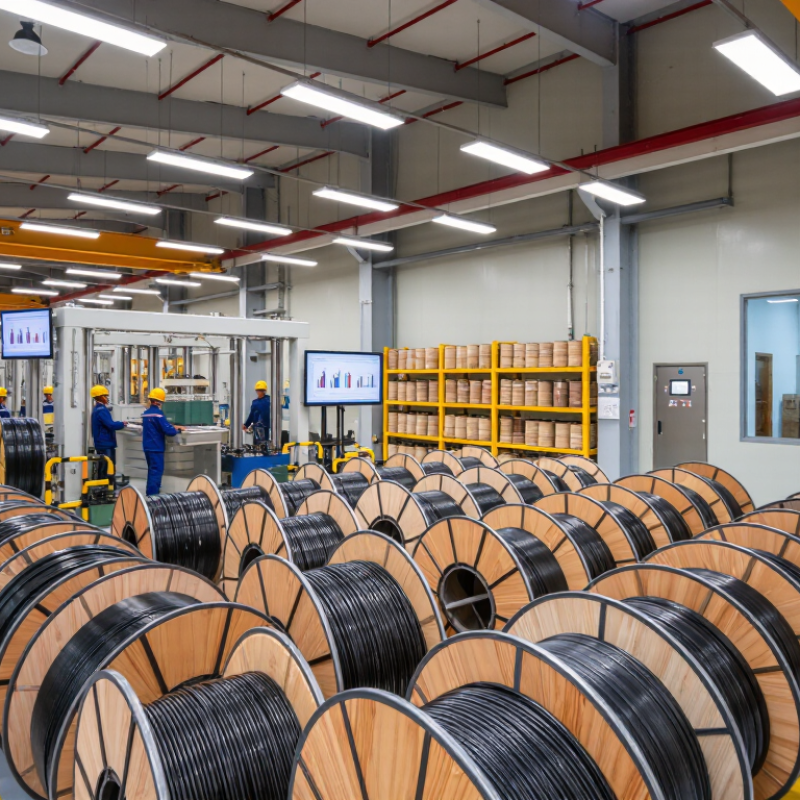
China Top ABC Cable Manufacturer and Supplier Guide
What Is ABC Cable and How Does It Work?
Aerial bundled cable, or ABC cable, combines several insulated conductors around a supporting messenger. The bundle hangs from poles and carries low-voltage electricity above streets. Unlike bare overhead wires, its insulation reduces accidental contact and phase-to-phase faults. The design also needs fewer crossarms, creating a cleaner line corridor.
In field inspections, installers usually check conductor insulation, messenger strength, sag, and connector temperature. ABC cable performs well in narrow roads and dense housing areas. It can tolerate branches better than exposed conductors, but it is not maintenance-free. Poorly tightened fittings may overheat. The cable also needs correct tension and clearance. Small mistakes matter.
The International Energy Agency’s Electricity Grids and Secure Energy Transitions report says annual grid investment must rise from about 300 billion dollars to over 600 billion dollars by 2030. It also estimates that 80 million kilometers of grids may be added or refurbished by 2040. These figures explain the growing need for compact, reliable distribution systems. However, choosing ABC cable only by price is a weak method.
Tips: Confirm voltage, conductor size, insulation material, messenger design, and applicable IEC requirements. Ask for routine test records and installation guidance. A cable can look robust and still fail when accessories are mismatched.
| Data Dimension | Typical ABC Cable Data | Technical Explanation |
|---|---|---|
| Cable Type | Aerial Bundled Cable (ABC) | Several insulated conductors are twisted together into one compact overhead cable assembly. |
| Primary Application | Low-voltage overhead power distribution | Commonly used for distribution lines, service connections, rural electrification, and connections between poles and buildings. |
| Common Voltage Class | Up to 0.6/1 kV AC for many low-voltage systems | The exact rated voltage must be confirmed against the applicable product standard, utility specification, and local electrical regulations. |
| Conductor Material | Stranded aluminium or copper | Aluminium is widely selected for overhead distribution because of its low density and cost; copper may be specified where higher conductivity or compact dimensions are required. |
| Conductor Construction | Circular stranded conductors | Stranding improves flexibility and helps the cable withstand bending during installation and service. |
| Insulation Material | XLPE or another approved thermoplastic insulation | Cross-linked polyethylene (XLPE) provides electrical insulation, weather resistance, and a typical continuous conductor operating temperature of up to 90°C when permitted by the applicable standard. |
| Core Arrangement | Two-core, three-core, four-core, or multi-core configurations | The arrangement depends on whether the circuit requires two conductors, three-phase conductors, a neutral, or a dedicated street-lighting core. |
| Neutral or Messenger | Bare or insulated neutral; separate supporting messenger in some designs | The neutral may carry current and also provide mechanical support. Some cable designs use a dedicated messenger for mechanical loading. |
| Typical Conductor Cross-Sections | Approximately 16–240 mm², depending on the design | The required cross-section is selected from load current, voltage drop, short-circuit withstand, span, installation conditions, and allowable temperature rise. |
| How It Works | Insulated conductors transmit electrical power while the bundle is supported by pole-mounted hardware | Electrical insulation separates the energized conductors, while suspension and anchoring fittings transfer the cable’s weight and mechanical forces to the poles. |
| Current-Carrying Capacity | Varies by conductor size, material, temperature, and installation conditions | Ampacity must be taken from the applicable calculation method or product datasheet; it should not be estimated from conductor area alone. |
| Voltage Drop | Depends on load current, cable impedance, conductor size, and route length | Long service runs or heavily loaded feeders may require a larger conductor to keep voltage within the permitted design limit. |
| Mechanical Support | Suspension clamps, anchor clamps, brackets, and pole fittings | Accessories must match the cable diameter, messenger type, rated tensile load, span length, wind, ice, and installation angle. |
| Protection Against Weather | Weather-resistant insulated outer surfaces | The insulation is designed for outdoor exposure, but ultraviolet resistance, moisture performance, and temperature limits must be verified for the selected construction. |
| Key Installation Benefit | Compact layout with fewer crossarms and reduced phase-to-phase exposure | The bundled arrangement can simplify pole-top construction and reduce the likelihood of contact between conductors compared with widely separated bare conductors. |
| Common Reference Standards | IEC 60502-1, IEC 60228, EN 50483, or equivalent national standards | The correct standard depends on the cable construction, voltage level, market, and utility requirements. Compliance should be confirmed through test documentation. |
| Selection Checklist | Voltage, conductor material, cross-section, core arrangement, insulation, span, load, and accessories | A complete specification should also define operating temperature, short-circuit requirements, environmental conditions, applicable standards, packaging, and required inspection documents. |
Note: ABC cable ratings and dimensions vary by construction and standard. Final cable selection should be verified by a qualified electrical engineer using the project load, installation conditions, and applicable local regulations.
Scan QR code to download the app
 Skip to main content