10 Best Valve Actuator Brands for Global Buyers?

Choosing the right Valve Actuator brand can influence plant safety, uptime, energy use, and maintenance costs. Global buyers face a crowded market, with electric, pneumatic, and hydraulic solutions serving different operating conditions. A strong brand must offer more than attractive specifications. It should provide dependable torque, accurate control, useful diagnostics, and responsive technical support.

Greg McMillan, a recognized process-control engineer, has stated, “The final control element is where the control loop meets the process.” This observation explains why actuator selection deserves careful attention. An actuator may look powerful on paper, yet perform poorly with oversized valves, unstable air supply, corrosion, or frequent cycling. Real-world details matter.

This guide examines 10 leading Valve Actuator brands for international buyers. It considers product range, control accuracy, enclosure protection, certification support, service networks, and long-term reliability. Application fit remains central. A compact electric actuator may suit water treatment, while a pneumatic model may better serve fast emergency isolation. Offshore users may prioritize corrosion resistance and hazardous-area certification. Food-processing plants may require cleanable designs and strict material control.

No ranking is perfect. Buyer priorities differ.

Some brands excel in severe-service applications. Others offer broader distribution or simpler maintenance. Pricing can also mislead when spare parts, commissioning, and downtime are ignored. The evaluation therefore combines published technical information with practical purchasing concerns. Readers should still verify current specifications, local support, and project requirements before making a final decision. That extra check can prevent an expensive mismatch.
10 Best Valve Actuator Brands for Global Buyers?

What Is a Valve Actuator and How Does It Work?

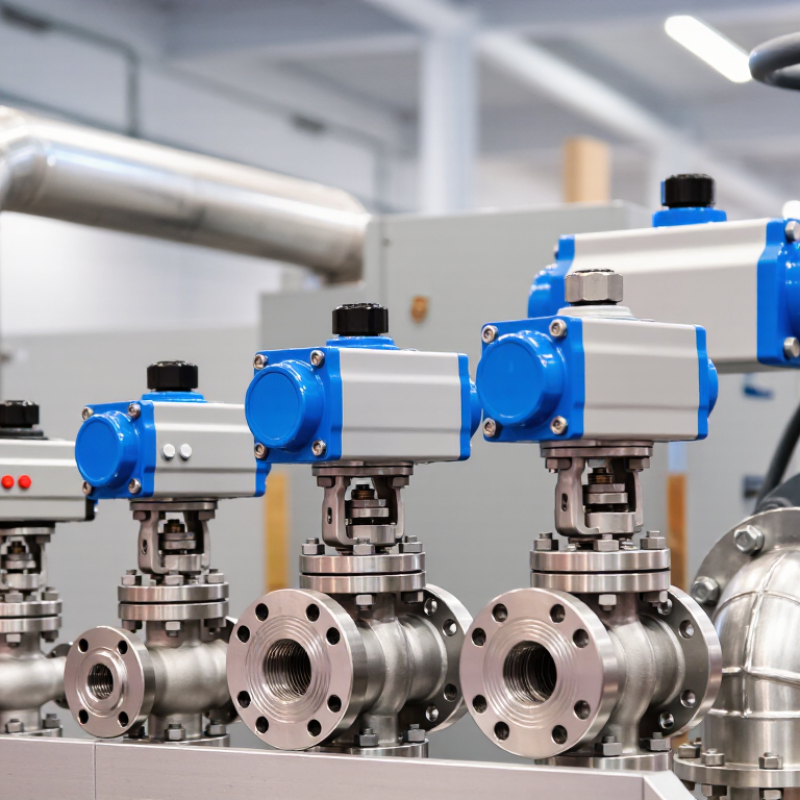
A valve actuator is the device that moves a valve without direct hand operation. It converts electrical, pneumatic, or hydraulic energy into controlled rotary or linear motion. In a typical electric unit, a motor turns gears connected to the valve stem. Limit switches stop movement at fully open or closed positions. Position sensors can report partial opening to a control system.

The actuator receives a signal from a switch, controller, or process instrument. A simple on-off signal drives the valve between two set points. A modulating signal allows finer control, such as maintaining pressure in a pipeline. Electric models suit accurate automation, while pneumatic models often respond quickly in industrial facilities. Hydraulic designs provide strong force for large valves.

Selection requires more than matching the connection size. Check required torque, valve type, operating temperature, duty cycle, enclosure protection, and available power. Outdoor installations may need corrosion-resistant housings and reliable cable entries. In dusty or wet areas, a suitable IP rating matters. A manual override can be valuable during power loss.

I have seen projects fail because torque was estimated from normal conditions only. Startup friction can be higher. That detail is easy to miss. Buyers should also verify feedback signals, fail-position behavior, testing records, and maintenance access. Local service capability remains important, even when the actuator appears technically perfect.
Key Criteria for Comparing Global Valve Actuator Brands

Key Criteria for Comparing Global Valve Actuator Brands

Global buyers should compare valve actuators by application, not catalogue size. A 2024 Grand View Research report estimated the valve actuator market at more than USD 8 billion. Growth is expected through 2030, driven by water, energy, and process industries. Yet market size does not prove product quality. Check required torque, operating speed, duty cycle, and control signal compatibility. A unit may fit the valve and still fail under frequent cycling. That mistake is expensive.

Environmental protection matters. Look for documented IP ratings, temperature limits, corrosion resistance, and compliance with relevant ISO and IEC requirements. For hazardous areas, request current certificates and installation limits. Do not accept vague claims. Ask for tested service-life data, maintenance intervals, and failure-response performance. A fail-safe function can protect equipment, but only when the power-loss design matches the process risk. Small details matter here.

Supply reliability deserves equal attention. The World Bank’s Global Economic Prospects reports continued uncertainty in trade and industrial investment, so spare-parts access can affect lifecycle cost. Compare regional warehouses, lead times, manuals, training, and technical response. Total cost includes commissioning, energy use, inspections, and downtime. Some buyers focus too heavily on purchase price. I have seen that approach backfire. Still, published lifecycle figures are not always transparent, so buyers should verify assumptions with site data and independent testing.

10 Leading Valve Actuator Brands for International Buyers

Choosing among the ten leading valve actuator brands for international buyers requires more than comparing prices. A reliable actuator must match valve torque, operating cycles, fluid conditions, and local power systems. In field evaluations, engineers often check enclosure ratings, manual override access, position feedback, and emergency behavior. Small details matter. A poorly sized actuator may stall, overheat, or damage the valve stem.

The strongest global suppliers usually offer electric, pneumatic, and hydraulic options for water treatment, energy, chemical processing, and industrial automation. Buyers should examine documented torque curves, temperature limits, corrosion protection, and control compatibility.

Third-party testing and recognized certifications can improve confidence across different markets. However, certification alone does not guarantee performance. Installation quality matters too.

After-sales support deserves equal attention. Spare-part availability, multilingual manuals, remote diagnostics, and regional technicians can reduce expensive downtime. Ask how quickly replacement boards, seals, and gear components can arrive. Review warranty exclusions carefully.

No ranking is flawless. One brand may excel in harsh outdoor environments, while another performs better in precise modulating service. Budget pressure can also tempt buyers to overlook lifecycle costs. That mistake becomes visible when maintenance visits multiply and production stops.

A practical comparison should include purchase price, energy use, commissioning time, service access, and expected operating life.

Comparing Actuator Types, Applications, and Brand Strengths

Choosing among the 10 best valve actuator brands requires more than comparing price or catalog ratings. Actuator type must match the valve, process, and operating environment. Electric actuators suit plants with reliable power and precise modulation. Pneumatic units respond quickly and perform well in hazardous process areas. Hydraulic actuators deliver high torque for large valves, but they need clean fluid systems and careful maintenance. I have seen small electric units overheat when their duty cycle was underestimated.

Quarter-turn actuators commonly operate butterfly and ball valves. Linear actuators fit globe and diaphragm valves requiring controlled stem movement. For water treatment, corrosion-resistant housings and clear position feedback matter. In chemical service, sealing quality and temperature limits deserve closer attention. Fail-safe operation may require springs, backup power, or stored air. It depends on the process risk.

Brand strength appears in more than manufacturing scale. Strong suppliers usually provide repeatable torque data, useful sizing software, responsive technical support, and accessible spare parts. Factory testing records build confidence, especially for remote projects. Local service coverage can matter more than a famous name. Still, specifications are not always perfectly comparable. Some ratings assume ideal conditions, which rarely exist in a dusty plant. Buyers should check enclosure protection, cycle life, noise, calibration methods, and communication protocols before approval. A practical site trial can reveal problems that a polished brochure hides.

10 Best Valve Actuator Brands for Global Buyers? — Comparing Actuator Types, Applications, and Brand Strengths

Brand-neutral comparison of actuator configurations for international valve buyers. The ranking reflects application suitability, control capability, safety behavior, maintainability, and global project practicality rather than company or brand performance.
No. Actuator Configuration Valve Movement Typical Valve Applications Typical Power Source Indicative Output Range Control Capability Key Strengths Important Selection Checks Common Standards / Ratings
01 Electric Quarter-Turn Actuator 90° rotary Ball, butterfly, plug, and quarter-turn damper valves Electric motor Approximately 20–4,000 N·m On/off or modulating, depending on the control package Clean operation
Precise positioning, easy integration with PLC and DCS systems, and no instrument-air requirement
Duty cycle, ambient temperature, enclosure protection, emergency operation, and correct valve torque margin IEC 60529 IP ratings; IEC 60034 motor principles; IEC 61000 EMC requirements where applicable
02 Electric Multi-Turn Actuator Multiple rotary turns Gate, globe, rising-stem, and multi-turn control valves Electric motor with gearbox Approximately 10–10,000 N·m at the output Open/close, throttling, or position control Versatile
Suitable for large valves, accurate travel control, and locations without compressed air
Stem thrust, travel length, seating load, operating speed, back-driving behavior, and actuator-to-valve interface IEC 60529 enclosure classification; ISO 5210 interface commonly used for multi-turn valves
03 Pneumatic Double-Acting Actuator 90° or linear movement Ball, butterfly, plug, damper, and process control valves Compressed air in both directions Approximately 20–100,000 N·m for rotary designs Fast on/off operation; modulating control with a positioner Fast response
Simple mechanical design, high cycle capability, and suitability for hazardous areas with appropriate certification
Available air pressure, air quality, breakaway torque, required stroking time, and behavior during loss of air or power ISO 5211 mounting interface; ISO 8573-1 compressed-air quality; hazardous-area certification when required
04 Pneumatic Spring-Return Actuator 90° or linear movement Emergency shutdown, fuel-gas isolation, process safety, and fire-safe valve systems Compressed air plus mechanical spring Approximately 20–20,000 N·m for common rotary packages On/off or modulating with suitable accessories Fail-safe action
Automatically moves to a defined fail-open or fail-closed position after loss of air
Spring direction, fail position, spring-end torque, shutdown time, supply pressure, and partial-stroke testing requirements IEC 61508 principles for functional safety; ISO 5211 interface; hazardous-area requirements as specified by the project
05 Hydraulic Quarter-Turn Actuator 90° rotary Large pipeline ball valves, subsea valves, hydrocarbon isolation, and high-pressure services Pressurized hydraulic fluid Approximately 1,000–1,000,000 N·m On/off, emergency shutdown, or proportional control Very high torque
High power density, reliable operation on large valves, and effective control where pneumatic power is insufficient
Fluid compatibility, hydraulic cleanliness, accumulator sizing, leakage control, temperature range, and maintenance access ISO 5211 interface commonly used; project-specific pipeline, pressure-equipment, and functional-safety requirements
06 Electro-Hydraulic Fail-Safe Actuator Rotary or linear Pipeline emergency shutdown, compressor stations, offshore facilities, and critical isolation valves Electric pump with hydraulic accumulator or stored-energy system Approximately 500–500,000 N·m Remote on/off, emergency shutdown, partial-stroke, and position feedback Stored-energy safety
Combines electrical control with hydraulic force and can maintain a defined safety position during power loss
Fail action, response time, accumulator autonomy, hydraulic leakage, diagnostic coverage, and hazardous-area certification IEC 61508 or IEC 61511 project requirements; enclosure and area-classification requirements depend on installation
07 Electric Linear Actuator Direct linear stroke Globe, control, diaphragm, pinch, and linear damper valves Electric motor, screw, or electro-mechanical drive Approximately 1–100 kN thrust On/off or accurate modulating control Direct stroke control
Good positioning accuracy, reduced pneumatic infrastructure, and useful feedback diagnostics
Required thrust, stroke length, seating force, speed, duty cycle, backlash, and protection against over-travel IEC 60529 IP ratings; EMC and machinery safety requirements according to the equipment design
08 Pneumatic Linear Actuator Direct linear stroke Globe and control valves, dampers, and process regulating equipment Compressed air with diaphragm or piston mechanism Approximately 0.5–100 kN thrust Modulating control with a pneumatic or electro-pneumatic positioner Excellent control fit
Widely used for process throttling, fast response, and comparatively simple fail-action arrangements
Spring range, air consumption, thrust at minimum pressure, valve travel, positioner performance, and fail-open or fail-closed action IEC 60534 control-valve principles; ISO 8573-1 compressed-air quality; hazardous-area requirements when applicable
09 Manual Override Electric Actuator Quarter-turn or multi-turn Water treatment, HVAC, utility systems, and plants requiring local operation during power interruption Electric motor with handwheel or declutch mechanism Approximately 20–10,000 N·m Local manual operation plus remote electric control Operational flexibility
Allows commissioning, maintenance, and emergency positioning without removing the actuator
Manual override safety, handwheel effort, interlocking, local/remote selector logic, limit switches, and available enclosure space ISO 5210 or ISO 5211 interface depending on valve movement; IEC 60529 enclosure ratings
10 Smart Modulating Actuator Package Quarter-turn, multi-turn, or linear Water networks, power generation, chemical processing, building services, and automated process lines Electric, pneumatic, or electro-hydraulic drive with digital controls Application-dependent; commonly 20–10,000 N·m or 1–100 kN thrust Continuous positioning, remote diagnostics, digital communication, and configurable control curves Data-ready
Supports condition monitoring, asset management, position feedback, alarms, and predictive maintenance strategies
Communication protocol, cybersecurity, calibration, control resolution, fail behavior, network redundancy, and lifecycle support IEC 62443 considerations for industrial cybersecurity; IEC 60529; project-specific fieldbus or industrial Ethernet requirements

Buyer note: Output ranges are indicative engineering ranges rather than universal limits. Final sizing should use the valve manufacturer’s required breakaway, running, seating, and unseating torque or thrust, with allowance for process conditions, temperature, pressure, corrosion, duty cycle, and the specified safety position.

How to Choose the Right Valve Actuator Supplier Worldwide

Choosing a valve actuator supplier worldwide requires more than comparing catalog prices. Grand View Research estimated the global valve actuator market at about USD 8.5 billion in 2023, with continued growth through 2030. This expansion increases supplier choices, but quality can vary sharply. Request test records, material certificates, torque curves, and documented factory inspections. Do not rely on polished websites alone.

Start with application evidence. Confirm valve torque, operating temperature, cycle frequency, enclosure rating, and failure position. ISO 5211 mounting compatibility can simplify installation. For hazardous or outdoor areas, verify the relevant certification and ingress protection rating. Ask whether the supplier can provide spare gears, limit switches, seals, and local technical support. A remote troubleshooting promise is not enough.

Check lifecycle value, not only the quotation. MarketsandMarkets has reported steady demand for automated valve systems, driven by water treatment, energy, and process industries. That demand makes after-sales capacity increasingly important. Compare response times, warranty terms, calibration procedures, and expected service intervals. A low purchase price can still become expensive after one failed actuator.

Supplier audits reveal practical details. Inspect assembly records, traceability systems, and final testing equipment. Request references from facilities with similar pressure and duty conditions. Some buyers overlook ambient temperature changes across regions. That is a costly oversight. Even experienced teams can choose the wrong control signal or undersize the actuator. Recheck calculations with an independent engineer before approval. The best supplier is not always the largest; it is the one that proves consistent performance, transparent documentation, and dependable support across borders.

10 Best Valve Actuator Brands for Global Buyers: Supplier Evaluation Framework

A practical 100-point weighting model for comparing valve actuator suppliers worldwide. It focuses on technical fit, compliance, serviceability, and total ownership value rather than brand popularity.

Use this framework to shortlist suppliers: confirm torque or thrust capacity first, then verify duty cycle, enclosure protection, control compatibility, certifications, local support, delivery capability, and lifecycle cost for the intended application.

LSP App

Download the LSP App now

Scan QR code to download the app

We use cookies to personalize content, utilize website traffic analytics & support our marketing initiatives. By continuing to browse our site you consent to receive our cookies. For more information see our Privacy Statement. 
Ok