Choosing the best Smart Glucose Meter in China requires more than comparing screen size, app design, or advertised accuracy. A reliable choice should fit real daily routines, from early-morning fingertip testing to carrying test strips during humid summer commutes. Users should examine measurement units, sample volume, result time, Bluetooth stability, and battery performance. Small details matter.
Clinical usefulness comes first.
A trustworthy evaluation should consider NMPA registration, published accuracy data, and clear instructions in Chinese. It should also examine whether the meter follows recognized performance standards, including ISO 15197 where applicable. Doctors, diabetes educators, and experienced users can provide valuable context, but their recommendations may not suit every patient. A person using insulin may need different features from someone monitoring occasional lifestyle changes. Data sharing with healthcare professionals can help, yet privacy policies deserve careful reading.
No device is perfect.
Some meters pair smoothly but consume phone battery quickly. Others offer excellent readings but use expensive or inconvenient strips. App translations may feel awkward, and customer support can vary between cities. These weaknesses should not be hidden behind polished marketing. This guide compares practical performance, clinical credibility, total ownership cost, and user experience to identify the strongest options in China. It also recognizes an important limitation: independent long-term comparisons remain uneven. Readers should confirm current registration, pricing, strip availability, and medical suitability before purchasing. A glucose meter supports informed decisions; it does not replace professional diagnosis or treatment.
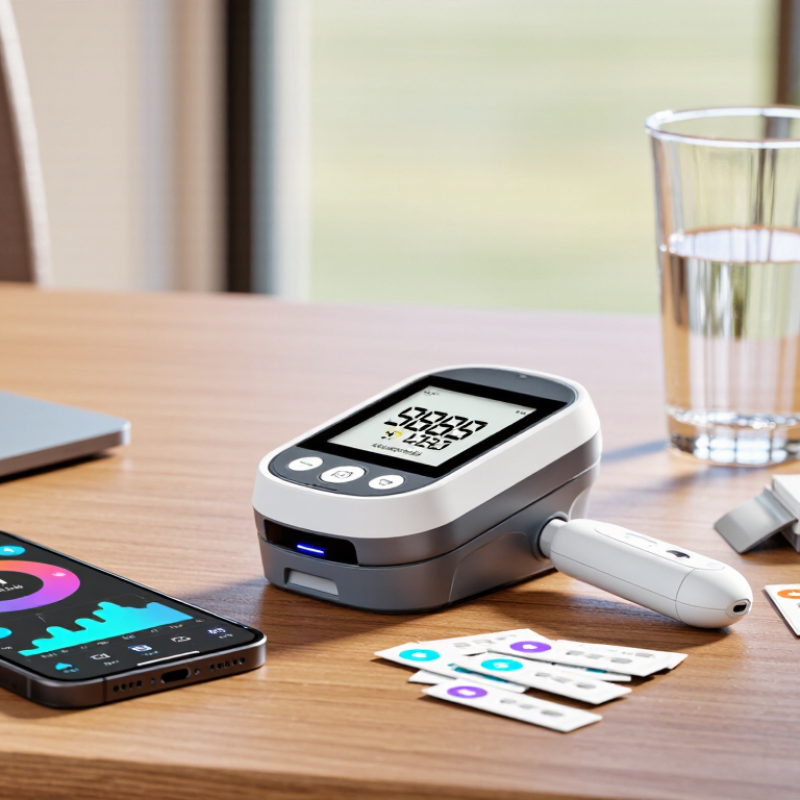
A smart glucose meter is a blood glucose testing device with digital connectivity. It usually uses a disposable test strip, a small blood sample, and an electrochemical sensor. The meter reads the electrical reaction and estimates glucose concentration within seconds. Simple, but not magic.
Many connected meters send results to a mobile application through Bluetooth or another wireless connection. The app can display trends, testing times, meals, medication notes, and unusual readings. Some systems provide reminders or warnings when readings move outside personal targets. These features may help users notice patterns, especially during busy workdays or travel. However, an app cannot replace clinical judgment. Its predictions depend on accurate input and reliable software.
In China, buyers should check testing certification, instructions, storage requirements, and after-sales support. A professional review should also consider measurement consistency, strip availability, battery life, and data protection. In practice, washing and drying hands matters because sugar residue can distort a result. Expired strips can mislead. Results may also differ slightly from laboratory measurements, so repeated unexpected readings deserve medical advice.
The technology is useful, though not flawless. I would compare readings with symptoms instead of trusting one number blindly. A smart meter should support informed decisions, not make them alone. Manufacturers could explain algorithm limits more clearly; many users may assume a polished graph means perfect accuracy.
What Is the Best Smart Glucose Meter in China?
A strong smart glucose meter should make testing simpler, not more confusing. In China, users should check whether the device has appropriate local registration and clear Chinese instructions. Accuracy evidence matters more than a colorful application. Look for published performance data, transparent testing methods, and strip storage guidance. Small details matter. A well-designed meter needs only a tiny blood sample and gives a readable result within seconds. Its lancing device should feel controlled, especially for people testing several times daily.
Bluetooth connection is useful when it works reliably. The companion app should record glucose levels, meals, medication notes, and testing times without hiding important data. Support for mmol/L is essential for everyday use in China. Helpful alerts can identify repeated high or low readings, but they should not replace professional medical advice. Secure cloud storage and understandable privacy settings also deserve attention. Some apps request too many permissions. That is a warning sign.
Battery life, strip availability, and after-sales support can decide whether a meter remains useful after purchase. A sophisticated device is not practical if compatible strips are difficult to find locally. I would also test its connection across different phones before relying on automatic records. No meter is perfect. Users can apply too little blood, test with damp hands, or store strips incorrectly. These ordinary mistakes may distort results, so the best choice combines dependable measurement, simple handling, and honest performance information.
| Evaluation Dimension | Bluetooth-Connected Meter | NFC-Enabled Meter | Cellular-Connected Meter | Best Practical Choice |
|---|---|---|---|---|
| Primary Connection | Bluetooth Low Energy | Near-field communication | Mobile network connection through an integrated module | Bluetooth for most individual users |
| Phone Requirement | A compatible smartphone is normally required for synchronization | A compatible NFC smartphone or reader is required | No smartphone is required for basic data transmission | Bluetooth when the user already uses a health-management app |
| Typical Blood Sample Volume | Approximately 0.5–1.0 microliters | Approximately 0.5–1.0 microliters | Approximately 0.5–1.0 microliters | Choose the lowest validated sample volume that is comfortable and reliable |
| Typical Testing Time | About 5–10 seconds | About 5–10 seconds | About 5–10 seconds | A meter with a short test time and clear completion signal |
| Measurement Range | Commonly around 1.1–33.3 mmol/L, depending on the approved system | Commonly around 1.1–33.3 mmol/L, depending on the approved system | Commonly around 1.1–33.3 mmol/L, depending on the approved system | Use only a meter with a measurement range suitable for the intended user |
| Result Storage | Usually stores several hundred readings; the app can retain more data | Usually stores several hundred readings; data is transferred when scanned | Stores readings locally and can transmit them automatically | At least 500 stored results for regular home monitoring |
| Data Review | Graphs, averages, time tags, and meal-related records may be available in the app | Review is generally performed after scanning or importing readings | Remote dashboards and automatic reports may be available | An app with trend charts, export functions, and readable summaries |
| Remote Data Sharing | Possible through the app, subject to internet access and user permission | Possible after data is transferred to a compatible application | Best suited to automatic sharing with caregivers or clinical services | Choose cellular connectivity when independent monitoring is essential |
| Manual Tagging | Often supports before-meal, after-meal, fasting, exercise, or medication tags | May support tags in the connected application | May support tags through the meter or remote platform | Meal and medication tagging is valuable for identifying patterns |
| Strip Coding | Automatic coding is preferred because it reduces setup errors | Automatic coding is preferred because it reduces setup errors | Automatic coding is preferred because it reduces setup errors | Select automatic coding whenever available |
| Operating Conditions | Use only within the temperature and humidity limits stated in the instructions | Use only within the temperature and humidity limits stated in the instructions | Use only within the temperature and humidity limits stated in the instructions | Choose a device with conditions suitable for the user’s location and routine |
| Power Source | Usually replaceable batteries; Bluetooth can increase battery use | Usually replaceable batteries with low connection-power requirements | Rechargeable or replaceable battery; cellular transmission requires more power | A replaceable-battery model is practical for travel and backup use |
| China Market Compliance | Verify the applicable National Medical Products Administration registration information | Verify the applicable National Medical Products Administration registration information | Verify the applicable National Medical Products Administration registration information and data-service terms | Regulatory status and locally supported test strips should be checked before purchase |
| Best Suited For | Users who want detailed personal trend analysis | Users who prefer low-power, scan-based data transfer | Older adults, caregivers, and users needing automatic remote reporting | Bluetooth-connected meters offer the best balance for most connected home users |
Note: Specifications vary by registered device and test-strip system. Always follow the approved instructions for use and confirm local availability, registration status, unit format, and compatible strips before purchase.
Choosing a smart glucose meter in China requires more than checking its lowest price. Accuracy should come first. Look for published test data and documented compliance with recognized medical-device standards, such as ISO 15197. A reliable comparison should include repeated readings, different glucose levels, and results checked against a laboratory method.
In daily use, wash and dry your hands before testing. Food residue can create surprisingly high readings. I have found that strip storage matters too. Heat and humidity can quietly affect results, especially during summer travel. No device is perfect.
Connectivity is useful when it saves effort. Check whether the meter connects through Bluetooth, works with your phone, and supports stable data syncing. An app should show clear trends, testing times, and notes for meals or exercise.
Offline storage is important when mobile service is weak. Also examine privacy settings and whether data can be exported for a clinician. A crowded interface may look advanced but frustrate older users. Large numbers, simple buttons, readable instructions, and an easy lancing process often matter more.
Tips: Compare several readings under similar conditions. Ask whether the local distributor provides technical support and replacement strips. Check battery life before travel. I once focused too much on app features and overlooked strip availability. That was a practical mistake. Ease of use includes the whole routine, from opening the case to understanding an unexpected result.
China’s diabetes burden makes device selection increasingly practical. The IDF Diabetes Atlas, 10th edition, estimated 140.9 million Chinese adults had diabetes in 2021. That is not one uniform user group. Older adults may prefer a simple Bluetooth blood glucose meter with large numbers, audible prompts, and a physical test strip. It should feel stable on a kitchen table, not like a complicated phone accessory.
The International Organization for Standardization requires self-testing systems to meet ISO 15197:2013 accuracy criteria, but real-world technique still matters. Unwashed hands can distort results.
Different users need different smart meter types. A connected capillary meter suits people who test before meals and want automatic phone records. It can reduce forgotten entries, although Bluetooth pairing sometimes fails at the worst moment.
A continuous glucose monitoring system fits insulin users, athletes, or people investigating overnight changes. The 2024 International Diabetes Federation recommendations emphasize individualized glucose monitoring rather than one universal schedule.
Sensors show trends, but interstitial glucose can lag behind blood glucose during rapid changes. Confirm unusual readings with a finger-stick test when advised by a clinician.
Caregivers may value shared reports and low-glucose alerts. Rural users may need offline storage, long battery life, and locally available supplies.
A professional review should examine validation evidence, app privacy, alarm clarity, and strip cost over twelve months. I would not choose the most expensive device automatically. Convenience is helpful, but poor hand hygiene, expired strips, or ignored alerts can defeat smart technology.
Accuracy should guide your decision. Check whether the meter has valid medical device registration in China. Also review its stated accuracy standard and testing conditions. A low reading cost means little if results vary widely. Compare readings with a clinic test when possible, especially during unusual symptoms. Small differences can matter.
Look at the strips, not only the device. Are they easy to find in local pharmacies or online stores? Check their expiry dates, storage temperature, and price per test. Some meters need coding, while others reduce that extra step. The blood sample size also matters. A device requiring less blood may feel easier for older users or children.
Smart functions need careful inspection. Confirm whether the application supports your phone system and Chinese language settings. Check how data is stored, exported, and shared. Avoid assuming cloud features are automatically private. Read the permissions. In practice, battery life, Bluetooth stability, and customer support can affect daily use more than attractive charts.
I once underestimated strip availability. That was a practical mistake. A meter is only useful when supplies remain accessible. Look for clear instructions, responsive service, and replacement policies. Do not change medication based on one reading without professional advice. A convenient device still requires careful technique, clean hands, and regular review with a qualified healthcare professional.
Scan QR code to download the app
LSP Products was founded by plumbers over 50 years ago with a focus on unparalleled innovation, superior product quality, and best-in-class service to the plumbing industry. Our primary focus is the new construction market where we develop products that make installations easy and provide significant cost savings to the plumbing/mechanical contractor. LSP has a manufacturing facility located in Monterrey, Mexico and a distribution center in Dallas, Texas. We are proud to offer many products designed and made in North America… About LSP
Submit the form below to receive the document via email.