Choosing the best Aluminum For Machining in 2026 is not a simple matter of picking the strongest alloy. It depends on the part’s geometry, tolerance, surface finish, production volume, and final environment. A shop cutting a thin enclosure needs different performance from one milling a high-load aerospace bracket.
“Machinability is not a single property,” wrote manufacturing authority John A. Schey. This concise observation remains highly relevant for modern CNC work. Alloy composition, temper, tool geometry, coolant delivery, and cutting speed can change the result dramatically. In daily production, 6061-T6 often offers an excellent balance of availability, strength, chip control, and predictable finishing. It is usually a dependable starting point.
But dependable does not mean perfect. 7075-T6 provides higher strength, yet it can demand sharper tooling and closer process control. 2024 may perform well in demanding structural applications, although corrosion protection requires attention. 5052 bends easily, but its softer surface can create burrs and frustrating material buildup. 6082 and 6063 also deserve consideration when regional supply, extrusion shape, or finishing requirements influence the decision.
Small details matter. A worn end mill can make a suitable alloy appear unsuitable. Poor workholding can distort a thin wall within minutes. Even experienced machinists occasionally blame the material too quickly. That mistake is worth questioning.
This guide examines the leading aluminum grades for machining in 2026. It compares practical machinability, strength, dimensional stability, finish quality, cost, and application fit. The goal is not to name one universal winner. The goal is to identify the most reliable choice for each machining challenge.
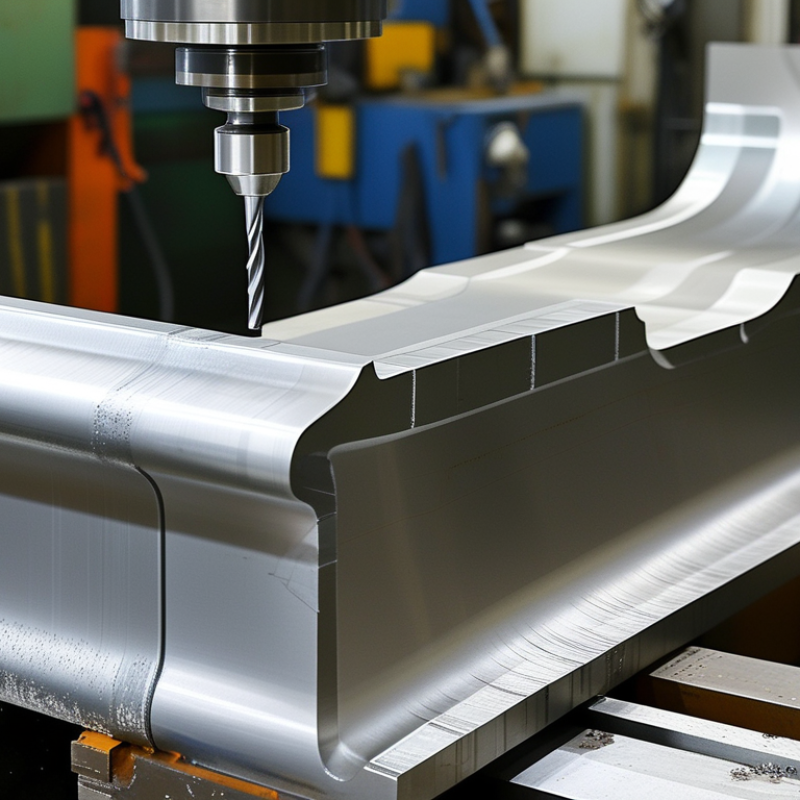
What Is the Best Aluminum for Machining in 2026?
Aluminum machining begins with fundamentals, not alloy popularity. The International Aluminium Institute reported global primary aluminum production of about 72.9 million tonnes in 2024. That scale reflects aluminum’s industrial importance, but it does not make every grade suitable for precision work. Alloy family, temper, geometry, and heat generation control the result.
Start with the component’s duty. 6061-T6 offers balanced strength, corrosion resistance, and predictable chip formation. It suits housings, brackets, and general fixtures. 7075-T6 provides higher strength, but it can increase tool wear and material cost. 2024-T3 machines efficiently, although its corrosion resistance requires careful protection. For formed parts, 5052 is practical, yet its ductility may produce stringy chips.
Chip control matters.
Cutting speed, feed rate, and tool geometry must match the alloy and temper. Sharp carbide tools with polished flutes usually reduce built-up edge. Flood coolant can protect the cutting zone, but excessive coolant may hide vibration or poor workholding. The USGS Mineral Commodity Summaries 2025 estimated world aluminum production at roughly 72 million metric tons in 2024, reinforcing the need for efficient, repeatable processing.
A simple hardness rule is tempting, but it fails in thin walls. I would verify machinability through a short trial cut, dimensional inspection, and surface-finish measurement. ASTM B221 and ISO 6892-1 provide useful material and testing references, but neither replaces shop-specific validation. Two bars with the same designation can behave differently after heat treatment, storage, or supplier processing.
| Alloy and Temper | Typical Tensile Strength | Typical Yield Strength | Machinability | Corrosion Resistance | Weldability | Dimensional Stability | Recommended Machining Applications | Key Selection Considerations |
|---|---|---|---|---|---|---|---|---|
| 6061-T6 | Approximately 310 MPa | Approximately 276 MPa | Good | Good general-purpose resistance | Good; strength in the heat-affected zone may decrease | Good for general components | Brackets, housings, frames, shafts, fixtures, and general CNC parts | The most balanced choice for strength, availability, corrosion resistance, cost, and ease of machining. |
| 7075-T6 | Approximately 572 MPa | Approximately 503 MPa | Good, but less forgiving than 6061 | Fair; lower resistance than 5xxx and 6xxx alloys | Poor to fair; generally not selected for fusion welding | Good in precision applications when stress relief is controlled | High-strength aerospace-style components, robotic parts, tooling, and lightweight structural parts | Best when strength-to-weight ratio is more important than weldability, corrosion resistance, or lowest machining cost. |
| 2024-T4 | Approximately 470 MPa | Approximately 325 MPa | Good | Fair to poor without protective treatment | Poor; welding can reduce performance and increase cracking risk | Good when residual stress is managed | Lightweight precision parts requiring high fatigue performance and moderate-to-high strength | Useful for demanding mechanical loads, but usually needs anodizing, cladding, coating, or other corrosion-control measures. |
| 6082-T6 | Approximately 340 MPa | Approximately 300 MPa | Good | Good | Good; post-weld strength reduction should be considered | Good | Structural plates, machine bases, supports, manifolds, and larger machined components | Often preferred where higher silicon and magnesium content provides a useful balance of strength and machinability. |
| 5052-H32 | Approximately 230 MPa | Approximately 195 MPa | Fair | Very good, especially in marine and humid environments | Very good | Fair; sheet forming and work hardening can affect accuracy | Thin covers, enclosures, brackets, panels, and corrosion-resistant sheet components | Choose it for corrosion resistance and forming rather than high-speed precision machining or high structural strength. |
| 2011-T3 | Approximately 360 MPa | Approximately 295 MPa | Excellent | Poor to fair | Poor | Good for small turned components | High-volume screw-machine parts, bushings, fittings, and intricate turned components | Among the easiest aluminum alloys to machine, but its lead-containing composition may restrict use in regulated, environmental, or food-contact applications. |
| 2024-T351 | Approximately 470 MPa | Approximately 325 MPa | Good | Fair to poor without protection | Poor | Very good after stress relieving | Precision plates, inspection fixtures, aerospace-style tooling, and parts where reduced distortion matters | The T351 temper is useful for thick plate machining because controlled stress relief can improve dimensional stability. |
| Machining and Alloy Selection Criteria | ||||||||
| Cutting Performance | Use alloy condition, tool geometry, and chip control together | Highest: 2011-T3 | 6xxx alloys generally provide a practical balance of chip formation and surface finish | Use sharp carbide tools, high positive rake geometry, adequate chip evacuation, and coolant or mist where appropriate. Avoid rubbing, which can cause built-up edge and poor finish. | ||||
| Strength-to-Weight Requirement | 7075-T6 provides the highest strength among the alloys listed | High | Strength may decline near welds or after significant thermal exposure | Select 7075-T6 for high static strength and low mass; select 6061-T6 when a more balanced, weldable, and corrosion-resistant material is needed. | ||||
| Corrosion Exposure | 5052-H32 offers the strongest general corrosion performance in this comparison | Application-dependent | Copper-bearing 2xxx alloys and zinc-bearing 7xxx alloys require greater protection | Consider anodizing, conversion coating, paint, cladding, sealing, galvanic compatibility, and the service environment before final alloy selection. | ||||
| Precision and Distortion Control | Temper, stock thickness, heat treatment, and residual stress are critical | Application-dependent | Removing material from only one side can release stress and cause warping | For tight tolerances, use stable stock, rough and finish operations, balanced material removal, appropriate workholding, and a controlled temperature environment. | ||||
| Practical conclusion: 6061-T6 is usually the best all-around aluminum for CNC machining. Choose 7075-T6 for maximum strength, 2011-T3 for exceptional machinability in suitable regulated environments, 5052-H32 for corrosion-resistant formed sheet, 2024-T4 or T351 for high-strength precision applications, and 6082-T6 for larger structural machined parts. | ||||||||
| Data note: Mechanical properties are representative minimum or typical values for commonly supplied product forms and may vary by specification, thickness, product form, and manufacturer. Verify the applicable material certificate and governing standard before production use. Machinability ratings are comparative guidance rather than standardized universal scores. | ||||||||

Scan QR code to download the app
 Skip to main content