Buying Steel Rebar in 2026 requires more than comparing price per tonne. Grade, diameter, rib geometry, coating, weldability, and traceability can change the project’s real cost.
The World Steel Association reported 1.88 billion tonnes of crude steel production in 2024. That scale shows the market’s strength, but it also hides major differences between mills, regions, and production routes. Its 2025 World Steel in Figures report provides useful context for supply capacity and regional manufacturing trends. Meanwhile, the OECD Steel Outlook 2024 warns that expanding global capacity may intensify competition and pressure margins. Buyers should therefore examine quality evidence, not only attractive quotations.
Several Steel Rebar types will compete for attention in 2026. Common choices include carbon-steel rebar, galvanized rebar, epoxy-coated rebar, stainless rebar, and high-strength grades. ASTM A615, ASTM A706, BS 4449, and ISO 6935-2 remain important reference standards, depending on the project location. Each option behaves differently beside wet concrete, chloride exposure, welding operations, and seismic detailing.
Performance matters most.
A coastal parking structure may need corrosion protection that a dry warehouse does not. A high-rise frame may benefit from stronger grades, but fabrication limits must be checked. The World Bank Commodity Markets Outlook, April 2025, also highlights continued uncertainty around industrial-material prices and construction demand. That makes a single “best” rebar ranking unreliable. A better decision compares lifecycle cost, mill certification, test results, delivery consistency, and local code acceptance. Some buyers still overlook bending performance. That mistake can become expensive on site.
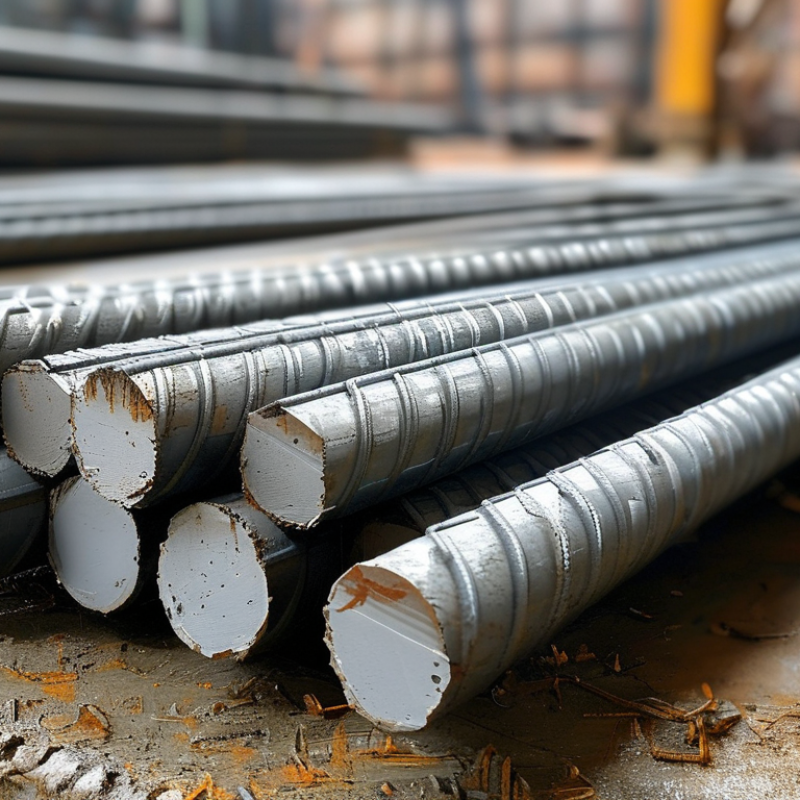
Steel rebar is a ribbed steel bar embedded inside concrete. It carries tension that concrete handles poorly. Concrete resists compression; rebar controls cracking and bending. That pairing supports bridges, foundations, slabs, and high-rise columns. The World Steel Association reports that construction consumes about half of global steel demand. The sector’s scale makes rebar selection a serious engineering decision. Yet tonnage alone says little about performance.
Hot-rolled carbon-steel rebar remains the practical choice for many projects in 2026. Weldable grades, such as those covered by ASTM A706, suit cages requiring reliable site connections. Epoxy-coated and galvanized rebar can slow corrosion in parking structures, marine works, and roads exposed to deicing salts. Stainless rebar offers stronger durability, but its higher purchase cost demands a life-cycle comparison. High-strength microalloyed rebar can reduce bar congestion and concrete cover problems. No type wins every project.
The 2025 OECD Steel Outlook warns that global steelmaking excess capacity could approach 721 million tonnes by 2027. Buyers should therefore check mill traceability, heat numbers, test certificates, and coating thickness. For a coastal parking deck, chloride exposure may justify corrosion-resistant reinforcement. For an indoor warehouse, it may not. ASTM and EN requirements also differ, so specifications need careful review. I would not assume the cheapest bar is economical. A damaged coating, poor weldability, or missing test record can create expensive site delays. Independent testing remains worthwhile, even when paperwork looks complete.

Steel rebar is a ribbed reinforcing bar embedded in concrete to improve its tensile capacity. For buyers in 2026, rebar type matters because yield strength, ductility, weldability, and compliance with the project specification affect structural performance and construction efficiency.
The chart compares the minimum specified yield strength of widely used rebar grades. ASTM Grade 60 requires approximately 420 MPa, ASTM Grade 80 approximately 550 MPa, and B500 grades require 500 MPa. Higher yield strength can reduce the amount of steel required, but buyers should also verify ductility, weldability, bend performance, corrosion protection, and local code acceptance.
Steel rebar is classified by surface, strength, steel composition, production method, and protective coating. This system helps buyers compare products without relying on confusing trade names. Plain round bar has a smooth surface and suits simple fabrication. Deformed bar has ribs that improve concrete bonding and is widely used in structural work.
Strength grades are another key division. Common classifications include 400, 500, or 600 MPa yield-strength levels, depending on the applicable standard. Higher strength can reduce bar quantity, but it may require stricter bending controls. Ductility also matters. A bar with good elongation can absorb movement more safely during seismic or heavy-load conditions.
Coating creates a separate category. Black steel rebar is economical for ordinary concrete environments. Galvanized and epoxy-coated rebar offer better corrosion resistance in wet, salty, or chemically exposed locations. Stainless rebar provides stronger protection, though its cost can be difficult to justify on every project. I have seen buyers compare price first and coating life second. That approach can backfire.
Rebar may also be classified by manufacturing route, such as hot-rolled, cold-worked, or quenched and tempered steel. Buyers should verify mill certificates, rib patterns, bend performance, weldability, and actual dimensions. A clean surface is useful. It is not proof of quality. Local construction codes and exposure conditions should control the final selection, even when a higher grade appears attractive.
Choosing rebar in 2026 starts with exposure, load, and construction conditions, not a catalog ranking. Grade 60 remains practical for general slabs, beams, and foundations. It balances strength, ductility, and availability. Grade 80 or Grade 100 can reduce congestion in heavily reinforced columns. However, engineers must verify development length, bendability, weldability, and code acceptance. A stronger bar is not automatically better. That assumption causes trouble.
For coastal decks, parking structures, and bridge elements, epoxy-coated rebar offers a familiar barrier against chlorides. Galvanized rebar tolerates handling damage better and suits exterior work with repeated wetting. Stainless steel rebar fits severe marine zones, wastewater facilities, and long-life repairs. Its premium requires a life-cycle calculation. Corrosion-resistant alloy bars may suit critical areas with limited replacement access. Inspect coating continuity, bends, and cut ends before placement. Small defects matter.
Indoor buildings with dry conditions usually need uncoated carbon-steel rebar. Proper concrete cover and drainage remain essential. Projects using deicing salts need more than a coating decision. Specify low-permeability concrete, adequate cover, clean supports, and accurate bar placement. Procurement teams should request mill certificates, tensile results, coating records, and traceable heat numbers. Field checks often reveal that drawings specify one grade while local fabricators stock another. Confirm early. Over-specified stainless bars can strain budgets without improving the actual exposure zone. Review the entire system, then choose rebar that can be installed correctly.
| Rebar Type / Grade | Primary Standard | Nominal Minimum Yield Strength | Corrosion Protection | Weldability and Fabrication | Best-Suited Projects | Key Buyer Considerations |
|---|---|---|---|---|---|---|
| Carbon-Steel Rebar Grade 60 | ASTM A615/A615M Grade 60 | 60 ksi 420 MPa | Uncoated carbon steel; requires adequate concrete cover and a suitable exposure design. | General-purpose reinforcing bar. Welding should not be assumed acceptable without checking the chemical composition and approved welding procedure. | Building foundations, slabs, beams, columns, retaining walls, bridges, and general reinforced-concrete construction. | Widely specified and readily available. Confirm nominal diameter, bend schedule, bar markings, elongation, and heat or lot traceability. |
| Carbon-Steel Rebar Grade 80 | ASTM A615/A615M Grade 80 | 80 ksi 550 MPa | Uncoated carbon steel; durability depends on concrete quality, cover, cracking control, and exposure conditions. | Higher strength can reduce bar congestion, but detailing, development length, lap splices, and seismic requirements must be checked. | High-load columns, heavily reinforced beams, foundations, high-rise structures, and projects seeking lower reinforcement tonnage. | Use only where the design code permits Grade 80. Verify bendability, seismic classification, splice design, and compatibility with couplers. |
| Weldable Carbon-Steel Rebar Grade 60 | ASTM A706/A706M Grade 60 | 60 ksi 420 MPa | Normally uncoated; corrosion performance is governed by the concrete environment unless an additional coating is specified. | Controlled chemical composition and tensile properties make it suitable for welding when the approved welding procedure is followed. | Seismic frames, congested reinforcement cages, prefabricated assemblies, and structures requiring welded connections. | Request the A706 material certificate and carbon-equivalent information. Do not substitute A615 for A706 where weldability is mandatory. |
| Weldable Carbon-Steel Rebar Grade 80 | ASTM A706/A706M Grade 80 | 80 ksi 550 MPa | Normally uncoated; use a corrosion-resistant coating when the exposure classification requires additional protection. | Designed for controlled fabrication and welding, subject to qualified procedures and project-specific heat input limits. | Seismic and high-load structures where both higher strength and controlled weldability are required. | Confirm that the design standard accepts Grade 80 A706. Check ductility, welding procedure qualification, splice details, and availability in required sizes. |
| Hot-Dip Galvanized Rebar | ASTM A767/A767M with a specified zinc coating class | Based on the selected steel grade commonly 60 ksi / 420 MPa | Zinc coating provides sacrificial protection and improves durability in many chloride or moisture exposures. | Can be cut and bent with suitable handling. Avoid damaging the coating; repair damaged areas according to the project specification. | Parking structures, bridge decks, marine-adjacent construction, road infrastructure, balconies, and exposed concrete elements. | Specify coating class, coating thickness or mass, bend diameter, handling requirements, and compatibility with tie wire, couplers, and repairs. |
| Fusion-Bonded Epoxy-Coated Rebar | ASTM A775/A775M or ASTM A934/A934M for prefabricated bars | Based on the selected steel grade commonly 60 ksi / 420 MPa | Nonmetallic epoxy barrier separates the steel from chlorides, moisture, and other aggressive agents. | Requires careful transport, storage, cutting, bending, and field repair to prevent coating damage. | Bridge decks, parking garages, waterfront structures, salt-exposed roads, wastewater facilities, and deicing-salt environments. | Confirm coating thickness, holiday testing, allowable damage, repair material, bend test requirements, and inspection records. |
| Stainless-Steel Reinforcing Bar | ASTM A955/A955M or the applicable stainless reinforcement specification | Grade-dependent; common grades include 60 ksi / 420 MPa and higher grades | High resistance to chloride-induced corrosion and carbonation compared with ordinary carbon steel. | Fabrication practices depend on the stainless grade. Prevent contamination from carbon-steel tools, storage racks, and cutting debris. | Severe marine exposure, bridge decks with long service-life targets, tunnels, seawalls, wastewater plants, and critical repairs. | Specify stainless grade, magnetic behavior, mechanical properties, welding procedure, surface condition, and galvanic compatibility with adjacent metals. |
| Chromium-Alloy Corrosion-Resistant Rebar | ASTM A1035/A1035M grade and class must be specified | Grade-dependent; high-strength options are available | Chromium-enriched alloy provides improved resistance to corrosion without using a separate surface coating. | Fabrication and welding requirements vary by grade and chemistry; follow the producer's qualified procedures and the project specification. | Long-life bridge decks, marine structures, high-performance concrete, and applications where reduced maintenance is important. | Do not purchase by “chromium rebar” alone. State the exact ASTM grade/class, yield strength, bend requirements, welding limits, and acceptance tests. |
| Ribbed High-Ductility Rebar B500B | EN 10080 with the applicable national product standard | 500 MPa minimum yield strength | Normally uncoated carbon steel; additional galvanizing or epoxy coating requires a separate specification. | Ductility Class B provides controlled ductility and weldability characteristics subject to the applicable national standard and procedure. | European-design reinforced-concrete buildings, foundations, industrial structures, and general infrastructure. | Confirm product certification, nominal diameter, rib geometry, ductility values, weldability, and compatibility with Eurocode-based design. |
| Ribbed High-Ductility Rebar B500C | EN 10080 with the applicable national product standard | 500 MPa minimum yield strength | Normally uncoated carbon steel; specify a separate corrosion-protection system for aggressive exposure. | Ductility Class C offers higher ductility than Class B and is commonly selected where seismic or plastic-deformation capacity is important. | Seismic regions, ductile moment frames, reinforced-concrete buildings, bridges, and structures designed for significant inelastic behavior. | Check the national annex, seismic detailing rules, k-factor or ductility requirements, weldability, and required certification. |
Buyers should compare rebar by strength, durability, and installed cost, not price per tonne alone. Standard carbon-steel rebar remains practical for ordinary indoor or low-corrosion concrete work. Grade 60 rebar provides a familiar strength baseline, while Grade 80 can reduce bar quantity and congestion. However, higher strength may require stricter bending, welding, and detailing controls. Always check project specifications and applicable standards, such as ASTM A615 or A706.
Durability changes the buying decision near seawater, deicing salts, or wet soil. Epoxy-coated rebar offers a protective barrier, but damaged coating needs careful repair during installation. Galvanized rebar tolerates handling better, while stainless rebar provides stronger corrosion resistance at a much higher purchase cost. The NACE IMPACT study estimated global corrosion costs at about US$2.5 trillion annually, or 3.4% of global GDP. That figure supports lifecycle thinking, although it does not predict one project's savings. The World Steel Association reported approximately 1.89 billion tonnes of crude steel production in 2023, indicating broad supply capacity, but local mill availability still controls delivery cost.
Tips: Request quotations by grade, coating, diameter, fabrication, freight, and inspection. Compare a 30-year cost, not only the invoice. Ask for mill certificates and bend-test records. Field experience shows that delivery delays can outweigh small steel-price savings. I may be too optimistic here: corrosion models often miss repair disruption, labor access, and concrete replacement costs. A simple spreadsheet should include those risks.
In 2026, buyers should select rebar by project exposure, not price alone. Common options include carbon-steel, weldable, epoxy-coated, galvanized, and stainless rebar. ASTM A615 covers general carbon-steel bars, while ASTM A706 addresses controlled chemistry and improved weldability. European projects commonly reference EN 10080, and ISO 6935-2 provides an international framework.
Every shipment should include a mill test certificate, heat number, chemical analysis, yield strength, tensile strength, elongation, and bend-test results. For welded cages, carbon equivalent matters. A low carbon equivalent usually supports safer welding, but site procedures still require technical review. ASTM A706 does not remove that responsibility. Standards can guide decisions, but they cannot replace inspection.
Supply conditions deserve equal attention. The World Steel Association’s October 2024 Short Range Outlook projected global steel demand at about 1.75 billion tonnes in 2024 and 1.77 billion tonnes in 2025. Rising demand can tighten rolling schedules and transport capacity. Buyers should confirm production lead time, bar length, bundle weight, coating thickness, traceability, storage conditions, and replacement procedures before ordering. Corrosion-resistant coatings may extend service life, yet damaged coating edges need repair.
Independent verification is sensible for critical structures, especially when documents use different grading systems. I would also challenge unusually short delivery promises. They sound attractive, but they may hide stock substitutions, incomplete testing, or weak traceability. Geological exposure, fire requirements, seismic detailing, and local authority rules should determine the final rebar specification.
Scan QR code to download the app
LSP Products was founded by plumbers over 50 years ago with a focus on unparalleled innovation, superior product quality, and best-in-class service to the plumbing industry. Our primary focus is the new construction market where we develop products that make installations easy and provide significant cost savings to the plumbing/mechanical contractor. LSP has a manufacturing facility located in Monterrey, Mexico and a distribution center in Dallas, Texas. We are proud to offer many products designed and made in North America… About LSP
Submit the form below to receive the document via email.