Choosing the right Automotive Camera supplier in 2026 requires more than comparing megapixels or unit prices. Global buyers must examine image quality, software stability, production capacity, testing discipline, and after-sales support. A camera may look excellent in daylight yet struggle on a rainy highway at dusk. That difference matters.
Amnon Shashua, co-founder and CEO of Mobileye, has stated, “The camera is the most important sensor in autonomous driving.” His view reflects a practical reality. Cameras interpret lane markings, traffic signs, pedestrians, and vehicle movement through visual data. However, no single sensor solves every driving condition. Buyers should therefore assess camera performance alongside radar, lidar, vehicle computing, and safety architecture.
This guide reviews leading Automotive Camera suppliers for global purchasing teams, vehicle manufacturers, system integrators, and mobility developers. It considers product coverage, regional manufacturing, automotive quality systems, imaging performance, thermal reliability, cybersecurity readiness, and integration support. Details such as a 2-megapixel versus 8-megapixel sensor can influence cost, bandwidth, and recognition range. Connector design, lens heating, calibration time, and low-light noise also deserve attention.
The market is advancing quickly. Not every supplier will remain equally strong. Some claims may appear impressive but lack public validation. That deserves skepticism. Buyers should request test reports, sample units, failure-rate data, and clear warranty terms before making a decision. Supplier rankings can guide research, but they cannot replace independent testing on real roads. A careful shortlist remains more valuable than a rushed purchase.
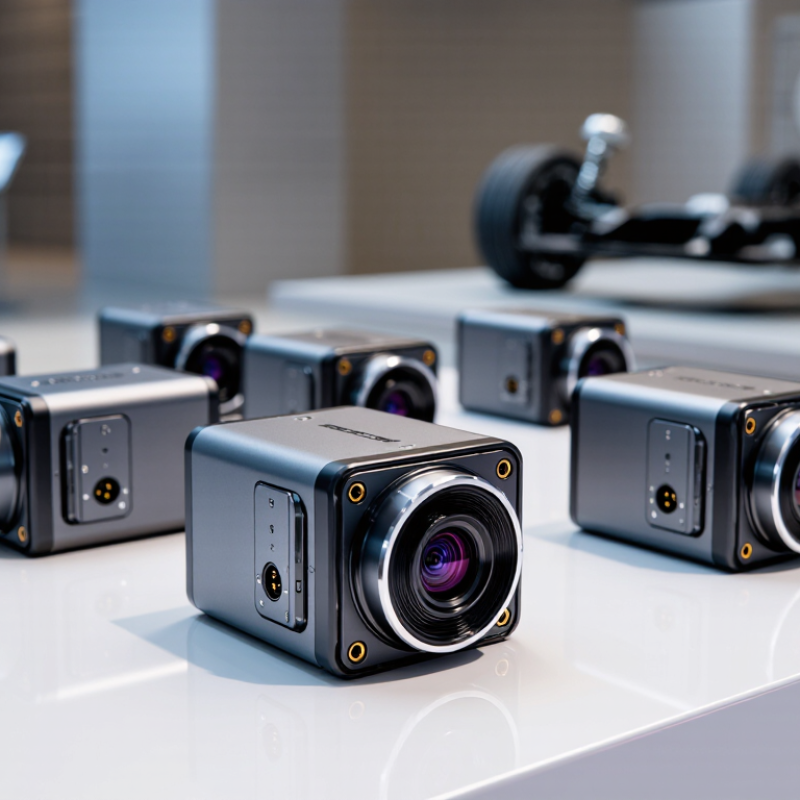
Automotive cameras are compact vision systems mounted around and inside a vehicle. They use image sensors, lenses, processors, and software to interpret nearby conditions. In 2026, they support lane detection, emergency braking, parking assistance, blind-spot monitoring, and driver attention checks.
Their value depends on more than pixel count. A camera facing a bright sunset must still recognize road markings. A rear camera may collect rain droplets, road dust, or snow. Wide-angle lenses improve coverage but can distort object distances. Low-light performance, image latency, thermal stability, and calibration accuracy often matter more than impressive brochure numbers.
Global buyers should examine test data from heat, cold, vibration, glare, and heavy rain. Ask how suppliers manage lens contamination and replacement calibration. Check whether image processing remains stable when several cameras operate together. Cybersecurity and data protection also require careful review, especially for cabin-facing systems.
No camera performs perfectly. Even advanced systems can misread faded lines or unusual shadows. That weakness deserves honest testing, not optimistic wording. In practical evaluations, engineers should compare recorded images with real driving scenes and measure false alerts, missed objects, and response time. A reliable supplier explains limitations clearly and provides traceable quality records. Specifications help, but field evidence decides.
| Supplier Category | Primary Camera Solutions | Typical 2026 Image Specification | Typical Field of View | Key Vehicle Applications | Relevant Automotive Requirements | What Global Buyers Should Verify |
|---|---|---|---|---|---|---|
| Advanced Driver-Assistance Camera Suppliers | Forward-facing mono, stereo, and multi-camera perception modules | Approximately 2–8 megapixels; HDR commonly around 120 dB or higher; 30–60 frames per second | Approximately 45°–150° horizontal, depending on the camera function | Lane support, automatic emergency braking, traffic-sign recognition, pedestrian and cyclist detection | ISO 26262 functional safety, ISO 21448 SOTIF, automotive EMC, cybersecurity, and vehicle-network compatibility | Object-detection performance, safety case documentation, software-update capability, calibration process, and long-term supply support |
| Surround-View and Parking Camera Suppliers | Wide-angle front, rear, side, and bird’s-eye-view camera modules | Approximately 1–3 megapixels; 25–60 frames per second; low-latency video output | Approximately 120°–195° diagonal, with fisheye lenses used for close-range coverage | Parking assistance, low-speed maneuvering, trailer alignment, curb detection, and surround-view imaging | UNECE R158 considerations for reversing technology, automotive EMC, waterproofing, vibration, and image-stitching accuracy | Stitching quality, lens distortion correction, night performance, water and dirt management, connector sealing, and installation tolerances |
| Driver-Monitoring Camera Suppliers | In-cabin infrared or RGB cameras for driver observation | Approximately 1–5 megapixels; infrared sensitivity commonly near 940 nm or 850 nm; 30–60 frames per second | Approximately 50°–100° horizontal | Distraction monitoring, fatigue detection, hands-off detection, occupant monitoring, and child-presence functions | UNECE R79 driver-control considerations, UNECE R157 automated-lane-system considerations where applicable, privacy laws, and functional safety | Performance with sunglasses and masks, night-time illumination, privacy controls, false-alert rate, data processing location, and cabin integration |
| Electronic-Mirror Camera Suppliers | Exterior side-view camera systems with interior display units | Approximately 1–3 megapixels; HDR commonly above 100 dB; display latency generally targeted below 150 ms | Typically 50°–100° horizontal per side-view camera | Aerodynamic mirror replacement, blind-spot visibility, commercial-vehicle side coverage, and all-weather viewing | Applicable exterior-vision regulations, UNECE R46 where adopted, EMC, thermal cycling, vibration, and optical safety requirements | Display readability, glare control, condensation resistance, cleaning or heating method, redundancy, latency, and homologation by target market |
| Commercial-Vehicle and Fleet Camera Suppliers | Rear, side, cargo-area, trailer, and multi-camera monitoring systems | Approximately 720p–4K depending on use; wired Ethernet, coaxial, or automotive-grade digital video interfaces | Approximately 90°–180° diagonal | Truck and bus visibility, loading-zone monitoring, trailer coupling, fleet safety, and insurance-oriented video recording | IP protection, vibration and shock resistance, EMC, data-protection rules, secure data transmission, and fleet-specific vehicle standards | Operating temperature, storage capacity, remote diagnostics, tamper resistance, installation time, warranty terms, and fleet-management integration |
| Automotive Camera Module Manufacturers | Customized camera modules combining image sensors, lenses, housings, connectors, and processing electronics | Resolution and interface configured to the vehicle program; common outputs include GMSL, FPD-Link, Ethernet, and CAN-related control interfaces | Configured from narrow-view monitoring to ultra-wide-angle coverage | OEM platforms, Tier 1 integration, specialty vehicles, electric vehicles, and autonomous-driving development programs | IATF 16949 quality management, APQP, PPAP, ISO 26262, ISO/SAE 21434 cybersecurity, and traceability requirements | Design ownership, engineering-change control, production capacity, component availability, end-of-life planning, audit results, and country-of-origin compliance |
| Specialty and Aftermarket Camera Suppliers | Replacement reversing cameras, retrofit ADAS cameras, inspection cameras, and universal display kits | Typically 720p–2K; analog or digital outputs; specifications vary significantly by product and installation environment | Approximately 90°–180° diagonal | Older vehicles, specialty fleets, recreational vehicles, utility vehicles, and low-volume retrofit projects | Regional vehicle-equipment rules, EMC, ingress protection, electrical compatibility, and consumer-product safety requirements | Vehicle compatibility, installation instructions, connector availability, calibration requirements, replacement support, and documented test results |
| Engineering and Camera-Validation Partners | Camera calibration, optical testing, environmental validation, perception-data services, and production-line inspection | Test capability generally covers geometric accuracy, HDR, color, latency, thermal behavior, vibration, water ingress, and electromagnetic compatibility | Validated against the target camera’s specified viewing angle and vehicle mounting position | New-product development, supplier qualification, production launch, warranty analysis, and regulatory evidence generation | ISO 17025 laboratory practices where applicable, OEM validation procedures, ISO 26262 evidence, and cybersecurity test processes | Measurement uncertainty, test repeatability, laboratory accreditation, data ownership, regional test coverage, and reporting format |
Scan QR code to download the app
 Skip to main content