For global buyers, 2026 will bring more attention to polyolefin insulation performance, not merely purchase price. Cable makers, building contractors, and equipment manufacturers need materials that remain stable under heat, moisture, vibration, and repeated installation stress. The leading options include polyethylene, cross-linked polyethylene, polypropylene, and foamed polyolefin systems. Each type serves a different operating reality.
Dr. George Wypych, a recognized polymer science author, offers a useful principle through his published technical work: polymer performance must be judged under service conditions, not composition alone. That idea matters when comparing insulation for power cables, data networks, automotive harnesses, refrigeration lines, and industrial piping. A laboratory sample may look excellent. The same material can behave differently beside a hot engine, inside a damp wall, or under constant bending.
This guide examines the 2026 top polyolefin insulation types through thermal resistance, dielectric strength, flexibility, flame behavior, processing consistency, and long-term durability. It also considers supplier documentation, batch control, and application-specific testing. Those details often decide whether a product performs reliably after installation.
No ranking is perfect.
A buyer may prefer XLPE for high-temperature cable service, while another may choose flexible polyethylene for easier handling. Foamed grades can reduce weight, but their cellular structure may require closer quality control. Recycled content may support sustainability goals, yet it can complicate consistency if specifications are vague. The strongest decision combines verified data, field experience, and honest recognition of these trade-offs.
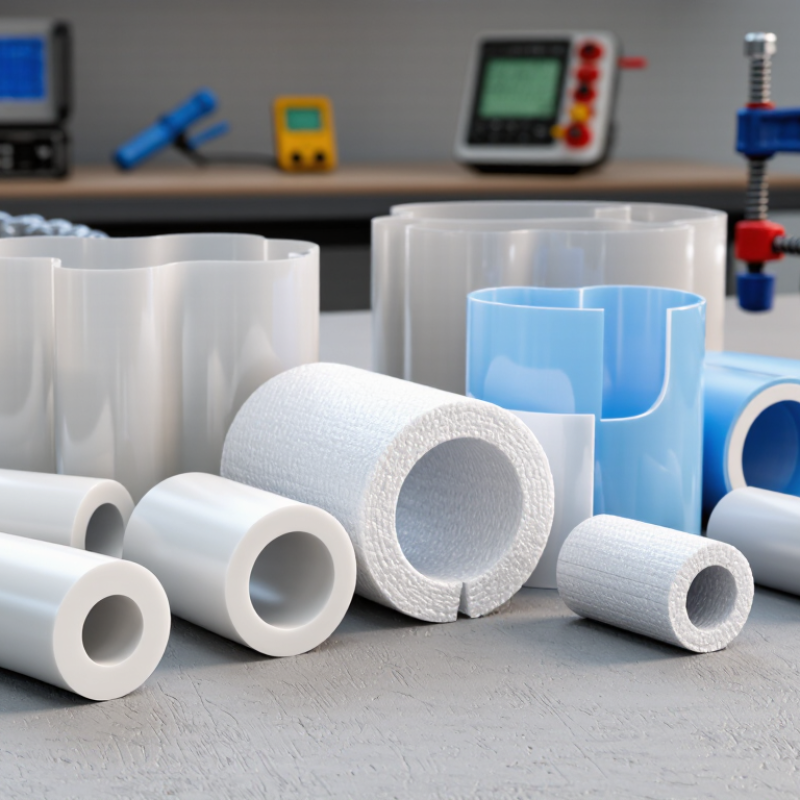
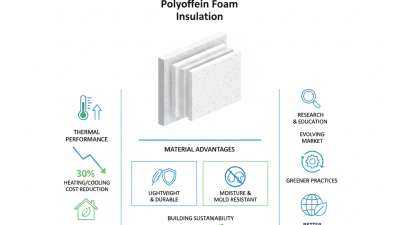
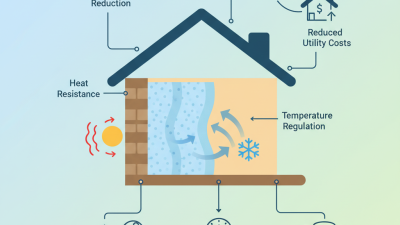
Polyolefin insulation is a family of plastic-based materials, mainly polyethylene and polypropylene. It usually appears as flexible foam, solid sheets, or cable insulation. Its closed-cell structure traps air and slows heat transfer. It also limits moisture entry around chilled pipes, ductwork, and refrigeration lines. That practical combination explains its growing importance in 2026.
Global buyers now examine more than initial price. They compare thermal conductivity at actual operating temperatures, water absorption, density, flexibility, and service life. For electrical applications, they also check dielectric strength, smoke behavior, and fire-test results. A material that performs well in a dry warehouse may behave differently near coastal equipment. Site conditions matter. So does installation quality.
Polyolefin products can support lower energy loss and cleaner maintenance when correctly selected. Their light weight can reduce handling time, especially on long pipe runs. Yet “high performance” is not universal. Some grades soften under sustained heat, while others need extra protection from flames or ultraviolet exposure. I have found that a short datasheet review is rarely enough; project records and independent test reports deserve equal attention. Buyers should request test methods, temperature ranges, thickness tolerances, and compliance documents before approval. One overlooked detail can weaken an otherwise sound specification.
2026 Top Polyolefin Insulation Types for Global Buyers
Global buyers usually compare polyethylene (PE), cross-linked polyethylene (XLPE), polypropylene (PP), and foamed polyolefin insulation. Each type suits a different operating window. PE offers low dielectric loss and dependable moisture resistance. XLPE handles higher temperatures, commonly around 90°C during continuous operation. PP provides strong thermal performance and useful mechanical stiffness. Foamed polyolefin reduces weight, but its cellular structure needs careful protection during processing.
Market data supports continued demand for these materials. The International Energy Agency’s Electricity 2024 report forecasts global electricity demand growth of about 3.4% annually from 2024 to 2026. Grand View Research estimated the global wire and cable market at approximately USD 205.9 billion in 2023. These figures do not measure insulation alone, but they indicate expanding demand for reliable cable systems. Buyers should still check voltage class, conductor size, installation temperature, fire behavior, and recycling requirements.
XLPE remains a practical choice for medium- and high-voltage cables. PE often fits communication and low-voltage applications. PP is gaining attention where thinner insulation and higher heat resistance matter. Foamed grades can improve flexibility and reduce material use. However, “lighter” is not automatically better. Processing consistency, water-tree resistance, and compatibility with screens deserve laboratory verification. IEC 60502-1 and IEC 60840 provide useful reference points, although local specifications may demand more. One overlooked issue is supplier data quality. A polished datasheet can still leave aging performance unclear.
Technical comparison of commonly specified polyolefin insulation systems for wires, cables, electrical equipment and industrial applications
| Insulation Type | Polymer Family | Typical Continuous Operating Temperature | Typical Dielectric Strength | Key Performance Characteristics | Common Applications | Buyer Advantages | Important Limitations | Common Specification References |
|---|---|---|---|---|---|---|---|---|
| Solid Polyethylene (PE) | Non-crosslinked polyethylene | Approximately 70–75°C | Typically 20–30 kV/mm, depending on formulation and test method | Low dielectric loss, strong moisture resistance, good chemical resistance and relatively easy processing | Telecommunication cables, low-voltage power cables, coaxial cables and selected medium-voltage cable designs | Cost-effective; good electrical insulation; suitable for wet and buried environments when properly jacketed | Lower heat capability than crosslinked grades; can soften under sustained high temperatures | IEC 60502-1, IEC 60502-2 and applicable national cable requirements |
| Cross-Linked Polyethylene (XLPE) | Crosslinked polyethylene | 90°C continuous; commonly 250°C for short-circuit conditions | Typically 20–30 kV/mm, depending on grade and construction | High thermal stability, low dielectric loss, good insulation resistance and strong resistance to moisture and many chemicals | Low-, medium- and high-voltage power cables, renewable-energy cables, industrial cables and building-wire systems | High current-carrying capacity and long service life; widely accepted in international power-cable specifications | Not readily melt-reprocessable after crosslinking; requires controlled extrusion and clean manufacturing for higher voltages | IEC 60502 series, IEC 60840, IEC 62067, EN 50618 and national electrical codes where applicable |
| Foamed or Cellular Polyethylene (FPE) | Physically or chemically foamed polyethylene | Approximately 70–80°C | Usually lower than solid PE on a volume basis, but optimized for low signal loss | Low density, low capacitance, low dielectric constant and favorable high-frequency signal performance | Data cables, coaxial cables, radio-frequency cables, instrumentation and communication systems | Helps reduce transmission loss and cable weight; efficient for high-frequency applications | Lower crush resistance and heat capability than many solid or crosslinked constructions; requires suitable mechanical protection | ISO/IEC 11801, IEC 61156 series and application-specific communication-cable standards |
| Cross-Linked Polyolefin (XLPO) | Crosslinked polyethylene or polyolefin compound, often formulated for flame and low-smoke performance | Typically 90–125°C, depending on the compound | Commonly approximately 20–30 kV/mm, subject to formulation | Good abrasion resistance, improved heat aging, moisture resistance and potential halogen-free low-smoke behavior | Solar cables, battery cables, industrial control cables, rail systems and equipment wiring | Combines polyolefin processing with enhanced thermal, flame and environmental performance | “Halogen-free” and temperature ratings vary by formulation; buyers must verify the exact compound and test results | EN 50618, IEC 62893, IEC 60332, IEC 60754 and IEC 61034, as applicable |
| Polypropylene (PP) | Polypropylene and polypropylene copolymers | Approximately 90–105°C for selected cable compounds | Typically 20–30 kV/mm, depending on grade and construction | Low density, good moisture resistance, favorable stiffness and relatively high softening temperature among thermoplastics | Automotive wiring, appliance wires, control cables and selected industrial cable constructions | Lightweight; can reduce cable diameter and material consumption in suitable designs | Can be less flexible than polyethylene; low-temperature impact and flame performance depend strongly on formulation | ISO 6722, ISO 19642, IEC 60227 and application-specific wiring standards |
| Thermoplastic Polyolefin (TPO) | Polyolefin blend, commonly based on polypropylene and polyethylene phases | Typically 90–125°C, depending on grade | Approximately 15–25 kV/mm for many insulation compounds | Good flexibility, weather resistance, moisture resistance and resistance to many automotive fluids | Automotive cable insulation, industrial wiring, flexible power leads and outdoor electrical assemblies | Thermoplastic reprocessability; balanced flexibility, durability and chemical resistance | Performance can vary substantially between formulations; some grades require additional flame-retardant additives | ISO 6722, ISO 19642, IEC 60227 and customer-specific automotive specifications |
| Halogen-Free Flame-Retardant Polyolefin (HFFR) | Polyolefin compound with mineral or synergistic flame-retardant systems | Typically 70–125°C, depending on grade and cable design | Often approximately 15–25 kV/mm, depending on filler content | Low halogen emission, low smoke, reduced corrosive gas generation and good flame performance when correctly formulated | Public buildings, tunnels, rail vehicles, data centers, marine interiors and critical infrastructure | Supports fire-safety objectives and can reduce smoke and corrosive gas hazards during a fire | Mineral fillers may reduce flexibility, elongation and dielectric strength; fire performance must be verified by testing | IEC 60332, IEC 60754, IEC 61034, EN 50399 and CPR-related requirements where applicable |
| Electron-Beam Cross-Linked Polyolefin | Radiation-crosslinked polyethylene or polyolefin compound | Typically 105–150°C, depending on formulation | Commonly approximately 20–30 kV/mm | Enhanced heat aging, abrasion resistance, cut-through resistance and dimensional stability | Automotive harnesses, railway wiring, industrial equipment, aerospace-support systems and high-temperature control wiring | High resistance to thermal cycling and mechanical abuse; useful where thin-wall insulation is required | Requires specialized irradiation equipment; excessive radiation dose or unsuitable formulation can reduce flexibility | ISO 6722, ISO 19642, EN 50306 and equipment-specific qualification standards |
| Silane-Crosslinked Polyolefin | Moisture-cured crosslinked polyethylene or polyolefin compound | Typically 90°C continuous for power-cable applications | Approximately 20–30 kV/mm, depending on grade and processing | Good thermal stability, moisture resistance and electrical insulation performance without electron-beam processing | Low- and medium-voltage power cables, building wires and industrial electrical cables | Suitable for continuous cable production; offers a practical balance between processing cost and thermal performance | Curing conditions and moisture control are important; insulation quality depends on clean, consistent compounding | IEC 60502 series, EN 50525 and relevant national cable standards |
Note: Values are typical industry ranges for comparison and are not universal material guarantees. Actual performance depends on polymer grade, additives, insulation thickness, conductor design, manufacturing process, environmental conditions and the applicable product standard. Global buyers should request the latest technical data sheet, safety documentation, compliance certificates and type-test reports for the exact construction.
For global buyers, polyolefin insulation should be judged by measured performance, not a product label. The first checkpoint is thermal conductivity, recorded in W/m·K under a stated temperature and conditioning method. Lower values usually mean better heat resistance, but density and expansion can change the result. Test samples should match the intended cable thickness. Small details matter.
Electrical performance requires dielectric strength, volume resistivity, and partial-discharge behavior where applicable. A reliable report identifies voltage ramp, electrode geometry, specimen thickness, and conditioning time. Mechanical testing records tensile strength and elongation before and after heat aging. For outdoor or buried systems, water absorption and dimensional stability deserve equal attention. A sample that passes dry may weaken after moisture exposure. That gap is easy to miss.
Buyers should compare test methods, acceptance limits, and measurement uncertainty, rather than isolated headline numbers. Independent laboratory results add confidence, especially when production batches vary. Yet no laboratory fully recreates pulling, bending, sunlight, and installation stress. Field feedback should challenge the specification. I would also request aging data at the actual operating temperature, not only an accelerated claim. This is less convenient.
In 2026, global buyers are comparing polyolefin insulation by application, not by resin name alone. Polyethylene remains widely used for low-voltage cables, control wires, and communication systems. It offers stable dielectric performance, light weight, and efficient extrusion. Cross-linked polyethylene supports higher operating temperatures in power cables. Its improved thermal strength suits demanding transmission environments. Polypropylene can reduce weight and provide useful heat resistance in selected cable constructions. Fit matters more.
For cables, buyers should review voltage class, conductor temperature, moisture exposure, and installation stress. Medium-voltage designs may require water-tree resistance and carefully controlled insulation thickness. Low-voltage systems often prioritize flexibility, abrasion resistance, and clean stripping during installation. Extrusion consistency is critical. Small defects matter. Testing should include dielectric strength, thermal aging, dimensional checks, and flame performance where required. Local certification requirements can change the acceptable material system.
In pipes, polyethylene and polypropylene insulation or jacketing help protect temperature-sensitive lines, district heating components, and industrial fluid systems. Closed-cell polyolefin foam can limit heat transfer around chilled or warm pipes. In factories, polyolefin materials also appear around sensors, motor leads, hydraulic lines, and automated equipment. Their low moisture uptake is useful, but not universal. A laboratory result can still mislead when field joints, sunlight, chemicals, or repeated bending are ignored. Buyers should request aging data at actual service temperatures and examine installation records, not only datasheets.
Global buyers should select polyolefin insulation by operating conditions, not by price alone. The IEA Electricity 2024 report expects global electricity demand to grow by about 4% annually through 2026. This growth increases pressure on cable reliability, especially in renewable energy, data centers, and industrial networks. Polyethylene suits many low- and medium-voltage applications. Cross-linked polyethylene, or XLPE, offers higher thermal endurance and better dimensional stability. Low-smoke, halogen-free polyolefin compounds may fit enclosed public spaces, but their mechanical and moisture performance must be verified.
Start with the cable’s actual duty cycle. Check conductor temperature, voltage level, short-circuit duration, bending radius, soil chemistry, and water exposure. IEC 60502-1 and IEC 60840 provide useful cable performance frameworks, while IEC 60332 and IEC 60754 address flame behavior and halogen-gas properties. Request complete test reports, not only a technical datasheet. Ask whether testing covered aging, partial discharge, water penetration, and installation stress. Small details matter.
Procurement teams should compare total service risk over the intended life. A lower-cost PE design can become expensive under continuous heat. XLPE may provide stronger thermal margins, yet poor joint workmanship can still cause failure. Field investigations often find installation defects, not insulation chemistry, at the center of trouble. This is easy to overlook. Suppliers should disclose compound grade, production controls, tolerance limits, and batch traceability. I would also require samples from actual production, because laboratory samples can look reassuringly perfect.
Scan QR code to download the app
LSP Products was founded by plumbers over 50 years ago with a focus on unparalleled innovation, superior product quality, and best-in-class service to the plumbing industry. Our primary focus is the new construction market where we develop products that make installations easy and provide significant cost savings to the plumbing/mechanical contractor. LSP has a manufacturing facility located in Monterrey, Mexico and a distribution center in Dallas, Texas. We are proud to offer many products designed and made in North America… About LSP
Submit the form below to receive the document via email.